
Author

New Central Asia: Building Bridges, Not Walls
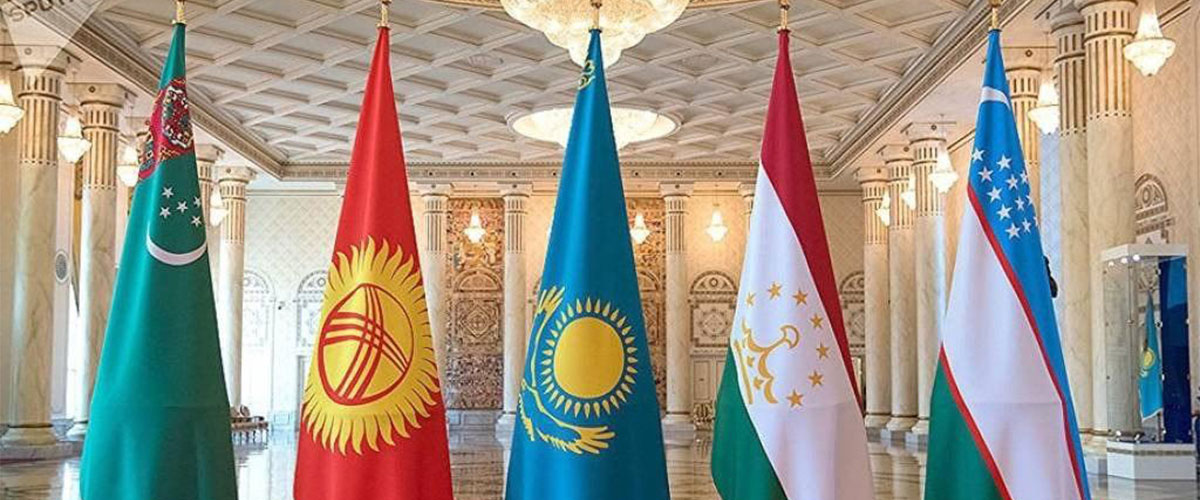
On 15-16 November, the seventh Consultative Meeting of the Heads of State of Central Asian countries will be held in Tashkent, Uzbekistan. The event’s agenda includes strengthening regional cooperation in Central Asia and implementing joint projects and initiatives in priority areas. The participants will also exchange views on pressing issues of regional and international politics. A substantial package of multilateral documents is expected to be adopted following the Consultative Meeting. The initiative to hold regular consultations among the leaders of Central Asian states was proposed by the President of Uzbekistan at the 72nd Session of the UN General Assembly in September 2017. During Uzbekistan’s chairmanship in this format, more than 20 major events covering various areas of cooperation have been held. Today, a new, responsible, and promising stage is beginning in the history of the Central Asian region. Once characterized by various contradictions, closed borders, and mutual distrust, the region is now becoming a space built on open dialogue, solidarity, and mutually beneficial cooperation. The article titled “Central Asia on the Verge of a New Era” by the President of the Republic of Uzbekistan Shavkat Mirziyoyev ahead of the meeting, has gained significant attention as a historically important document that logically reflects this process and outlines the region’s main directions of future development. Undoubtedly, the renewal processes observed in Central Asia are not accidental. They are the result of the wise political will of state leaders over the past seven to eight years, a worldview aligned with the hopes and aspirations of their peoples, and a new political culture founded on mutual trust. Indeed, the countries of the region are demonstrating in practice the truth that “we are peoples connected not only geographically but also historically and by destiny”. The main idea of the President’s article is unity and cohesion. If in the past borders divided nations, today they are turning into bridges of cooperation. Efforts such as legally demarcating borders, ensuring fair use of water and energy resources, and implementing joint projects such as Kambarata HPP-1, Zarafshan, and Fondaryo are practical reflections of a new political mindset. As a result, borders are no longer merely geographical lines but symbols of trust, friendship, and mutual respect. It should be noted that cooperation among the countries of the region has acquired fundamentally new meaning through the initiatives of the heads of state. In particular, the approaches put forward by the President of Uzbekistan – open economy, close integration with neighbors, open and transparent borders, and strengthening economic neighborliness – have shaped a common development trajectory for the entire region. As a result of these initiatives, trade turnover among regional states has steadily increased in recent years, the investment climate has improved, and many joint enterprises have been established. According to analyses, regional economic integration is strengthening. For example, green energy is contributing to deeper mutually beneficial and strategic economic interdependence among the countries of the region. Central Asia’s geography offers significant advantages for transit, and the development of transport corridors could elevate the region’s role in global trade. International experts emphasize that routes such as the “Middle Corridor”, initiated by President Shavkat Mirziyoyev, have historic significance in this regard. Speaking about the importance of the Consultative Meeting alone, the format, created in 2017, has fundamentally transformed regional relations. It has established a new political culture based on open dialogue without external intermediaries. As a result, historic progress has been made in resolving issues that previously caused tension, such as borders, water, and energy. The 2025 agreement on the delimitation of the borders of Uzbekistan, Kyrgyzstan, and Tajikistan opened a new chapter in the region’s history. This was not only a step toward resolving legal issues but also an important milestone in strengthening trust and closeness among the people. As the President noted in his article, over the past eight years, the combined GDP of Central Asian countries has reached $ 520 billion, while foreign trade has more than doubled. Uzbekistan’s trade turnover with neighboring states increased from $2.4 billion in 2016 to $7.2 billion in 2024. Today, the region’s industry is growing by approximately 6 percent annually – a figure twice the global average. As a result, an economically cohesive space is emerging in which each country benefits from its neighbors’ success. External partners now view Central Asia not as a collection of separate states but as a unified regional force. This new geopolitical reality expands opportunities to attract international investment and implement major transport and energy projects. The approach to Afghanistan has also changed. It is now viewed “not as a problem, but as an opportunity”, representing a revolutionary shift in regional security policy. The Trans-Afghan Railway Project is a strategic step in this direction, connecting the entire region with South Asia. In conclusion, the ongoing processes in Central Asia are neither natural coincidences nor random developments. They are the result of regional leaders’ political will, nations’ internal desire for unity, and their confidence in a common future. The emerging new political environment in Central Asia creates the fundamental conditions for the region’s future stability and prosperity. As President Shavkat Mirziyoyev stated, unity today is not only a moral value but also a strategic necessity.