
Author

The Worsening Global Situation And Imran Khan’s Case
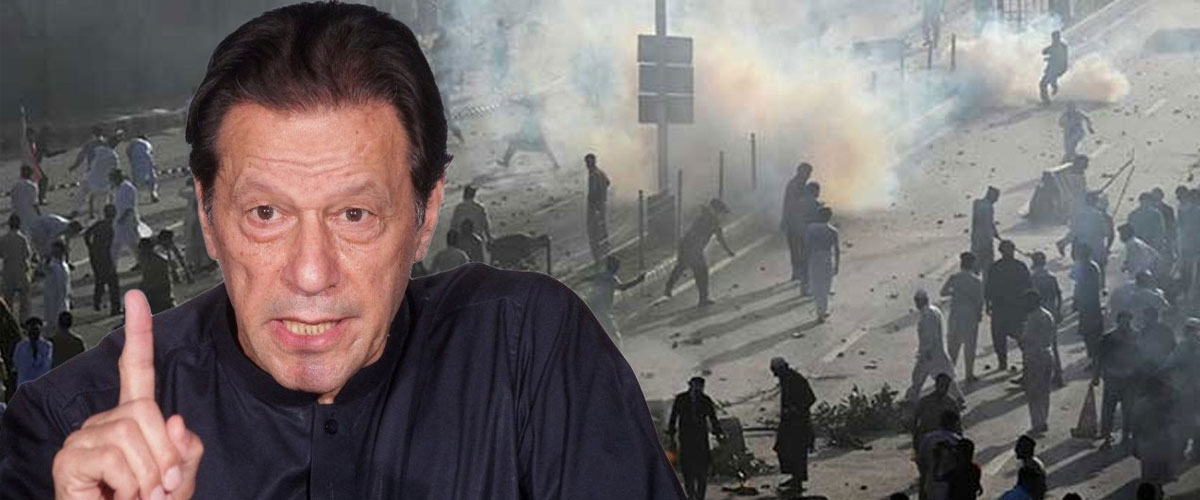
The United Nations’ Special Rapporteur has warned that PTI founder and former Prime Minister Imran Khan is being held in prison under conditions that may amount to inhuman or degrading treatment, and has urged Pakistani authorities to comply with international principles and standards. According to reports by foreign news agencies, in September the legal team approached the UN representative to intervene in order to prevent the alleged mistreatment of Imran Khan and his wife, Bushra Bibi, by the Pakistani government. UN official Alice Jill Edwards urged Pakistan to take immediate and effective action on the reports received regarding the conditions of detention of the 73-year-old Imran Khan.
In a statement, she said: “I call on the Pakistani authorities to ensure that the conditions of Imran Khan’s detention comply with international principles and standards.” She added that since his transfer to Adiala Jail in Rawalpindi on 26 September 2023, Imran Khan has allegedly been kept in excessive solitary confinement, confined to his cell for up to 23 hours a day, with extremely limited access to the outside world, and that his cell has reportedly been under continuous camera surveillance. Special Rapporteurs like Alice Jill Edwards are independent experts mandated by the Human Rights Council; they do not speak on behalf of the United Nations itself.
However, the Prime Minister’s aide, Rana Ihsan Afzal, rejected the concerns raised by the UN representative, stating that Imran Khan is being kept in accordance with prison rules and the jail manual. He said that Khan’s children have access to him and that they should schedule their calls and submit appropriate requests, adding that there is no issue or obstruction from the Government of Pakistan. He further claimed that the PTI founder is being provided facilities “beyond his entitlements” as a B-class prisoner, including exercise facilities, good food, and adequate space.
The United Nations’ concern for Imran Khan appears to many as a question mark, especially at a time when the world is grappling with wars, famine, environmental destruction, and humanitarian catastrophes. However, this issue needs to be understood in an international context rather than through emotion. The United Nations is not a spokesperson for any individual, country, or political party; under its charter, it monitors principles such as human rights, fair judicial process, and political freedoms. When questions arise about the arrest, trials, or judicial proceedings of a political leader in a member state, the UN generally focuses on whether due process—that is, legal requirements—are being fulfilled. It seeks to apply the same principles across all regions of the world, whether in Africa, Latin America, or Asia.
The perception that the United Nations has resolved all other global problems and that only Imran Khan remains is far from reality. UN reports, resolutions, and statements continue to be issued on Gaza, Ukraine, Sudan, Yemen, Myanmar, and many other regions. The difference is that we tend to pay less attention to those issues, while statements related to our own country feel more prominent.
Imran Khan’s case also draws international attention because he is a former prime minister, and at the global level it is widely accepted that the treatment of elected political leadership is considered a measure of a country’s democratic standards. The UN’s concern is not interference in Pakistan’s internal political decisions but rather an ethical and principled stance—one it has taken in the past regarding Nawaz Sharif, Benazir Bhutto, and other leaders around the world.
The real question is not for the United Nations, but for ourselves. Have we been able to build a system where political differences are resolved transparently in parliament and courts, rather than through prisons, cases, and retaliatory actions? If our system is strong and credible, neither will our sovereignty be threatened by a statement from any international body, nor will we be compelled to offer repeated explanations.