
Author

Pakistan, Turkiye And Saudi Arabia in Talks To Sign Tripartite Defense Agreement
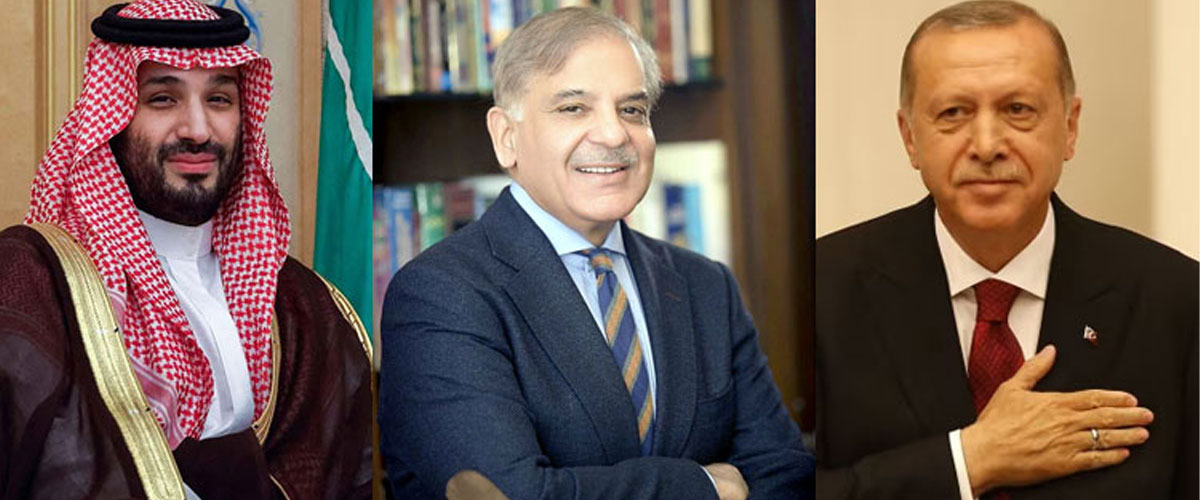
ISLAMABAD: Pakistan, Turkiye and Saudi Arabia are actively engaged in deliberations in connection with the tripartite Defense Agreement between these three Muslim countries to bolster joint defenses, a move that has been widely described in Pakistan media as establishment of Islamic NATO.
Officials of Turkish and Pakistani governments confirmed that talks and review of the draft of the defense agreement has been ongoing since last one year.
Both Pakistan’s Minister for Defense production, Raza Hayat Harraj and Turkiye Foreign Minister Makan Fidan confirmed this information on the same day separately. The Pakistani Minister told Reuters about this impending agreement in an interview on Thursday. The Turkiye Foreign Minister confirmed this during a press conference in Istanbul.
Pakistan, Saudi Arabia and Turkiye have prepared a draft defence agreement after nearly a year of talks, Defence Production Minister Raza Hayat Harraj confirmed. His confirmation follows a statement by the Turkish foreign minister about the potential deal earlier
Harraj told Reuters the potential deal between the three countries was separate from a bilateral Saudi-Pakistani accord announced last year. A final consensus between the three states is needed to complete the deal, he said.
“The Pakistan-Saudi Arabia-Turkey trilateral agreement is something that is already in the pipeline,” Harraj said in an interview.
“The draft agreement is already available with us. The draft agreement is already with Saudi Arabia. The draft agreement is already available with Turkey. And all three countries are deliberating. And this agreement has been there for the last 10 months.”
Asked at a press conference in Istanbul earlier today about media reports on negotiations between the three sides, Turkish Foreign Minister Hakan Fidan said talks had been held but that no agreement had been signed.
Fidan pointed to a need for broader regional cooperation and trust to overcome distrust, which he said created “cracks and problems” that led to the emergence of external hegemonies or wars and instability stemming from terrorism, in the region.
Turkiye and Pakistan have highly professional militaries, whereas Saudi Arabia is the world’s leading oil producer with a very strong financial muscle. Pakistan is a nuclear power as well.
Saudi Arabia and Pakistan are facing troublesome enemies on their borders. Pakistan is facing a two front security situation, with much large military power, India posing a threat on its Eastern border, while a hostile Afghan Taliban are controlling Afghanistan which makes Pakistan’s western border highly unstable.
Saudi Arabia, on the other hand is facing multiple threats from Israel, Shia militias in the region and a hostile Iran. It is generally believed that Saudi Arabia is military very weak as its society doesn’t produce military manpower on a large scale.
Turkiye perhaps is the only country in this group of three which has stable international borders with Turkiye military and doesn’t have to face a military force on its border larger than itself.
A tripartite agreement between these three countries has the potential to make a formidable political and military block in the region.
The Middle East was already highly unstable with hostile Shia militias posing a threat to the central country of this proposed alliance, Saudi Arabia. Now after Israeli military strikes in Qatari capital, Doha a few months back, the Saudis have a reason to perceive military threat from Israel as well.
Saudi Arabia and Pakistan have already entered into a bilateral defense assistance pact a few months back. Now a tripartite agreement involving another of great Muslim military power, Turkiye will give the Saudi defense planner more confidence.
At the level of popular imagination, military alliance between Muslim powers has always been a powerful presence in Muslim societies. However Muslim rulers, as they have always depended on big powers for their security, have never seriously perceived a joint military alliance as a serious option for their countries.
The events of the past few years have made it clear for Muslim rulers that the United States would not come to their rescue if they are attacked by Israel. Or in case chaos in the neighboring countries and regions knock at their doors.
For instance Saudi Arabia perceives threat from Houthi militias in Yemen, Hezbollah militia in Lebanon and Shia Militias in Syria and Iraq–all these countries, except Syria share borders with Saudi Arabia. But disturbances in Syria do affect Saudi Arabia’s security.
What benefit will come to Pakistan in case this tripartite agreement is signed in the near future. Pakistan has a powerful military, but its economy has been in bad shape for the past many years. It has a vibrant defense industry which could become a source of military hardware for Saudi Arabia and its allied countries in the Arab world and Arabic speaking Africa.