
Author

Rift in Afghan Taliban Ranks
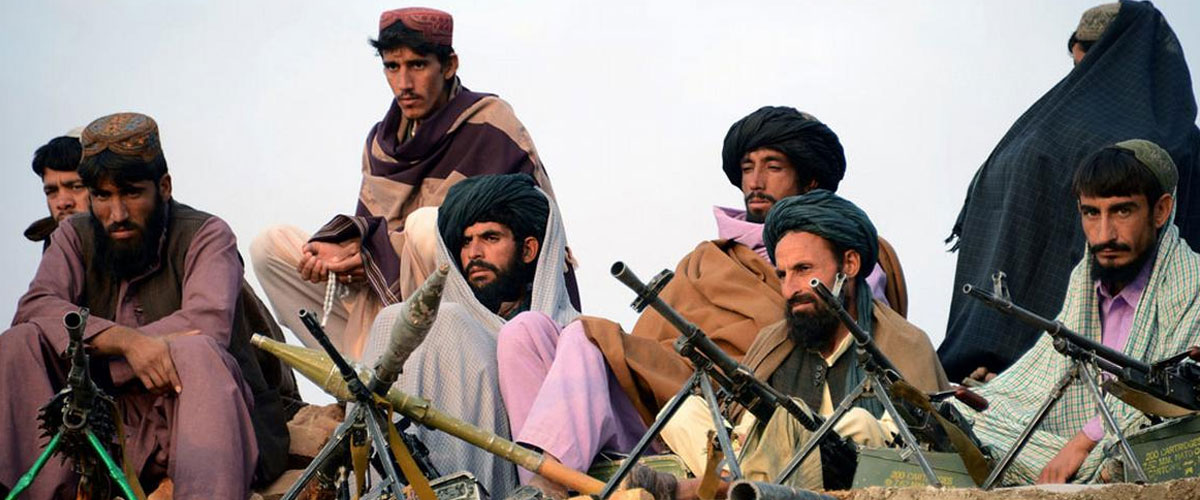
ISLAMABAD: Afghan Taliban’s unity is increasingly facing the challenge of internal rift that might make the ruling group of Afghanistan a deeply dysfunctional political entity. These deep divisions in Taliban ranks have been visible to discerning observers right from the day one when Afghan Taliban took over Kabul in August 2021.
Late last week objective evidence emerged that the Taliban leadership is itself worried about these divisions, which can bring down the Taliban regime in Kabul.
The evidence emerged in the form of a investigative piece by BBC, which released an audio recording of Supreme leader Hibatullah Akhundzada’s speech delivered at a Madrassa in which he expressed the fear that the internal right might bring down the regime.
The investigative report published by BBC two days ago reported that the Taliban leadership is divided into two groups.
“One entirely loyal to Akhundzada, who, from his base in Kandahar, is driving the country towards his vision of a strict Islamic Emirate – isolated from the modern world, where religious figures loyal to him control every aspect of society” reads the story, “ And a second, made up of powerful Taliban members largely based in the capital Kabul, advocating for an Afghanistan which – while still following a strict interpretation of Islam – engages with the outside, builds the country’s economy, and even allows girls and women access to an education they are currently denied beyond primary school”.
The reports about divisions in Taliban ranks emerged at a time when Pakistan has warned the Taliban regime to withdraw itself support from TTP or face the consequences.
As the power struggle within the loosely knitted umbrella organization called Afghan Taliban has intensified after the militant group took over power in Kabul in August 2021, the stories, rumors and unconfirmed reports about deep divisions dividing Taliban down the middle have become a daily life routine of Afghan people.
Afghan Experts—especially those of Afghan origins–, journalists and observers are full of stories about divisions in Taliban organizations.
Some of these differences between top Taliban leadership came to the surface when in February 2023, leader of Haqqani faction of Taliban Sirajuddin Haqqani made critical comments on the situation in Afghanistan during a public event.
“The current situation is intolerable. If the public situation becomes worse and unstable, it is our responsibility to bring them closer to us,” Haqqani said. Afghan experts interpreted this statement in the background of two parallel developments that were taking place in Afghan society at that point of time. Firstly, Afghan society was struggling with humanitarian and economic crises that have left millions without lifesaving support. Haqqani’s statement followed a highly restrictive directive issued by the Taliban Supreme leader targeting women “that are seen as further isolating the country from the international community”.
Around the same time the Acting Defense Minister and son of the movement’s revered founder Omar, Muhammad Yaqoob said that the Taliban must always listen to “legitimate demands of the people.” Several Taliban leaders who were part of the government made similar comments. This was a direct challenge to the authority of Taliban Supreme Leader Haibatullah Akhundzada who was issuing all these restrictive edicts and was leading a group of hardline Taliban leaders opposed to any kind of regular contact with the west.
“Incessant disagreements and power struggles can potentially lead to further divisions, rendering the so-called Islamic Emirate unable to even take off on matters of governance and services delivery to the Afghan population. Likewise, the Taliban’s ability to maintain its influence and negotiate with external actors may also be compromised, further complicating the already volatile political landscape in Afghanistan”.
Many experts of Afghan affairs opine that differences and conflicts between different factions of Afghan Taliban are nothing new. Many experts said that ever since the death of Afghan Taliban founding leader, Mullah Omar the factional fighting between Taliban groups have remained a norm, “Internal fault lines rooted in ideology, tribal loyalties, regional affiliations, control over resources including narcotics business etc. defy the myth of Taliban being a united and cohesive organization” says an expert of Afghan affairs based in Islamabad “Within the Emirate, those relatively moderate clash with hardliners in a continuous battle to gain greater say over the matters of state including the overall course of the organization.
While some advocate for a changed approach to governance that offers some semblance of moderation, others stick to rigid interpretation of Islamic principles, unwilling to back off from their uncompromising stance. The gulf between these factions remains unbridged”.
The internal conflicts among the Afghan Taliban reveal the complex dynamics and power struggles within the group. These conflicts arise from a variety of factors including ideological differences, regional and tribal rivalries, personal ambitions of key leaders, and divergent approaches to governance and external relations.
“One of the main sources of internal conflict is the clash between hardliners and pragmatists. Hardliners push for rigid policies and resist compromise, mirroring their policies from the 1990s. On the other hand, pragmatists prioritize practical considerations and political expediency, seeking negotiations and engagement with external actors. This divide leads to conflicting policies and approaches within the group as exemplified by the contrasting debate over girls’ education and the acceptance of former government officials into the Islamic Emirate’s fold”.
On the other hand, many western experts and diplomats believe that the differences between different factions of Taliban that have surfaced recently are unprecedented and likely to disrupt Taliban’s ability to govern and act as a cohesive group.
One Kabul based Afghan expert on the condition of anonymity told NAM news that Taliban have a tendency to demote or silence critics with the use of force or through coercive methods. They point out the examples of former Taliban ambassador Abdul Salam Zaeef, ex-foreign minister Abdul Wakeel Muttawakil, and moderate Taliban leader Agha Jan Motassim, all of whom were demoted for showing dissent. Meanwhile, Mullah Abdul Manan Niazi, who dissented in 2015, was killed in a suicide bombing last year.
The myth of Taliban organization as a monolithic entity is an invention of western media. It was never a united force. It was only because they had a common enemy in the shape of the US military that they acted or seemed to have acted as a united force.
One Pakistani expert opines that there are regional, ideological as well as tribal rivalries within Taliban organization. Some tribes occupy more prominent positions in Taliban organization and in the process attract jealousy, “The Durrani tribe, for instance, has played a significant role within the Taliban with sub-tribes like the Noorzai and Ishaqzai involved in managing financial affairs and promoting the opium trade. Such tribal dynamics often intersect with ideological differences, exacerbating internal tensions.”
“Moreover, external influences and relationships add another layer of complexity to the internal conflicts. Some Taliban leaders have had connections with neighboring countries such as Pakistan and Iran which can influence their perspectives and actions. These external alliances may contribute to divisions within the group as different factions align themselves with different foreign actors”. It seems Taliban leaders have found another enemy in the shape of ISIS-Khorasan to create cohesion within the organization. But in the past Taliban cadres have defected from their mother organization towards the more radical ISIS-Khorasan. That is another aspect of the problem about divisions in Taliban organization.