
Author

Federal Cabinet To Deliberate on Joining Gaza Board of Peace
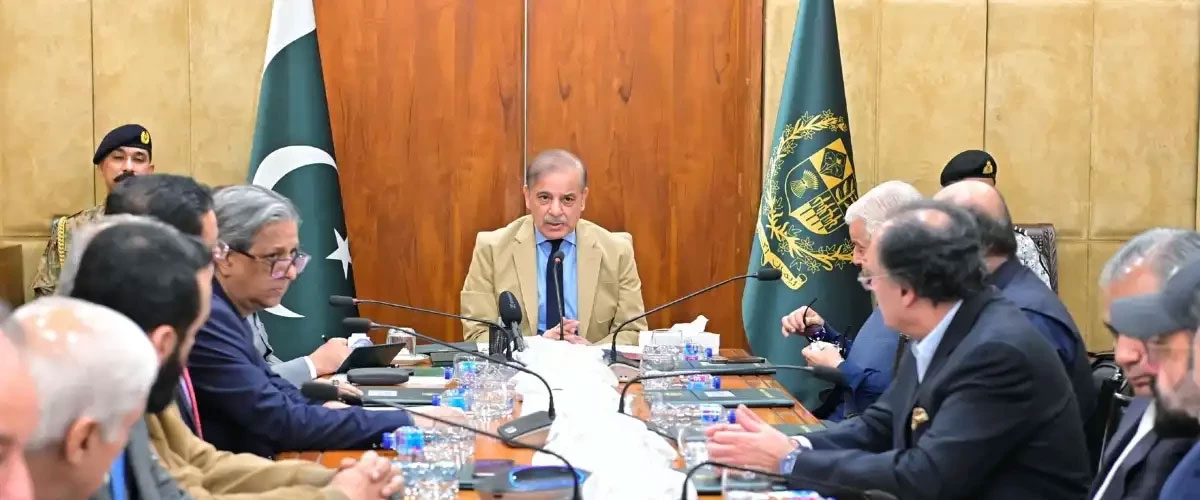
ISLAMABAD: The Federal Cabinet will discuss the various options of engagement with the US led Gaza Board of Peace before giving a final go ahead for Pakistan’s participation in President Trump’s proposed Board which will serve as a governing body for the War torn Gaza after withdrawal of Israeli troops from there.
The Pakistani Foreign Office is likely to give a briefing to the Federal cabinet on the various options and possibilities available to Pakistan in this regard. After foreign office briefing the federal cabinet will deliberate on these options in detail.
Early this month, Pakistan was formally invited by US President Donald Trump to join the Gaza Board of Peace (BoP), an international body designed to oversee the post-war transition, reconstruction, and governance of the Gaza Strip.
Pakistan has expressed a strong preference for missions authorized by a UN Security Council (UNSC) resolution to ensure international legitimacy. While the BoP received initial UNSC backing (Resolution 2803), its new charter expands its role into a broader international organization, raising questions about whether it supersedes the UN’s authority, “we are currently reviewing the BoP’s specific mandate and implications before deciding on the nature of its engagement” says an official.
Participation in the Board of Peace could allow Pakistan to move beyond rhetoric-filed Palestine policy and play a practical role in shaping humanitarian relief and political outcomes in Gaza. It would also enhance Pakistan’s standing as a “security stabilizer” in the Muslim world.
A controversial aspect of the BoP is the requirement for permanent members to contribute $1 billion in the first year. While countries can join for three years for free, the high cost of permanent membership is a significant factor for Pakistan’s debt-stressed economy.
In Pakistan there is largely a consensus in support of the Palestine cause. However any participation perceived as legitimizing Israeli security interests or Western agendas over Palestinian aspirations.
The government officials said that any final decision will be reached collectively through the country’s political leadership and Parliament to ensure it aligns with national interests and public aspirations.
Since the time of independence Pakistan has always supported the cause of Palestinian people. It has always sided with the Palestinian people in international diplomacy.
Pakistan was part of the original eight-nations peace initiative that laid the foundation for the current US-brokered Gaza peace plan. As per Deputy PM Ishaq Dar, Pakistan has yet not decided to send its troops to participate in ISF. The Pakistan army has a long-standing history of participating in UN missions as peacekeepers around the world. It will be blessing in disguise for both i.e. Pakistani people and Palestinians if the Pakistani government allows its troops to participate in ISF. History revealed that Pakistani troops during their UN peace keeping mission in Bosnia not only maintained peace but also helped the local Muslim community by providing humanitarian assistance. This includes establishing free medical camps, distribution of free food, clothes and sports gears for kids etc. Pakistan has never been a player in the geo-politics of the Middle East and as a neutral player, contributing troops only for humanitarian purposes will provide this opportunity.
The Pervez Musharraf regime considered sending troops to Iraq, but with conditions, and ultimately refused to deploy them. Musharraf initially signaled willingness to send troops for “peacekeeping” if the U.S. paid for it and if it was under a UN or other multilateral mandate, though some reports stated he had agreed to a plan for up to 10,000 troops in exchange for aid and other conditions. By late 2004, he definitively ruled out sending troops, citing the “domestic environment” and the risk of being seen as an “extension of the present forces”.