
Author

Is BOP A Rival To UN Security Council?
ISLAMABAD: When the US military invaded South American countries, Venezuela in the early days of this Month, many in the international diplomatic circles speculated that US President Donald Trump was out to replace rule based international order with an international system of states centered around spheres of influence. Some practitioners of diplomacy went to the extent of predicting that now the US was only interested in maintaining its hegemony in Western hemisphere–that is North and South America. It was predicted that President Trump might withdraw from South East Asia and Europe to leave the room open for China and Russia to dominate these two regions respectively. It seemed President Trump had some more surprises up his sleeves.
Early this week White House proclaimed a charter for the Board for Peace–a body of world leaders initially proposed as a governing body for war-torn Gaza–that makes no mention of Gaza as an area which it will govern.
Board For Peace as proposed by White House is aimed at establishing an international structure that “seeks to promote stability, restore dependable and lawful governance, and secure enduring peace in areas affected or threatened by conflict”. By now White House has sent invitations to dozens of world leaders to join the Board for Peace as an international body that acts as a forum for resolution of conflicts throughout the world.
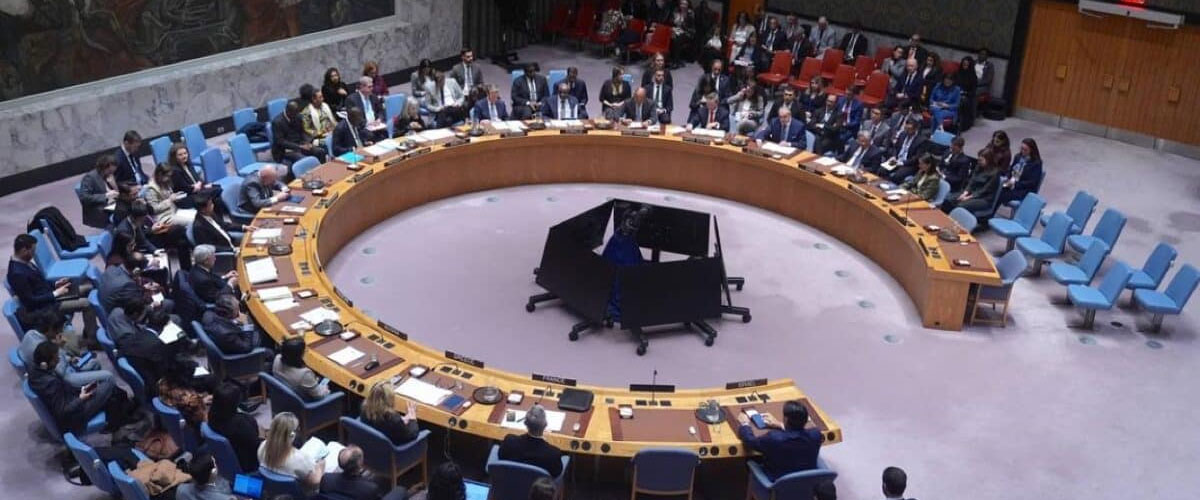
In other words the Board for Peace would be an organization that would rival the United Nations Security Council as a body where the big five decides the direction events would move in different parts of the world. The United Nations Security Council was established in the wake of the Second World War with Soviet Russia, China, France, Britain and the United States as its permanent members.
Board for Peace was first proposed in September on the sidelines of the UN General Assembly session, it was proposed as a mechanism to support the administration, reconstruction and economic recovery of the Gaza Strip.
The White House announced the Board’s creation with the issuing of an 11-page charter, comprising eight chapters and 13 articles, however the charter does not mention Gaza once.
Instead, it proposes a broad mandate for a new international organisation that “seeks to promote stability, restore dependable and lawful governance, and secure enduring peace in areas affected or threatened by conflict”.
The governance structure has three layers: the BoP, an executive board and a chairman with sweeping authority
According to the White House, a “founding executive council” sits at the top. The board of peace votes on budgets, policy and senior appointments while the executive board, which consists of seven members, is responsible for implementing the mission.
Members of the executive board include former United Kingdom Prime Minister Tony Blair, US Secretary of State Marco Rubio and Trump’s son-in-law Jared Kushner.
The chairman is Trump himself. He serves as the final authority on the interpretation of the charter and holds veto power over key decisions, including membership removal and executive board actions.
There are genuine concerns in the international diplomatic circles that US President Trump wants the Board for Peace to replace the United Nations Security Council as a peace making and conflict resolving forum.
While the UNSC gives power of veto to five permanent members, the Board for Peace charter gives veto power to President Trump only.
However not surprisingly on Wednesday Seven leaders of Muslim countries issued a joint statement accepting President’s invitation,
“The Ministers of Foreign Affairs of Islamic Republic of Pakistan, the Arab Republic of Egypt, the Hashemite Kingdom of Jordan, the United Arab Emirates, the Republic of Indonesia, the Republic of Türkiye, the Kingdom of Saudi Arabia, and the State of Qatar welcome the invitation extended to their leaders by the President of the United States of America, Donald J. Trump, to join the Board of Peace” reads the joint statement.
The Ministers announce their countries’ shared decision to join the Board of Peace. Each country will sign the joining documents according to its respective relevant legal and other necessary procedures, including Egypt, Pakistan, and the UAE, that have already announced to join.
The Ministers reiterate their countries’ support for the peace efforts led by President Trump, and reaffirm their countries’ commitment to supporting the implementation of the mission of the Board of Peace as a transitional administration, as set out in the Comprehensive Plan to End the Gaza Conflict and endorsed by United Nations Security Council Resolution 2803, aimed at consolidating a permanent ceasefire, supporting the reconstruction of Gaza, and advancing a just and lasting peace grounded in the Palestinian right to self-determination and statehood in accordance with international law, thereby paving the way for security and stability for all countries and peoples of the region.
While the UNSC formally backed the BoP in November 2025 through Resolution 2803 as a transitional mechanism for Gaza, Trump’s vision has since expanded into a potential global rival to the UN. The legal authority granted by Resolution 2803 is temporary, intended to expire at the end of 2027 once a reformed Palestinian Authority can take control.
Though originally conceived for Gaza, its official charter (released in January 2026) does not mention Gaza once. Instead, it seeks a global mandate to resolve conflicts indefinitely, positioning itself as a “nimble and effective” alternative to existing international institutions.
Issued on Wednesday morning the Pakistan Foreign Office statement which contains the acceptance of President Trump’s invitation particularly notes the significance of the United Nations and the mandate the Security Council has issued for the implementation of the Peace Plan.
Pakistan’s emphasis on the UN security Council mandate is specifically significant in the context of international voices which are expressing concern that the terms of reference proclaiming for the Board for Peace doesn’t match with the mandate issued by the Security Council.
There are voices in the international diplomatic circles which are criticizing President Trump’s ambition to make the Board of Peace as a rival of the United Nations Security Council for resolution of international disputes.
“In response to the invitation extended to Prime Minister Muhammad Shehbaz Sharif by the President of the United States, H.E. Donald J. Trump, Pakistan would like to announce its decision to join the Board of Peace (BoP) as part of its ongoing efforts to support the implementation of the Gaza Peace Plan under the framework of the United Nations Security Council Resolution 2803” reads Foreign Office Press release.
The question is what countries like Pakistan–whose diplomacy is overly reliant on UN support and charter–will do if Board of Peace activities directly clash with the UN Security Council mandate and charter