
Author

Pakistani Society Might Witness Another Round of Anti-Americanism
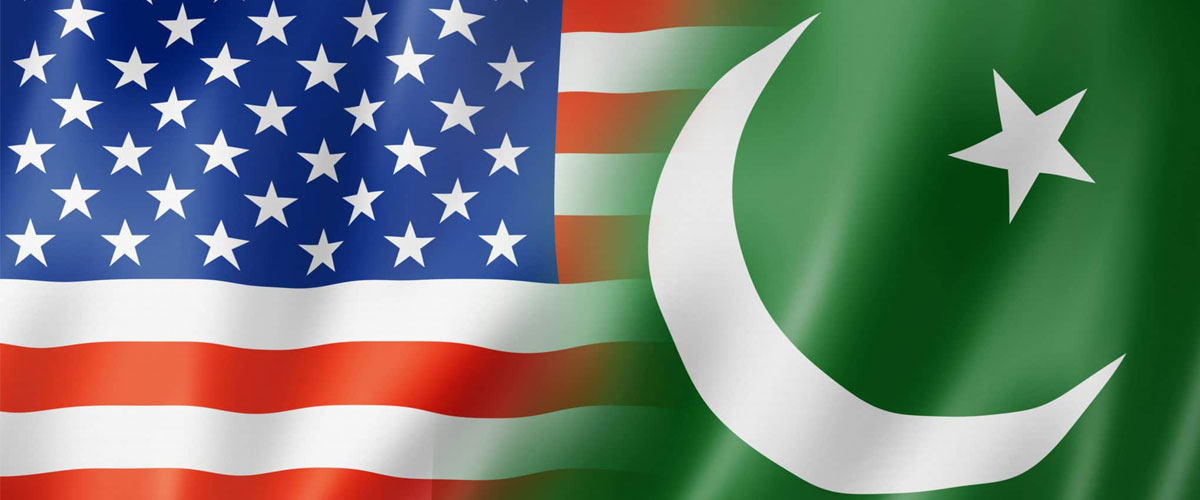
ISLAMABAD: Pakistani society might witness another round of anti-American political activism after Pakistan government and military leaders seemed inclined to go out of the way to play second fiddle to the Trump Administration.
The strong indication of Pakistan government inclination towards the Trump Administration came when Prime Minister Shehbaz Sharif signed the charter of US-led Board of Peace in Davos. Seven other Muslim countries also signed the Charter–countries where governments are overly pro-American in their political and foreign policy inclinations.
The first signs of Anti-American activism in Pakistani society became visible in Pakistani parliament where opposition parties accused the government of supporting the US president who was responsible for strengthening Israel against Muslim countries such as Iran.
Pakistani society has been a hub of Anti-American feelings in the region, especially amid repeated American CIA led drone strikes in Pakistani tribal areas. Large scale protests frequently followed drone strikes, between 2008–2018. In 2011 NATO attack on a Pakistani border post on Pak-Afghan border led to large scale protests. Earlier anti-American tensions peaked during the 1990s following the Pressler Amendment, which suspended aid due to Pakistan’s nuclear program.
One of the most severe instances of anti-American political activism occurred in 1979, when a mob burned the U.S. Embassy in Islamabad following false reports of American involvement in the seizure of the Grand Mosque in Mecca.
In Pakistani society anti-American political activism is largely instigated by religio-political parties including Jamaat-e-Islami(JI) and Jamiat-e-Ulema Islam (JUI).
On Friday Maulana Fazl-ur-Rehman the leader of his own faction of JUI accused the government of being afraid of US President Donald Trump–a feeling which led the government to join the US-led Board of Peace.
On January 23, 2026 thousands of protesters marched in Karachi to condemn U.S. and Israeli strikes on Iran. Demonstrators reportedly walked over a large American flag featuring a picture of President Donald Trump while chanting anti-American slogans. This protest was organized by religious parties.
In the post-Cold War era, Anti-Americanism in Pakistani society is largely instigated by the religious parties. During the Cold War it was left-oriented and pro-Moscow communist groups which inspired anti-American protests in Pakistani society. With the death of the traditional left in Pakistani society the left oriented anti-Americanism also died down. However after the US attack on Venezuela on January 3, 202 various left-oriented organizations, including the National Trade Union Federation (NTUF), staged a rally in Karachi against “U.S. aggression” in Venezuela and the alleged abduction of its president, describing U.S. policy as “war hysteria” and “blatant terrorism”.
In Pakistan, political and religious leaders from opposition parties have largely rejected President Trump’s proposed peace plan for Gaza and have labeled it as a continuation of the Abraham Accord under which the US Administration wanted Gulf Sheikhdom to extend diplomatic recognition to Israel. The recent closeness between Pakistan’s political and military leaders and US President Trump has also come up for scathing criticism by religious leaders in and out of the parliament.
Several religious leaders have opined that Pakistan joining the Board of Peace means it would serve Israeli geopolitical interests.
The government ministers in defense of government policy said prominent Muslim countries were given a chance through this initiative to play their role for the rights of the people of Palestine and for peace in Palestine.
He stressed that the government’s stance was the same as that of the people of Pakistan: “that Israel was an aggressor and a cruel country, which — Netanyahu has the blood of Muslims and Palestinians on his hands.”
“Our moral stance has not changed at all,” he said, adding that the government decided to join the board on the basis of this stance. “So that we can play our role along with our brother countries for peace in Palestine.”
He said that a major reason behind “the halt to bombardment” in Palestine was the role of eight Muslim countries that worked with the Trump administration on a ceasefire plan for Gaza.