
Author

Besant: A Colorful Festival of Culture, History, and Controversy
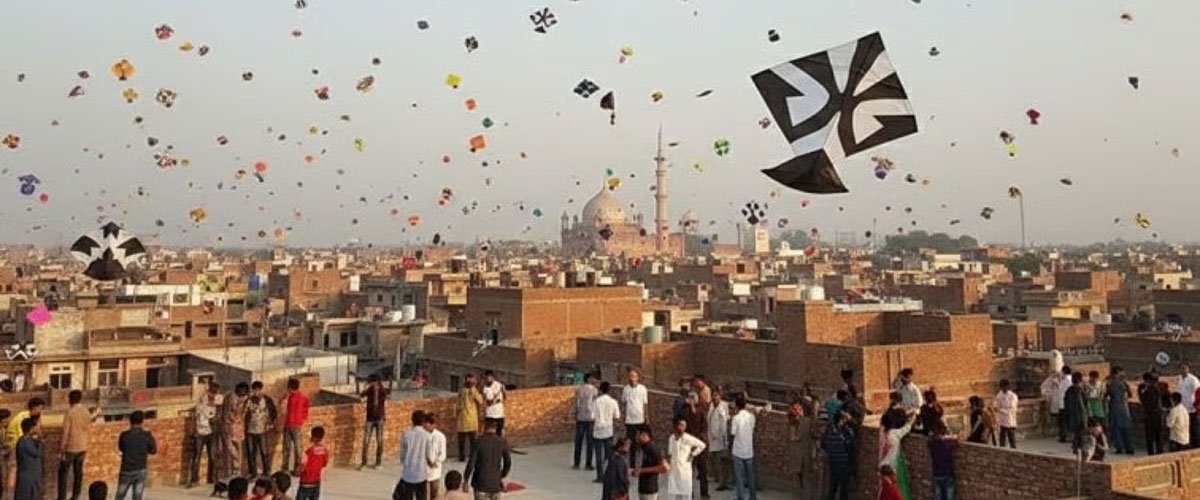
Besant is one of the ancient traditions of the Subcontinent that has been celebrated for centuries to mark the arrival of spring. This festival is not merely about kite flying or a celebration of colors; rather, it is a cultural phenomenon that encompasses many aspects of history, civilization, seasons, and social attitudes. The very mention of Besant brings to mind the rooftops of Lahore, colorful kites soaring in the sky, joyful voices echoing in the air, and the gentle breeze of spring. However, with the passage of time, this festival has become not only a symbol of happiness but also one of controversy and danger.
The word Besant is derived from the Sanskrit language, meaning spring or the season of spring. In ancient Hindu civilization, it was celebrated as Besant Panchami, associated with Goddess Sara Swati, the deity of knowledge and arts. This day was considered a symbol of new crops, prosperity, and seasonal change. The yellow mustard flowers blooming in the fields and the new life emerging from the earth were central metaphors of this festival.
During the era of Muslim rulers in the Subcontinent, Besant also remained alive as a cultural celebration. In the Delhi Sultanate and the Mughal period, Besant festivities gained access to royal courts. Mughal emperors and nobles embraced it not as a religious event but as a seasonal and public festival. Historical accounts suggest that kite flying, music, and celebrations were held in royal palaces, proving that Besant remained a part of the shared cultural heritage of the Subcontinent.
In Pakistan, the most prominent color of Besant was seen in Lahore. Lahore was known as the “City of Besant,” where rooftops would fill with kites at the beginning of spring. This festival was not only a source of public entertainment but also boosted economic activities. Kite making, the string industry, tourism, and cultural events would reach their peak during this occasion.
However, over time, Besant began to change its face. Competition and irresponsibility entered this festival of fun and culture. The use of chemical-coated and metallic strings turned it into a dangerous activity. Every year, incidents of accidents, injuries, and loss of precious lives began to emerge.
Damage to electric wires, traffic disruptions, and other issues forced the government to take strict decisions, and Besant was banned in many areas.
After 25 years, the government has once again allowed the cultural festival of Besant to be celebrated in Lahore. Kite flying has been permitted in the district on 6th, 7th, and 8th February 2026, under strict rules and regulations. The Punjab Cabinet has also granted permission for the manufacturing of kite-flying materials in four additional districts along with Lahore: Faisalabad, Kasur, Sheikhupura, and Multan.
The Punjab Government approved this under the Punjab Regulation of Kite Flying Act 2025. Manufacturers in these four districts will register with the relevant Deputy Commissioner. All manufacturers will complete online registration through the Punjab Government’s e-Biz portal. Registered manufacturers will only be allowed to produce kites and strings in accordance with kite-flying rules.
Registered manufacturers will be permitted to sell kites and strings only to traders or sellers registered in Lahore. The manufactured kites and strings will only be sold for use in Lahore during Besant on 6th, 7th, and 8th February 2026. Kite-flying equipment produced in these four districts will not be sold or used in any other district besides Lahore.
In Faisalabad, Kasur, Sheikhupura, and Multan, only manufacturers will be registered. Registration as traders or sellers will not be allowed in these districts. Deputy Commissioners of all four districts have been instructed to make necessary arrangements according to the approval.
The question still remains today: should Besant be completely eliminated, or can it be revived in a safe manner? Some consider it a cultural heritage and argue that with proper legislation and safety measures, Besant can once again be celebrated. Others believe that no festival is more important than the protection of human lives.
Besant was, in essence, a symbol of spring’s joy, the colors of life, and the shared culture of the Subcontinent. Unfortunately, irresponsible behavior and dangerous practices turned this celebration into a tragedy rather than happiness. There is a strong need to develop awareness of adopting cultural traditions in a safe and positive manner so that festivals spread joy instead of sorrow.
If the colors of Besant remain within the boundaries of civilization and responsibility, it can truly become a celebration of spring. But if negligence is allowed to prevail, these very colors can turn into a threat to human life.