
Author

Why Kashmir Still Matters To The World: History, Conflict, And Global Implications
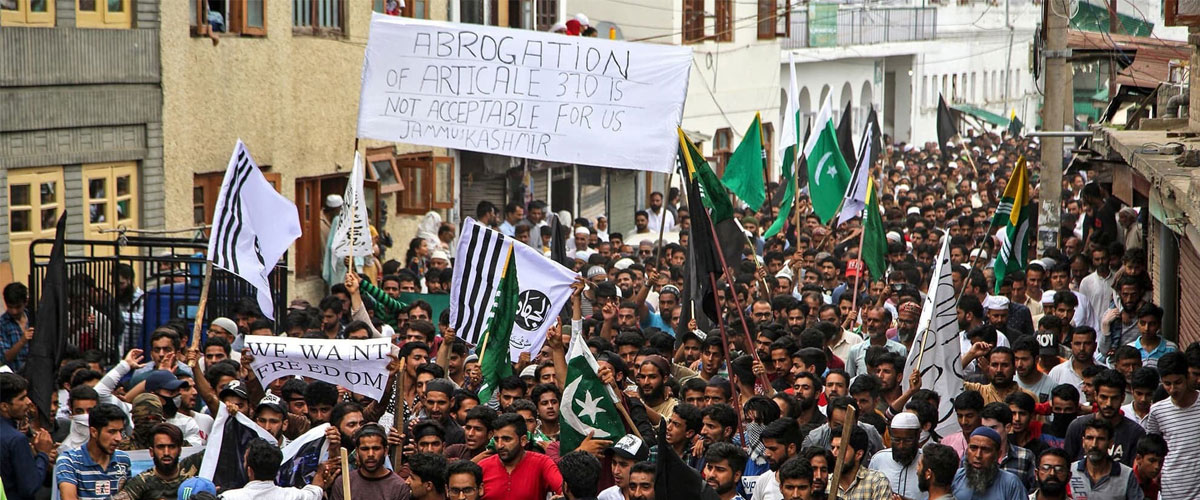
Every 5 February, Kashmir Solidarity Day is observed in Pakistan and by Kashmiris across the world. What some dismiss as a symbolic or regional observance is, in truth, a moral summons to the international community: a reminder of a people abandoned by history, law, and conscience. At a moment when the global order is shifting—when alliances realign, conflicts redraw borders, and human-rights rhetoric is tested—Kashmir poses a defining challenge to the credibility of the rules-based international system.
The roots of the dispute reach back to the violent and unfinished process of 1947 Partition. As British rule ended, princely states in the Indian Sub-continent were expected to accede to India or Pakistan according to geography and the will of their people. Jammu and Kashmir, with an overwhelming Muslim majority and deep social, economic and geographic ties to what became Pakistan, should have followed that logic. Instead, the state became an exception that condemned its people to decades of conflict.
Maharaja Hari Singh, a Hindu ruler of a predominantly Muslim population, presided over repression that culminated in mass killings and displacement in Jammu. When popular uprisings in Poonch and elsewhere favoured accession to Pakistan, the Maharaja solicited India’s military assistance and signed an Instrument of Accession in October 1947—an act Pakistan denounced as coerced and illegitimate. India’s intervention turned the matter into the first Indo-Pak war and brought the dispute to the United Nations. The UN Security Council recognised Jammu and Kashmir as disputed territory and called for a free and impartial plebiscite under its supervision—resolutions that remain unimplemented and therefore continue to constitute an outstanding international obligation.
Over subsequent decades, Indian policy in the territory moved from political consolidation to legal and demographic re-engineering. The territory’s limited autonomy was progressively eroded, culminating in the unilateral revocation of Articles 370 and 35A on 5 August 2019. That act was more than a domestic constitutional change: in a disputed territory, it represented an attempt to alter political status and demographic balance without the consent of the people whose fate it determined.
Today, the Indian Illegally Occupied Jammu and Kashmir (IIOJK) is among the most heavily militarised regions on earth. Beneath the region’s scenic valleys lies a daily reality of curfews, communication blackouts, mass detentions, enforced disappearances, and extrajudicial killings. These measures are not sporadic excesses; they are instruments of governance that have intensified, not alleviated, suffering. Kashmir Solidarity Day exists because that suffering did not abate—it deepened.
What is unfolding in Kashmir must be seen in two connected dimensions: the humanitarian reality on the ground, and the broader ideological transformation within India that has given rise to majoritarian extremism. Over the past decade, Hindu nationalist narratives have reshaped institutions, media, and public discourse, increasingly portraying religious minorities as internal threats and dissent as treachery. Kashmir has become the most extreme manifestation of this trend, a testing ground for policies that include political disenfranchisement and demographic intervention.
Scholars of mass atrocities recognise recurring stages—identification, dehumanisation, militarisation, collective punishment, demographic engineering, and silencing of dissent. Elements of this pattern are visible in Kashmir: a targeted population treated as a security problem rather than a people with political rights; laws and policies that enable outsiders to settle and alter the region’s character; and comprehensive information controls that conceal the lived reality of ordinary civilians. Labelling all resistance as “terrorism” does not absolve a state of its responsibilities under international law; nor does it erase the distinction between legitimate anti-occupation resistance and criminal violence.
From a legal standpoint, India’s position is difficult to defend. Jammu and Kashmir remains internationally recognised as a disputed territory; UN Security Council resolutions calling for a plebiscite have never been rescinded. The UN Charter prohibits the acquisition of territory by force, and international humanitarian law forbids collective punishment and the targeting of civilians. The systematic use of arbitrary detention, excessive force, and prolonged communication blackouts contravenes core human-rights norms to which India is a party. Unilateral domestic measures cannot nullify international obligations.
The international community’s prolonged silence and selective outrage have consequences far beyond South Asia. When powerful states violate international law without meaningful response, they erode norms that protect vulnerable people everywhere. If the right of self-determination can be effectively buried in Kashmir, it can be denied elsewhere. If demographic engineering becomes normalised in one disputed territory, it sets a precedent.
Kashmir Solidarity Day is not a parochial ritual. It is a demand for global responsibility. Pakistan’s stated position—that it will accept the outcome of a UN-supervised plebiscite—aligns with international law and the principle of self-determination. The Kashmiri demand is elemental: let the people decide.
As geopolitical priorities shift and strategic calculations grow more complex, moral clarity must not be the first casualty. Economic interests and alliances cannot justify turning a blind eye to sustained oppression. History does not forgive neutrality when injustice is plain and persistent.
The people of Kashmir have waited for more than seven decades. They have buried their dead, raised orphaned children, and maintained hope under conditions many would find unbearable. Kashmir Solidarity Day is a call to the world: choose law over might, justice over convenience, and humanity over silence. The credibility of international law, the prospects for peace in South Asia, and the future of global justice depend on it. The question is no longer whether the world should care; it is how long it can afford not to.