
Author

Iran’s Regional Deterrence Strategy
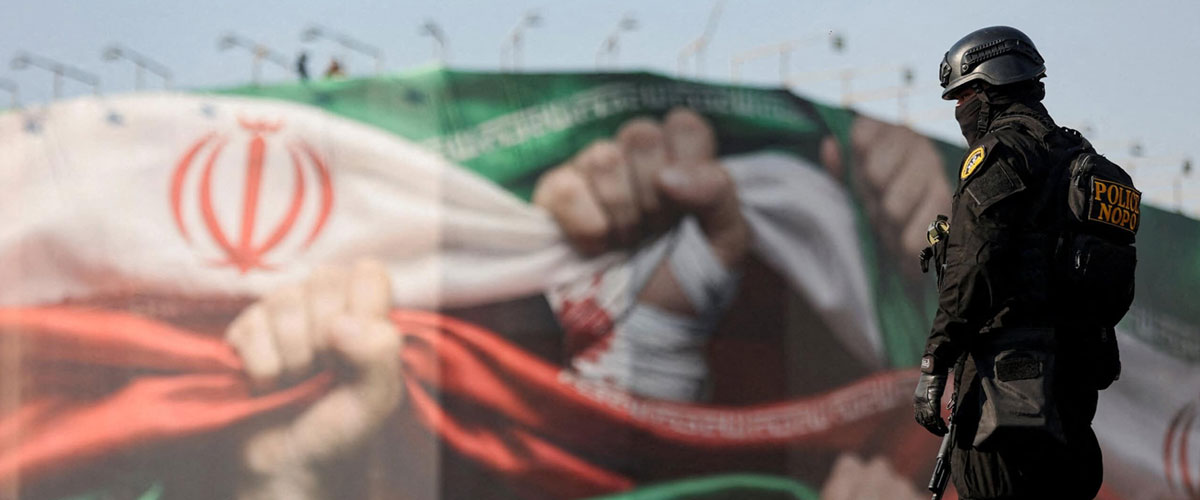
ISLAMABAD: Turkiye’s President Recep Tayyip Erdogan Monday warned the Iranian government against taking “provocative steps” after Nato defence systems intercepted a second Turkey-bound ballistic missile launched from Iran.
“Despite our sincere warnings, extremely wrong and provocative steps continue to be taken that will jeopardise Turkiye’s friendship. One should not engage in such behaviour,” he said, adding, “Persistence and stubbornness in wrongdoing should be avoided”.
Turkiya is the 9th neighboring Muslim country attacked by the Iranian regime after it came under Israeli-American attack last week. Other Muslim countries which are already under Iranian attack include Saudi Arabia, UAE, Bahrain, Qatar, Kuwait, Oman, Jordan and Iraq.
The only thing which is similar among these Muslim states is that all of them host American military presence on their territory. But then Iranians are not only targeting American military bases in these countries. Iran has carried out attacks against civilian targets and energy infrastructure in these Muslim states.
Military experts believe that Iran is trying to create a deterrence against Israel-American attacks on its territory. Iranian attacks in these nine countries have not only somewhat successfully destroyed American military bases, they have also caused a disruption of the global economic system as far as it is based in this part of the world.
Iran intends to achieve two objectives with the targeting of civilian as well as military targets in these countries. Firstly targeting energy infrastructure and civilian sites like airports and hotels, Iran aims to disrupt the global economy and regional trade. The goal is to force Gulf leaders to pressure Washington into de-escalating or ending the war due to the rising economic costs.
Iran views the U.S. military bases hosted by neighboring countries as integral to the system used to attack it. It uses these strikes to demand that neighbors stop allowing their land or airspace to be used for operations against Iran.
Experts believe that Iran is employing a “war of attrition,” using waves of less sophisticated drones and missiles to force regional and Western forces to expend their limited stockpiles of high-end air defense interceptors. At home, the Iranian leadership uses these strikes to project strength and resolve to its domestic supporters, particularly after suffering high-level assassinations and damage to its sovereign territory.
Pakistan’s primary assurance has been that it will not allow its soil to be used for any attacks against Iran, while simultaneously warning Tehran that any aggression against Saudi Arabia triggers a Mutual Defence Agreement.
Tehran didn’t stop the attacks on Saudi Arabia even after Pakistan foreign minister and military leaders conveyed to the Iranian government that Saudi territory would not be used against Iran. Deputy PM Ishaq Dar confirmed Pakistan conveyed Saudi assurances to Tehran that the Kingdom’s territory would not be used by foreign powers (such as the US or Israel) to strike Iran.
It was simple maths: Americans and Israelis will attack Iran and Iran will carry out retaliatory strikes against all US bases in the region, which are located in UAE, Bahrain, Qatar and Kuwait.
Then why and on what basis Pakistani military leaders assured these Arab states that Pakistan will ensure their security.
Only a week before US-Israel strikes on Iran, Pakistani Chief of Defense Forces, Field Marshal Asim Munir assured UAE government that their security is integral part of Pakistan’s security.
The fact of the matter is that Pakistan doesn’t have the kind of military capability to defend against missile attacks.
Experts believe that Pakistan military doesn’t have the kind of capability needed to defend the Gulf States and Saudi Arabia against ballistic missile attacks These land forces could be used to defend against land attacks like Shia militia attacks from Yemen, Iraq and Lebanon
Pakistan is facing a dilemma : As Saudi Arabia is under attack from Iran, It would be politically very difficult for Pakistan to intervene in this situation, militarily much easier. If it is attacked by Israel, the situation will be politically very easy but militarily very destructive.
The Arab sheikhs will realize that in conventional attacks like ballistic missile and drone attacks, Pakistan has least utility. But there is a possibility that in the wake of this war, this region will potentially become a vast anarchy. Then Pakistan military manpower will be of much utility for smaller Gulf states.