Author

Iran Under Pressure: Pakistan’s Silent Vulnerability Next Door
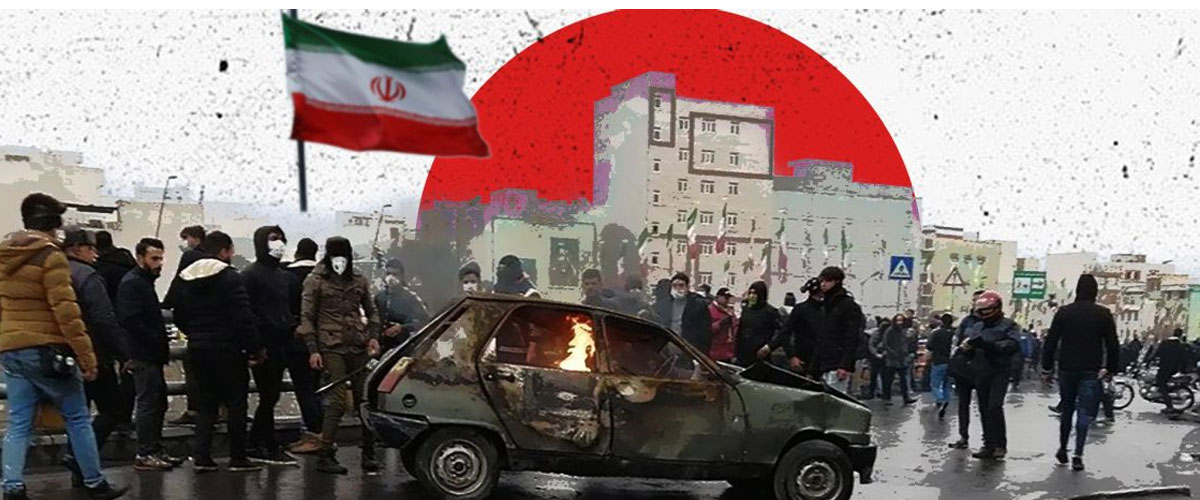
Islamabad: The sudden softening of rhetoric from Washington on Iran – with President Donald Trump claiming that Tehran has “stopped killing protesters” barely a day after US military assets were repositioned from parts of the Gulf – should not be mistaken for de-escalation. It reflects tactical recalibration rather than strategic retreat. The pressure architecture on Iran, shaped by US-Israeli convergence, remains firmly in place.
For Pakistan, Iran’s immediate neighbour, this moment is neither distant nor abstract. Yet Islamabad’s response so far – deliberate silence and declared neutrality – points less to strategic confidence than to a narrowing of options. In an era where instability is increasingly managed rather than resolved by great powers, proximity to crisis often becomes a liability rather than an advantage.
Despite recurring speculation about regime change, there is little evidence that Washington or Tel Aviv seek the collapse of the Iranian state. Post-Iraq and post-Afghanistan, the Western appetite for rebuilding broken countries has evaporated. The preferred approach today is sustained pressure without ownership: weaken adversaries internally, constrain them externally, and avoid responsibility for what follows. Israel’s interest lies in an Iran distracted inward, economically strained and politically fragmented. For the US, continued pressure keeps Tehran boxed in without triggering another prolonged Middle Eastern war. The flaw in this model, however, is familiar. Instability does not respect borders.
Iran’s internal unrest reflects the convergence of long-term economic distress, generational alienation from clerical authority, and elite fragmentation within the state. Historically, regimes under such pressure tend to securitise internally while externalising threats. This often produces heightened regional activity rather than strategic withdrawal. A weakened Iran is therefore not necessarily a quieter Iran. It is a more unpredictable one, prone to activating proxies, hardening borders, and relying on informal economic networks.
For Pakistan, this unpredictability is not theoretical. It plays out along a long and porous frontier that intersects with long-standing grievances in Balochistan. Militancy, criminal economies, and cross-border movement already challenge state authority in the region. Any erosion of Iranian control on its side of the border will complicate Pakistan’s internal security environment, not through dramatic incursions but through gradual erosion of control that is harder to detect and contain.
The economic dimension is equally underappreciated. While formal trade between Pakistan and Iran remains constrained by sanctions, informal cross-border commerce functions as a stabilising mechanism for peripheral regions. Fuel, food items, and consumer goods move through semi-regulated channels that sustain livelihoods otherwise excluded from Pakistan’s core growth narrative. Disruption of these flows – whether through tighter sanctions or Iranian internal disorder – will not immediately register in macroeconomic indicators. It will, however, intensify inflationary pressures and social stress in already marginalised areas, with political consequences that extend far beyond the border districts.
Sectarian equilibrium presents a third, more sensitive vulnerability. Pakistan has not resolved sectarian tensions; it has managed them through a combination of state oversight, elite consensus, and fatigue. Heightened pressure on Iran risks reactivating sectarian narratives domestically, not necessarily through mass mobilisation but through targeted radicalisation and proxy messaging. In a political environment where the state’s capacity to regulate extremist discourse remains uneven, this represents a latent but serious risk.
An often-overlooked factor is the Iran-Afghanistan-Pakistan triangle. Iran maintains influence networks in western Afghanistan and among Hazara communities, as well as economic and political stakes that intersect with Pakistan’s own interests. Any shift in Tehran’s internal capacity or strategic priorities will inevitably affect Afghan dynamics. For Pakistan, already managing a complex relationship with the Taliban government in Kabul, changes in Iran’s Afghan posture could complicate border management, refugee flows, and regional diplomacy. Whether Iran disengages or seeks to compensate for internal weakness through external activism, the pressure on Pakistan’s western frontier will increase.
Islamabad’s restraint is understandable in the short term. Public alignment would invite retaliation; overt mediation would lack credibility. Silence, however, becomes a liability when it is not accompanied by parallel diplomatic engagement. There is little evidence of Pakistan attempting to shape outcomes through quiet coalition-building with China, Turkey, Central Asian states, or Gulf intermediaries that maintain channels with Tehran. Nor has Islamabad articulated a regional narrative that frames Iranian stability as a shared neighbourhood concern rather than a bilateral issue. This absence of initiative points to a deeper problem: Pakistan’s declining relevance in regional diplomacy outside moments of acute crisis.
If Iran stabilises, Pakistan absorbs manageable shocks. If Iran reforms, Pakistan adapts. But if Iran fragments – even partially – Pakistan faces a convergence of pressures: refugee movements without international funding, security spillover without Western assistance, and economic disruption without compensatory aid. Unlike Europe, Pakistan cannot externalise costs. Unlike Gulf states, it cannot purchase insulation. And unlike Israel, it cannot shape the threat environment.
Iran under pressure is not Pakistan’s ideological concern. It is a test of Pakistan’s ability to manage proximity to instability in an era where great powers increasingly outsource disorder to the periphery. Neutrality, in this context, is not a strategy. Relevance is. Without proactive engagement and contingency planning, Pakistan risks once again becoming a silent neighbour paying the price for decisions taken elsewhere