Author

Military Operations in Pak-Afghan Border Areas: Who is in Charge?
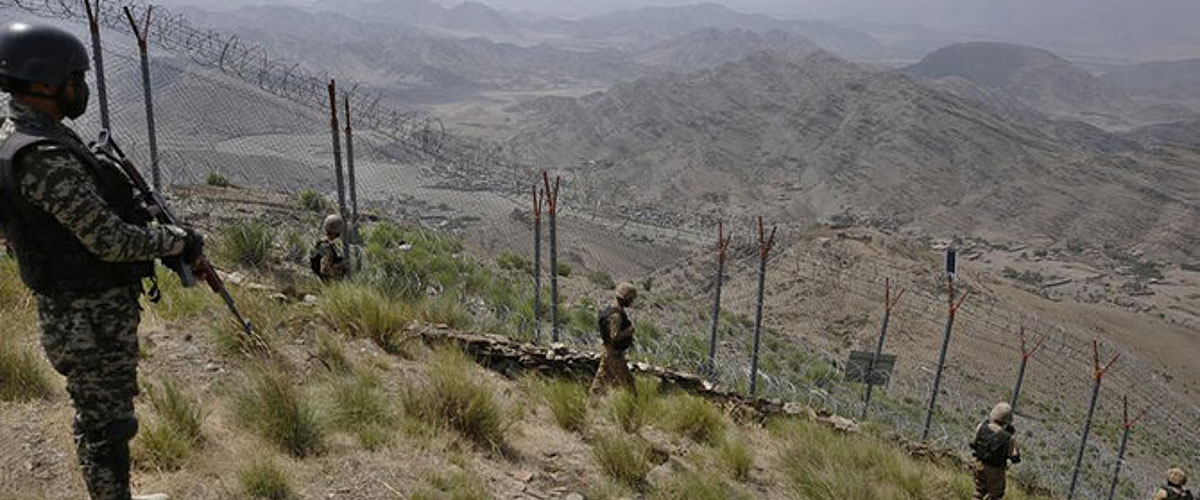
ISLAMABAD: Federal government legal position on military operations in Pak-Afghan border areas, which lie within the territorial boundaries of Khyber Pakhtunkhwa, is fortified with constitutional justification–a justification based on constitutional provisions that give the Federal Government final word on issues related to national defense and security.
Constitutional Experts say that the provincial government could invoke the constitution to call in military or federal forces in aid of civil administration to enforce law and order. But it cannot under the constitution challenge or question the authority of the federal government to direct the military to take appropriate measures or steps for the defense and security of the country, even if the steps that are being contemplated have to be carried out within the provincial territory boundaries.
In the last two days the officials of provincial government have stated vehemently that the military operations that are being carried out in Tirah valley (Khyber District) have been imposed on the provincial government by the federal government. They have repeatedly asserted that the provincial government and provincial assembly have not been consulted for these military operations.
The KP government officials have been stating that the stakeholders, including tribal elders and political leaders, should be consulted before operations like Azm-i-Istihkam are conducted.
Chief Minister Suhail Afridi has openly and vocally opposed the military operations in the border districts of Khyber Pakhtunkhwa. He has recently toured Karachi and Lahore where he openly challenged the wisdom of carrying out military operations in the border districts. He said that military options alone cannot solve the problem of militancy. Besides, he said that the military operations in the past have incurred a great social cost for the tribal society, where the operations are being conducted.
The government constitutional experts have developed a full fledged constitutional argument in support of what the military is doing in tribal districts under the direction of the Federal government, “Article 243 of constitution vests the command and control of the Armed Forces squarely in the Federal Government. Defence is part of the Federal Legislative List, meaning it is an exclusive federal domain, removed from provincial jurisdiction” said a government constitutional expert.
“Article 245 of the constitution mandates that the Armed Forces shall, under the directions of the Federal Government, defend Pakistan against external aggression or threat of war. It also allows the military to act “in aid of civil power” when called upon”
Thirdly and finally article 149(4) of the constitution allows the Federal Government to give directions to a province to prevent any “grave menace to the peace or tranquility” of Pakistan”.
The constitutional experts say that the provincial government doesn’t have any Veto Power in this regard, “While provincial governments can request military aid (under Article 245), they do not have a constitutional “veto” over federal decisions regarding national defense or operations against external/border threats” said the constitutional expert. Besides, the Federal government’s directions issued under Article 245 for military operations cannot be called into question.
The tussle between provincial government and federal government on the question of military operations in border districts of KP is unprecedented in the more than 20 years of persistent military operations in erstwhile tribal areas.
This is for the first time in 20 year of counter insurgency operations in tribal districts that Pakistan’s political system was witnessing such deep rooted animosity between different players, consensus among which was considered vital for the success of military operations in the past.
In Pakistan’s political context, the fact that the Federal government is led by PMLN and provincial is led by PTI, means that there will be perpetual political tensions between the two rival national level parties. However, since the time Pakistan joined the war against terror and started its own operation against tribal militants, there never have been an occasion when rival political groups took conflicting positions on the question of the utility of the military operations in border districts