Author

Grand Jirga Will Review Tirah Valley Situation
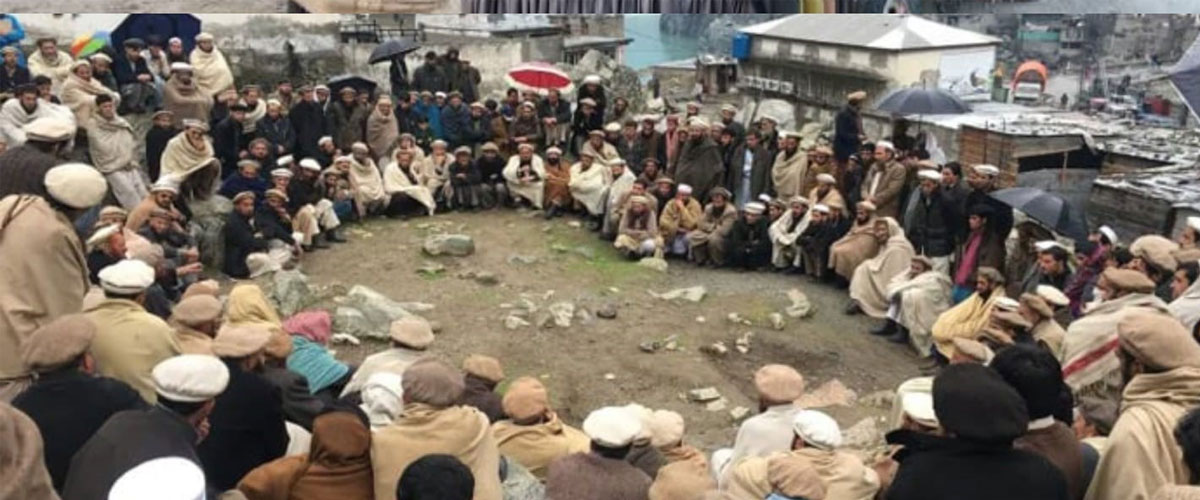
ISLAMABAD: In a major escalatory step in his tensions with the Federal government, the Chief Minister of Khyber Pakhtunkhwa, Suhail Afridi has convened a Grand Jirga “to address the controversial displacement of residents from the Tirah Valley as a result of what the provincial government dub as military operation.
The chief Minister’s statement mentioned 1st February as the day for the Grand Jirga of Afridi tribe to discuss the situation in Tirah Valley, where, according to the Federal government, more than 500 TTP fighters are hiding.
Military has carried out routine intelligence based operations in Tirah Valley against the militants. However, Federal Minister for Defense Khawaja Asif said that there was no question of a full-fledged military operation in Tirah valley.
The government and the military distinguish between full scale military operation and Intelligence based raids on militant hideouts–while full scale military operations involve Division level engagement of army troops, Intelligence based raids involve small parties of troops going after militant hideouts.
Chief Minister Suhail Afridi has been advocating against military operations in border districts of KP and has dubbed present military activity in the Tirah valley as full fledged military operations.
CM Afridi said that a jirga of the Afridi tribe had been scheduled for Sunday, February 1, 2026. He warned that if the federal government does not retract claims that the displacement is “voluntary” and issue an apology, he will escalate this to a grand jirga of the entire Pashtun nation.
The Chief Minister alleges that a military operation was “imposed” on Tirah behind closed doors, forcing residents to evacuate their homes during harsh winter conditions. He maintains that a 24-member committee of tribal elders was coerced into signing an evacuation agreement.
Federal Defence Minister Khawaja Asif in a press conference on Tuesday denied any ongoing or planned large-scale military operation in Tirah. They insisted the movement of people is a “routine seasonal migration” due to winter weather, a practice documented since the British era.
The Tirah valley situation and the political mess around it has exposed our political system. The conflict between two rival political parties can put a halt to the system. Both are pursuing senseless political campaigns. Yet the positions of both these parties–one federal government and other provincial governments–reflect some aspect of the reality of tackling militancy in border districts.
PMLN position–which is in fact the military’s position–that intelligence based operations are a must is one aspect of reality, which must be taken into account. That state action is required in the area is evident. Sources say that militants belonging to IS-K, the Gul Bahadur group and Lashkar-i-Islam as well as Jamaatul Ahrar are all present in Tirah. These elements threaten all of Khyber district and Peshawar. Hence, an operation appears to be essential.
PTI position–which is in fact the position of jailed PTI founder, Imran Khan–that social cost of military operation is very high. Evacuating residents have faced extreme winter weather, with heavy snowfall and snowstorms leaving hundreds of families stranded. Both are rational positions and must be taken into account in the process of policy making. Yet they are fighting like insane or mad people and don’t listen to each other. This exposes the political system as non-functional. Military operations in border districts started in 2004. At that time there was military rule in the country. The party which was ruling the province belonged to MMA and the central government was led by Muslim League.
Public Opposition vs. Private Cooperation: While the MMA vocally condemned the operations and Pakistan’s friendship with the U.S., they generally did not interfere with the actual military or law enforcement actions on the ground. The PTI have always supported dialogue over military operations. But supported military operations after the APS attack.