Author

Massive Deployment of Troops in Balochistan is Need of The Hour, Says Asif
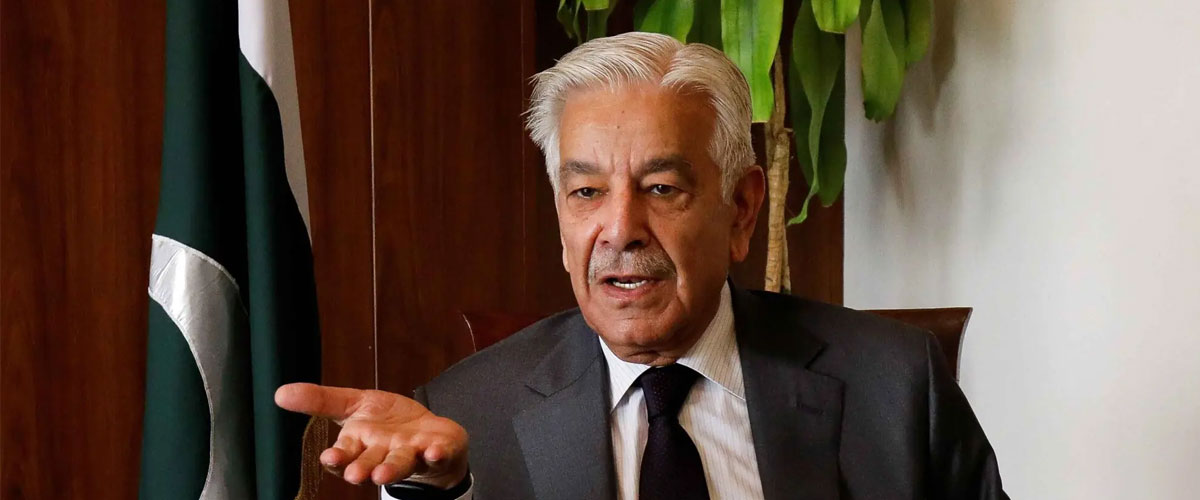
ISLAMABAD: Pakistan’s Defense Minister, Khawaja Asif has said that there was an urgent need for deployment of Pakistani troops in Baluchistan on a massive scale in the context of rising violence against state institutions and civilian population in the province.
Asif was briefing the National Assembly on the latest security situation in the wake of spate of terrorist attacks in 11 different parts of the province a day ago.
He pointed out that Balochistan was the largest province of Pakistan in terms of area, where a single person was residing every 35 kilometres.
“Controlling this is way more difficult than a populated city or area, and there is a need for the deployment of our forces on a massive scale. Our forces are deployed there and taking action against them, but there is a physical handicap when it comes to guarding and patrolling such a large area,” he added.
Official figures quoted by defense minister in his speech in the national assembly on Monday reported that 177 terrorists had been killed, 17 personnel — including 10 of police, six of Frontier Corps and one Levies — had been martyred and 33 civilians had lost their lives, mainly in Gwadar, in a span of two days.
The terrorists launched simultaneous attacks on 11 different cities of Balochistan province in which government offices, security forces, police and banks were targeted.
Khawaja Asif said that the state’s central objective is that “nobody in Pakistan will be allowed to rationalise violence”.
“When you try to rationalise violence or dress it up as a freedom movement — it is not acceptable because it is not true. This is a cover to legitimise criminal activities,” he said while addressing the National Assembly.
The terrorist attacks have been claimed by the Balochistan Liberation Army (BLA) as part of their “Operation Herof 2.0,” as they targeted various locations including Quetta, Gwadar, and a high-security prison.
Separatist, Baloch Liberation Army—a militant organization led by an exiled tribal chief—has been actively engaging in an insurgency across Balochistan.
Baluch separatists have been engaged in a low-key insurgency against the Pakistani military and government since 2006 when a tribal chief was killed in a military operation. Baluch separatists accuse the Pakistani government and Chinese port company of exploiting natural resources of Baloch province. The Gwadar deep water port is a major project of the China-Pakistan Economic Corridor on which Beijing is expected to spend more than $50 billion.
The project aims to connect western China with the Indian Ocean via Pakistan, and is one of the axes of China’s broad “Belt and Road” initiative that aims to improve trade links between Asia, Europe, Africa and even beyond by building ports, railways, airports and industrial parks.
Balochistan is a largest province of Pakistan with poor, sparsely populated southwestern Pakistan, bordering Afghanistan and Iran. The region is rich in fuel and minerals, but its residents complain of marginalization and not benefiting from its natural resources.Pakistan has been facing two insurgencies which have intensified its militant activities since Taliban take over of Kabul in August 2021.
Balouch separatists are secular minded militant organizations which have their origins in the 1976 Baluch rebellion against the Pakistani state. Baluch insurgency was revived in 2006 after a Baloch tribal chief, Akbar Bugti was killed in a military operation.
Baluch militants had been operating from Afghanistan since the American invasion of Afghanistan in 2001 as they had their camps in the South of Afghanistan in the Pak-Afghan border areas.
After the Taliban took over Kabul, they forced Baloch separatists to shift their camp into Iranian territory from, where they now operate against Pakistani security forces. In the past Baloch Liberation Army has claimed responsibility for several terrorist attacks against Pakistani security forces and government.