Author

The India–United Arab Emirates Agreement: A Warning Bell For Pakistan or a New Regional Alignment?
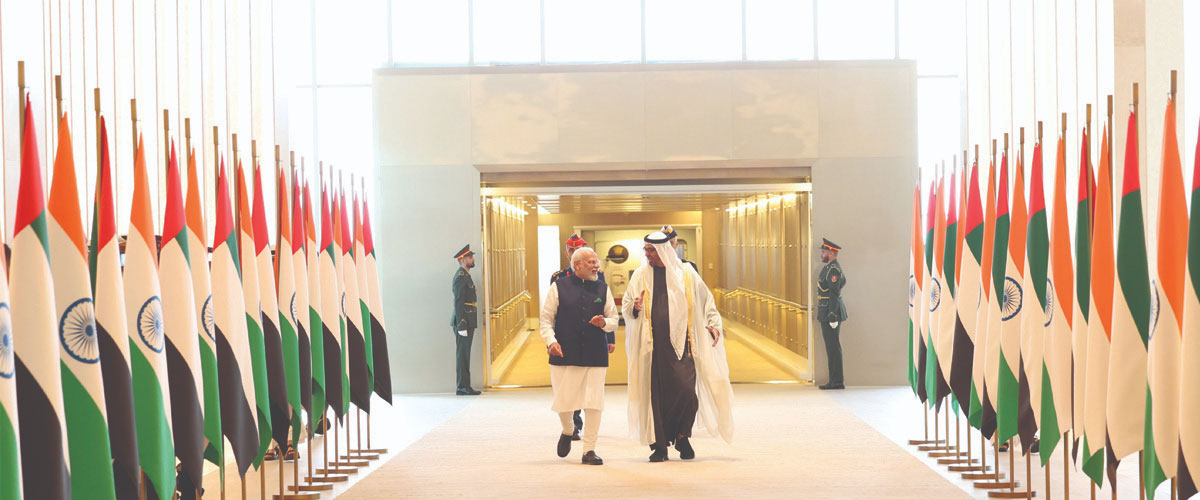
The politics of the Middle East and South Asia has entered a new era, where relationships are no longer shaped solely by religious or historical foundations, but increasingly by economic interests, defense cooperation, and the strategic priorities of global powers. In recent years, the growing agreements and strategic partnership between India and the United Arab Emirates have not only given rise to a new regional alignment but have also raised several questions and concerns for Pakistan.
For a long time, the United Arab Emirates was considered a close friend and brotherly country of Pakistan. Millions of Pakistanis are employed there, remittances from the UAE serve as a backbone of Pakistan’s economy, and the religious and cultural ties between the two nations have remained strong. However, in recent years, the increasing closeness between the UAE and India has significantly altered the region’s diplomatic dynamics.
The agreements between India and the UAE are no longer limited to trade alone. They have expanded into sensitive areas such as defense, cyber security, intelligence cooperation, and maritime security. Through economic corridors, major investment projects, and joint military exercises, both countries have transformed their relationship into a full strategic partnership.
This development is seemingly being pursued in the name of economic growth and regional stability, yet for Pakistan, it may also be seen as a warning sign. India is already striving to establish its dominance in the region, and if it gains political and defense support from Gulf countries, Pakistan’s diplomatic position could weaken.
The effects of this new alignment are also evident on the issue of Kashmir. In the past, Gulf countries were generally viewed as being closer to Pakistan’s stance, but now economic interests with India have made these countries more cautious and silent. The UAE’s apparent coldness or neutrality on the Kashmir matter may become a source of concern for Pakistan.
However, viewing this situation only through the lens of threat does not present the complete picture. The reality is that the world is changing rapidly, and nations are making decisions based on their national interests. The UAE is also an emerging global economy that seeks to expand its commercial and defense outreach. India represents a large market and an important center for investment, which is why the Emirates is strengthening its ties with New Delhi.
For Pakistan, the real question is not why the UAE is moving closer to India, but rather how Pakistan can make its foreign policy more active, balanced, and effective. Pakistan must strengthen its relations with Gulf countries not merely through emotional slogans, but through economic partnerships, investment opportunities, technology collaboration, and defense cooperation.
Furthermore, Pakistan must focus on economic stability and internal strength in order to highlight its importance in the region. A weak economy and political instability affect any country’s diplomatic influence. If Pakistan can overcome its internal challenges, no regional alignment can isolate it.
The growing cooperation between India and the UAE is a reality and part of a broader new regional alignment. For Pakistan, it is both a challenge and an opportunity. A challenge because the diplomatic balance is shifting, and an opportunity because Pakistan can reshape its foreign policy according to new regional and global demands.
In conclusion, it is fair to say that in international politics, there are no permanent friends or enemies—only permanent interests. Pakistan must also recognize this reality and strengthen its strategy in the region; otherwise there remains a risk of falling behind in the new regional order.