Author

Regional Connectivity, Political Will & Sustainable Development
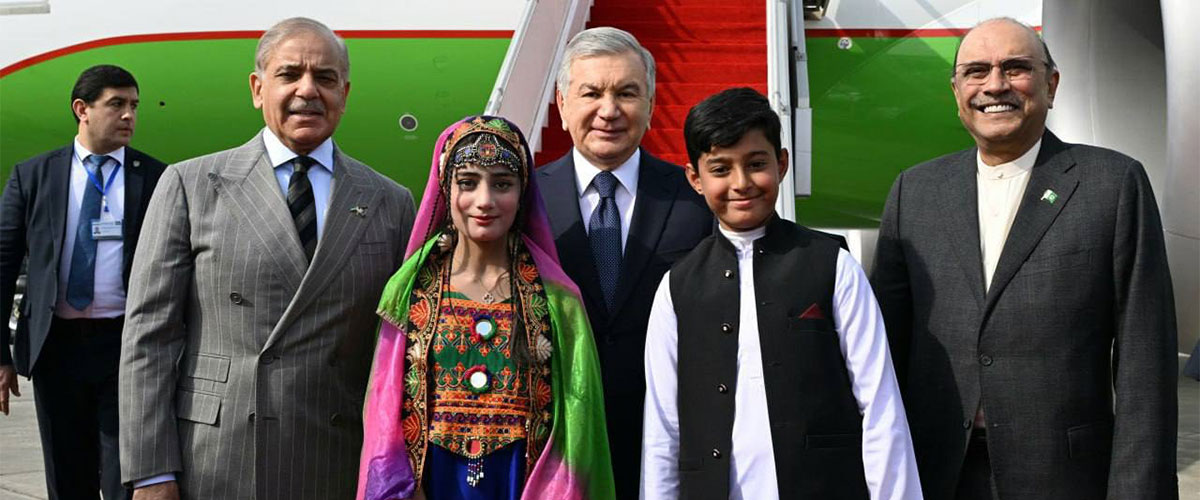
The forthcoming state visit of President of the Republic of Uzbekistan Shavkat Mirziyoyev to the Islamic Republic of Pakistan marks an essential milestone in Uzbekistan’s long-term foreign policy strategy to strengthen connectivity between Central and South Asia. The visit is expected to elevate bilateral relations to a new qualitative level, deepen mutually beneficial cooperation in the economic, social, transport, and energy sectors, and contribute to sustainable development through enhanced regional security.
Against the backdrop of profound transformations in the global economy and international relations, issues such as the reconfiguration of trade routes, energy security, food supply, and climate change have become increasingly strategic. According to World Bank estimates, global logistics costs have increased by an average of 25-30 percent over the past five years, and searching for alternative transport corridors is a strategic necessity for landlocked countries.
In this context, Uzbekistan’s foreign policy, based on openness, pragmatism, and mutual benefit, prioritizes strengthening ties with neighboring regions. As President Shavkat Mirziyoyev has emphasized, the core objective of Uzbekistan’s foreign policy is to create a peaceful, stable, and economically interconnected regional environment.
Pakistan occupies a key place in this strategic vision. Owing to its geographical location, large domestic market, and developed port infrastructure, Pakistan serves as a reliable partner for Uzbekistan’s access to South Asian and Indian Ocean markets. Bilateral relations are grounded in mutual respect, sovereignty, and non-interference, and extend beyond national interests to contribute to broader regional stability.
Afghanistan remains a critical element of this cooperation. Uzbekistan and Pakistan share the view that Afghanistan should be seen not as a source of threat but as a country whose stability can be ensured through economic integration. As President Shavkat Mirziyoyev stated at the United Nations, lasting peace in Afghanistan is unattainable without its inclusion in regional economic processes.
Although current trade volumes between Uzbekistan and Pakistan do not yet reflect their full potential, World Bank analyses suggest that reducing transport costs could increase bilateral trade by two to three times. Pakistan’s market of over 240 million people offers significant opportunities for Uzbek exports, particularly in textiles, agriculture, food processing, pharmaceuticals, and chemicals, including through the establishment of high-value-added joint ventures.
Transport connectivity remains a key constraint for Uzbekistan’s foreign trade. The implementation of the Trans-Afghan railway and road corridors would significantly shorten access to seaports, reduce delivery times to 10-12 days, lower logistics costs, and enhance the competitiveness of Uzbek exports. Access to Pakistani ports would fundamentally transform Uzbekistan’s role as a regional transit hub.
Energy cooperation is another strategic dimension. According to the International Energy Agency, energy demand in Central and South Asia is expected to grow by over 30 percent by 2030. Uzbekistan’s recent progress in green energy development, combined with Pakistan’s experience in solar and wind power, creates substantial potential for joint projects in renewable energy, energy efficiency, and the green economy.
Beyond political and economic agreements, a long-term partnership is ultimately built on people-to-people ties. Cooperation in education, science, culture, and tourism, including student exchanges and joint research, strengthens mutual trust and creates a durable foundation for strategic relations independent of political cycles.
President Shavkat Mirziyoyev’s state visit to Pakistan is therefore not merely a diplomatic event, but a clear demonstration of political will to build a stable, interconnected, and prosperous space between Central and South Asia, contributing to Uzbekistan’s national sustainable development goals