Author

Instability in Iran Could Bring Refugees Into Pakistani Balochistan
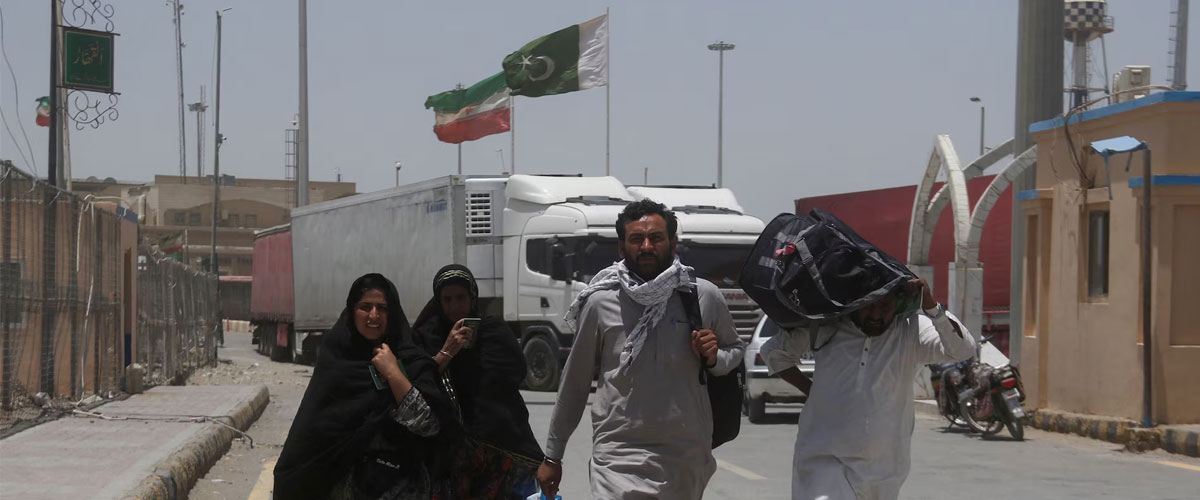
ISLAMABAD: UN officials have predicted that the political instability in Iran could trigger a large-scale exodus of Iranian refugees into Pakistani Balochistan.
A statement released on Thursday from UN Headquarters,UN official for refugees, Tom Fletcher said Pakistan already hosts some 1.3 million registered refugees and it has limited capacity to absorb more.
He predicted that the more refugees from Iran could have catastrophic consequences for Pakistan’s social and economic life.
“Afghanistan was already experiencing an escalation of hostilities with Pakistan, with more than 60,000 people being driven from their homes. Nearly 22 million people already need humanitarian support” he said
“We are constantly assessing the damage and the scale of the growing humanitarian response required, and scaling up where necessary and possible. I have activated contingency plans across Iran and the region — including in Afghanistan, Pakistan, Lebanon, the OPT, Syria and Yemen. The limited presence of international NGOs and operational space in Iran makes the challenge there greater,” he said.
The humanitarian fallout from the escalation of violence in the Middle East is increasingly daunting and civilians are paying the price across the region.
The UN relief coordinator regretted that respect for international law is being challenged and eroded again. Each time civilian infrastructure is struck, access is restricted and aid is politicised, the space for humanitarian action shrinks.
The economic cost of the conflict would be horrendous. The Persian Gulf is the critical choke point through which 20 percent of global oil supplies pass through. It is likely that Iran will make an attempt to mine and close the Persian Gulf, which will make the energy prices skyrocket, a development which would trigger a global recession.
Some of the military experts have listed the Iranian option of closing and mining the Persian Gulf as its most potent deterrence against any American attack. The industrial machines of American allies like WEstern Europe and Japan would be worst affected by closure of Persian gulf and Strait of Hormuz, a scenario which could deter Americans from attacking Iran.
It is extremely naive of American experts to predict the collapse of Iranian central authority in case of persistent US strikes inside Iran. They have not bothered to ponder upon the consequences of such collapse. Experts point out that in case of collapse of central authority in Iran its 90+ million people could descend into civil war or fragment along ethnic lines (e.g., Kurds, Baluchis), creating a massive refugee and humanitarian crisis similar to the aftermath of conflicts in Syria or Libya.
Pakistan might emerge as the worst affected country from any possible conflict in the Persian Gulf with its economic taking nosedive. Pakistan relies heavily on Middle Eastern energy routes. A conflict would likely spike global oil prices and disrupt supply, leading to soaring inflation and higher electricity costs for an already struggling economy. In a proactive move on January 29, 2026, Pakistan secured a $430 million crude oil deal with the U.S. to reduce its critical reliance on the Strait of Hormuz.
Pakistan shares a 900 kilometers border with Iran with Iranian Balochistan providing sanctuaries to Pakistan Baloch rebels. The crisis in Iran might embolden Baloch separatist elements.