Author

Russia Praises The Taliban Pakistan Accuses Them Why The Difference?
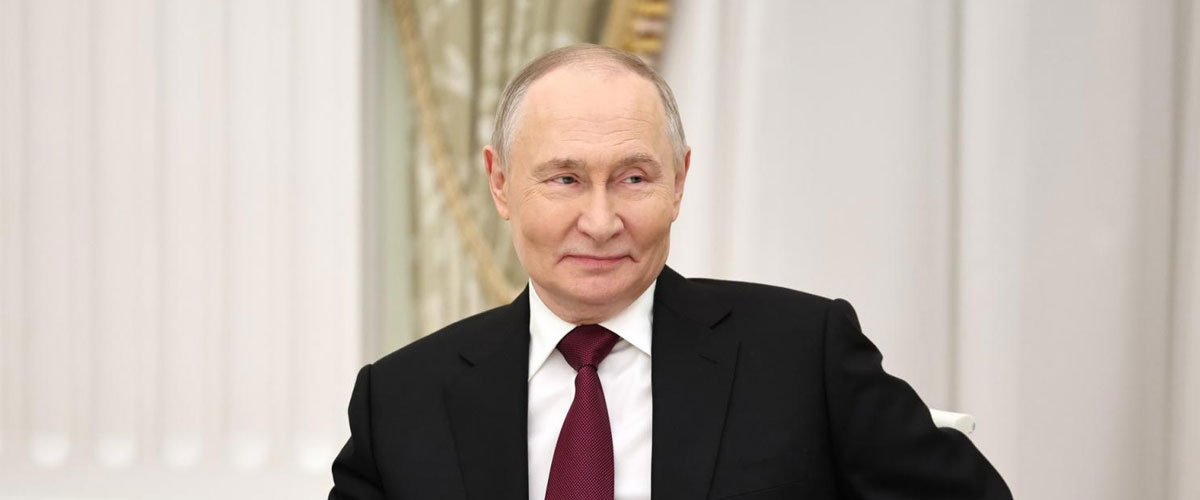
In a recent interview with Indian media, Vladimir Putin praised the Afghan Taliban for their campaign against extremist groups in Afghanistan, particularly Islamic State – Khorasan Province (ISIS-K). According to Putin, the Taliban have taken effective measures to combat terrorist organizations operating in the country.
Pakistan’s military leadership, however, presents a sharply different assessment. In a February 2026 press conference, military spokesman Ahmed Sharif Chaudhry argued that the distinction between ISIS-K and the Taliban had become increasingly blurred and accused the Afghan authorities of facilitating militant groups such as Pakistani Taliban (TTP) and Al-Qaida.
As far as Afghanistan’s terror landscape is concerned, Russians are particularly concerned about the situation in Northern Afghanistan, where ISIS-K had established bases, which, according to Afghan Taliban claims, have been destroyed. Whereas Pakistan’s main concern is Eastern Afghanistan, where, since 2014, Pakistani Taliban continue to operate, in connivance with Afghan Taliban, against Pakistani government and military targets inside Pakistani territory.
Afghan Taliban seem to be sympathetic towards Russian complaints against ISIS-K and turn a deaf ear to Pakistani complaints against TTP fighters. Initially in the wake of Taliban takeover of Kabul, Pakistani and Russian intelligence jointly decided to provide technical and intelligence support to Afghan Taliban to make it capable of dealing with ISIS-K threat. Somehow the idea was dropped at a later stage.
Russia doesn’t have a border with Afghanistan, but three former Soviet Central Asian states, Turkmenistan, Uzbekistan and Tajikistan–share a border with Northern Afghanistan. The present Russian state considers these three Central Asian States to be its security backyard.
Russians were paranoid about the presence of ISIS-K in Northern Afghanistan even before the US forces withdrew from this war-torn country. In Feb 2018, in a joint Press conference with the then Pakistan Foreign Minister, Khawaja Asif, Russian Foreign Minister Sergei Lavrov accused the US military of bringing ISIS fighters from Syria into Northern Afghanistan. The United States, on the other hand, has accused both of these countries of either actively or tacitly backing the Taliban.
Both Pakistan and Russia have been at the receiving end of ISIS-K led terrorism repeatedly since US withdrawal from Afghanistan and Taliban takeover of Kabul in August 2021. Russian Paranoia with ISIS-K reached new heights in the wake of March 2024 Moscow concert hall attack, for which ISIS-K claimed responsibility. In Pakistan, after multiple attacks since August 2021, ISIS-K recently claimed responsibility for a suicide bombing in a Shia Mosque in Islamabad only a month ago.
Why, despite coordinating their efforts in Afghanistan, Russians and Pakistanis are so divergent in their assessment of Afghan Taliban’s performance with regards to hunting down the terror groups that pose a threat to both the countries? Why are two regional actors interpreting the same militant landscape in Afghanistan so differently?
This divergence stems from the Afghan Taliban’s different treatment of terror groups, which are perceived as a threat by Russia and Pakistan respectively.
Taliban developed a deep animosity toward ISIS-K, which was posing a threat to Central Asian States, with the proximity of its base in Northern Afghanistan to the borders of Central Asia. There have been reports that Russian intelligence started propping up the Afghan Taliban against ISIS-K even before the US withdrawal from Afghanistan.
Afghan Taliban developed deep animosity towards ISIS-K after the latter started to attract recruits from disgruntled members of the former’s organization after 2015. Since coming to power the Afghan Taliban have launched a military campaign against ISIS cadres in university and colleges of urban Afghanistan.
On the other hand, Pakistanis are deeply annoyed with Afghan Taliban for their continued support of Terik-e-Taliban Pakistan (TTP), a group of Pakistani militants which have stepped their violence against Pakistani military and government installations and personnel since Afghan Taliban’s takeover of Kabul in August 2021. According to the Pakistan Institute for Peace Studies (PIPS), a research organization, terrorist attacks surged by 73% during the first 21 months of Taliban rule compared to the same period before the takeover.
Russians think that with their bases in Northern Afghanistan radical Sunni groups like ISIS-K could destabilize Central Asia. After Russian started perceiving this threat, they began their pragmatic interaction with the Taliban in around 2015. In March 2018, the commander of US forces in Afghanistan General John Nicholson alleged that Russians had been providing medium and heavy machine guns and night-vision goggles to the Afghan Taliban. Russia formally recognized the Taliban-led government in July 2025.
Perhaps emboldened by Russian support or perhaps keeping in view their old alliances with Pakistani militant groups, Afghan Taliban turned a deaf ear to repeated requests of the Pakistani government to curb the cross-border attacks of Pakistani Taliban on Pakistan military and government installations inside Pakistani territory. This led to deterioration of relations between Islamabad and Afghan Taliban. In the last days of February 2026, Pakistani military launched military strikes against TTP hideouts in Afghanistan. These military operations are still ongoing.
Pakistan’s position on the terror landscape in Afghanistan was reinforced by The UN Security Council investigators, who in their latest report to UNSC describe Afghanistan under the Taliban as a “permissive environment” for various terrorist groups.
The UN report says Afghan intelligence services host 20 regional terror and militant groups in the territory under their control.
Russians seem to believe that Afghan Taliban and the territory of Northern Afghanistan under their control could act as a buffer for Central Asian States of Turkmenistan, Tajikistan and Uzbekistan. Reports in Afghan media suggest that Afghan Taliban have killed hundreds of members of ISIS-K in Northern Afghanistan. It is not that ISIS-K doesn’t pose a threat to Pakistani society.
Another ISIS-K base is located in Eastern Afghanistan that borders Pakistani territory. In Pakistani intelligence assessment Pakistani Taliban and ISIS-K do cooperate at the local level in their attacks on Pakistani military and government installations. However, independent observers maintain that the Pakistani Taliban have diverged dramatically from ISIS-K with regards to the targeting of the Shia community in Pakistan. There are reports that Pakistani Taliban have distanced themselves from sectarian violence.
Pakistani foreign policy thinkers believe that use of military tools against Afghan Taliban and TTP is only a partial solution to the twin problems of militancy and terrorism faced by Pakistani state and society. Some of them have opined that Pakistan needs to coordinate its counter terrorism efforts with regional states, which are also facing threats from Afghanistan based terror and militant groups. In this way Pakistan would be in a better position to convince the Afghan Taliban about taking action against TTP.
Although with Russia hobnobbing with the Afghan Taliban this idea appears to be nothing more than a pipe dream.