
Author

Pakistan Day: A Promise Made, A Promise Pending
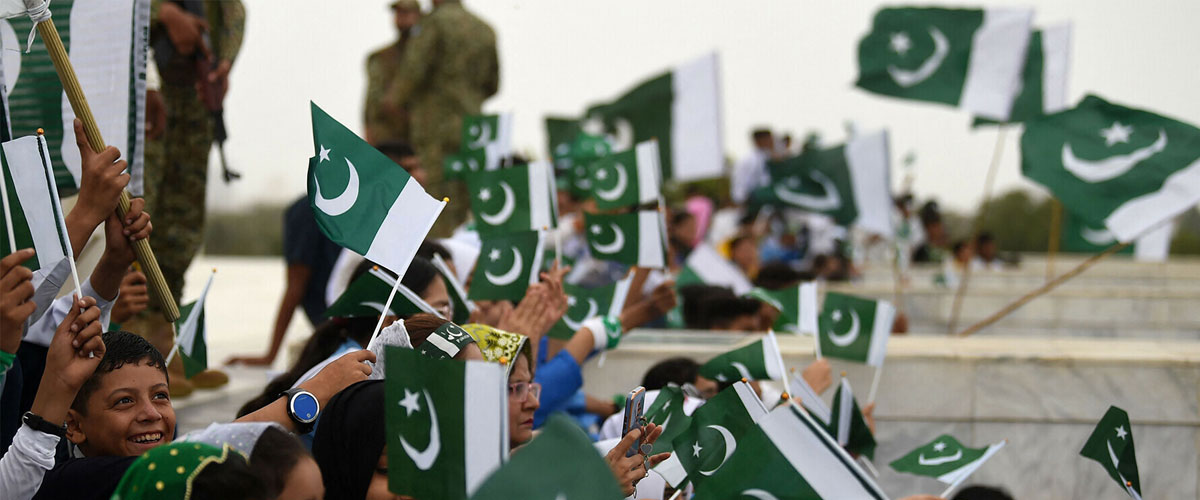
On 23 March 1940, at Minto Park, a vision was set in motion that would ultimately lead to the creation of Pakistan. The Lahore Resolution was not just a political demand—it was a promise. A promise of dignity, self-rule, and the ability of a people to shape their own destiny.
That promise was fulfilled in 1947.
But independence is not a single moment in history. It is a condition that must be continuously strengthened.
The Meaning of Independence Has Changed
In the decades since independence, the global understanding of sovereignty has evolved.
Today, sovereignty is not defined only by territorial control or political authority. It is defined by economic resilience—the ability of a country to sustain itself, grow through production and trade, and make independent decisions without external compulsion.
Pakistan, like many developing nations, continues to navigate economic challenges that test this form of sovereignty. Engagements with institutions such as the International Monetary Fund have become a recurring feature of its economic landscape. These engagements provide support—but they also highlight underlying structural weaknesses, including narrow exports, fiscal pressures, and underdeveloped institutions.
Lessons from the World Pakistan’s journey is not unique. Many nations that gained independence in the 20th century faced similar or greater challenges.
South Korea transformed itself from an aid-dependent economy into a global industrial leader through investment in education, exports, and technology.
Singapore, once a small and resource-scarce state, built one of the most efficient and competitive economies in the world by prioritizing governance, trade, and institutional strength.
Vietnam emerged from conflict to become a manufacturing hub, integrating deeply into global supply chains.
These countries did not succeed because they had more resources. They succeeded because they maintained policy consistency, invested in human capital, and aligned their economies with global markets. They demonstrated that political freedom must be paired with economic discipline.
Pakistan’s Untapped Potential. Pakistan possesses many of the same advantages.
It has a strategic geographic location, connecting multiple regions. It has a young and growing population, with nearly 65 percent under the age of 30. It has natural resources and significant economic potential. And yet, for decades, this potential has remained underutilized.
Economic policy has often been shaped by short-term pressures rather than long-term vision. Reforms are introduced in times of crisis but rarely sustained. Institutional weaknesses persist, affecting investor confidence and economic stability. The result is a pattern of progress that is real—but insufficient.
This is a nation capable of more—much more—than it has achieved so far. The question is whether it will seize the opportunity to transform potential into performance.
A More Urgent Pakistan Day This year, Pakistan Day carries a heightened sense of urgency. In a region marked by shifting dynamics and underlying tensions, the importance of national strength has become more evident than ever. Sovereignty must be protected not only through political means but through economic resilience.
The spirit of the Lahore Resolution was about securing control over destiny. Today, that control depends on building an economy that is strong, stable, and self-reliant. Without it, political freedom risks being symbolic rather than substantive.
Demographics make this imperative even clearer. With 240 million citizens, including a massive youth population, Pakistan must create opportunities, ensure employment, and invest in education and skills. Failure to do so not only threatens prosperity but also the very fabric of political independence.
The Path Forward
The path ahead is clear, even if it is not easy. Pakistan must strengthen its export base, move towards value addition, invest in human capital, and build institutions that inspire confidence. Most importantly, it must ensure continuity in policy—so that reforms are sustained beyond immediate crises.
Consistency is key:
Consistency in policy ensures that priorities survive political transitions and provide certainty to businesses and investors.
Consistency in reform ensures structural changes are implemented fully, not abandoned midway.
Consistency in direction ensures the nation moves steadily toward long-term goals, despite short-term pressures.
Countries that have succeeded globally did so by staying the course. Pakistan must do the same.
A Day for Remembrance and Responsibility
Pakistan Day is also a moment of remembrance. It is a day to honor those who struggled, sacrificed, and envisioned a nation that would stand with dignity among the nations of the world.
Their dream was not only political independence but also a nation that could thrive economically and socially. Completing their mission is the responsibility of today’s generation. Their sacrifices demand that Pakistan is not just free—but strong, resilient, and respected on the global stage.
A Day for Decision Pakistan Day should not only celebrate what was achieved—it should define what comes next.
When Pakistan came into being, it was a meagre-resource, nascent state. Yet through resilience, it survived, stabilized, and gradually laid the foundations for governance and economic management. That history is not a story of weakness—it is a story of endurance.
But endurance alone is no longer enough.
The world is moving faster than ever. Economies are transforming, technologies are redefining industries, and nations are competing not just for survival but for relevance. In such a world, standing still is not stability—it is decline.
To catch up with global development, Pakistan must move with clarity of direction, consistency of decisions, and courage to translate ambition into execution. Vision must become policy. Policy must become implementation. Implementation must deliver results.
The generation of 1940 created Pakistan.
This generation must now strengthen it.
The promise was made.
Its fulfilment still lies ahead.
