Author

India Isn’t Sitting on the Fence It’s Trying to Stop One From Being Built
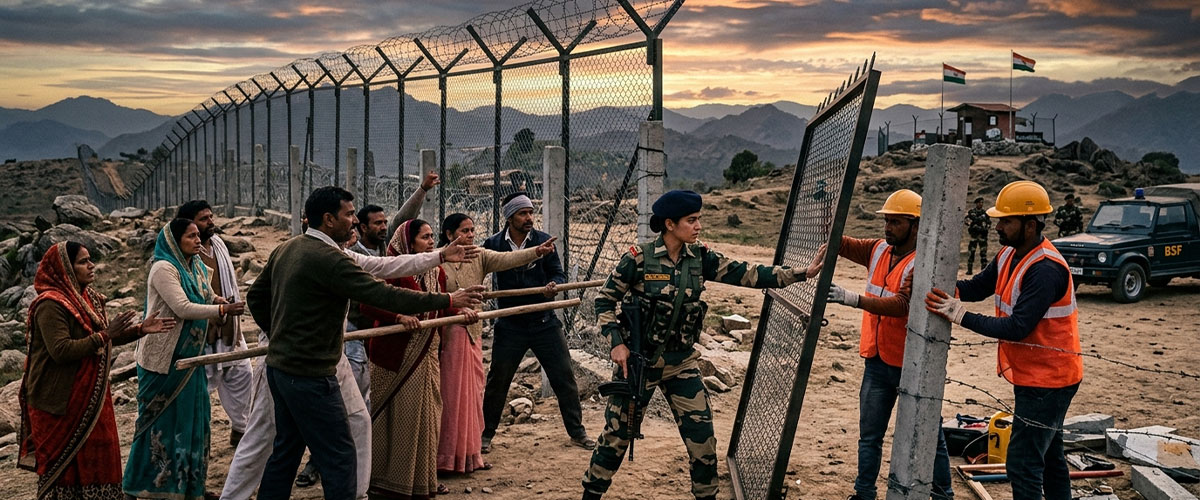
India is heavily dependent on Israel to equip its military with modern weapon systems. On the other hand, India relies on Iran for access to Afghanistan and Central Asia–a route it needs to counter Pakistan’s influence in Afghanistan. Yet when it came to the Israel-Iran conflict, it chose to stay neutral. India didn’t outrightly condemn Israel, it didn’t support Iran. India is calling for de escalation. Is this hesitation or strategy? It is part of a deliberate effort to preserve strategic flexibility in a situation where every clear choice carries unacceptable cost.
The May 2025 Pak-India conflict clearly demonstrated India’s over reliance on Israeli Defense industry in making Indian military battle ready for war with Pakistan.A significant portions of weapons used by the Indian military in the conflict with Pakistan came from Israel. Iran is no less important in India’s foreign policy calculations: it continued to buy crude from Iran despite American sanctions and it relied on Iranian Chabahar Port for access to Central Asia and Afghanistan in a situation where it is engaged in a tough competition with its arch rival, Pakistan for influence.
The Real Fear: Forced Alignment:
This indirect relevance of Pakistan as a factor in Indian calculations related to the conflict makes it extremely wary of a situation where it would have to take sides.
India is not maintaining its ostensibly neutral position with much enthusiasm. It is only reluctantly avoiding a trap to get dragged into someone else’s conflict geometry.
Viewed from the perspective of India’s strategic community, India’s biggest fear is a polarized regional order where it would be forced to take sides between opposing camps. In its emphasis on de-escalation and diplomacy as a preferred tool for resolving regional conflict, India is trying to preserve its military and strategic interests that Israel and Iran serve respectively. India’s diplomacy is aimed at preventing the conflict from hardening into blocs. If warring states in this conflict become permanent blocs, Indian regional diplomacy will be forced into alignment with either side–something India foreign policy managers dread. For instance, if India tilts decisively towards Israel, there is a great chance that Iran will more clearly go into a tight embrace with Pakistan.
Energy Security: The Non-Negotiable Constraint
India’s primary calculations drive from its heavy dependence on oil from the Gulf countries–a factor that introduces a non-negotiable constraint on its policy choices.
India depends on oil from the Gulf countries like Saudi Arabia, Iraq, UAE and Kuwait for its oil needs with a major portion of this oil passing through Strait of Hormuz. India imports ~85–90% of its total crude oil for four Gulf countries. 40% to 50% of India’s crude oil imports pass through the Strait of Hormuz.
Israel: The Security Anchor
Huge complexity is added to Indian calculations when Indian dependence on Israeli weaponry for its military is taken into account. The Indian military is now heavily dependent on Israeli military technology to get ready for war with Pakistan. According to Indian media claims, the Indian military used Israeli made Harop and Harpy anti-radar drones to launch cross border attacks to hit Pakistan’s air Defense systems. The jointly produced Barak-8 air defence system, co-developed by India and Israel, was used to shoot down incoming Pakistani missiles during the four days Pak-India conflict in May 2025. This dependence explains why the Indian government has not decisively condemned Israel’s unprovoked attack on Iran. This also explains why India has not supported Iran in this time of need, despite historical and strategic relations with it.
Iran: Geography and Strategic Access
On the other hand Iran gives India continental reach without Pakistan. Pakistan sits in the Indian path to Afghanistan and Central Asia. Pakistan military has been historically averse to granting access to India to reach Afghanistan and Central Asia through its territory. Of late, Pakistani political and military leaders have devised a plan for projecting Pakistan as a regional connectivity hub linking Central Asia, South Asia and South-west Asia. However, this idea has not found much traction in New Delhi primarily because the Indian government has already invested heavily in the development of Iranian Port of Chabahar with its direct route to Afghanistan and Central Asia. So, in regional geopolitics, Iran gives India something which Israel cannot–continental reach.
The Pakistan Factor: Present but Not Central
Pakistan is not a driving factor in India’s policy towards the Israel-Iran conflict. Since determinants of India policy are access to oil, ensuring continued military supplies from Israel and ensuring availability of Iranian territory for continental reach into Central Asia and Afghanistan. However indirectly, Pakistan is a factor in Indian decision-making related to ongoing regional conflict– as the utility of both Iran and Israel are shaped by rivalry with Pakistan. India needs Iran as a route to Afghanistan and Central Asia because it is engaged in a tough competition with Pakistan in these regions. On the other hand, India needs Israeli military supplies to make its military battle ready for war with Pakistan. So, indirectly, Pakistan is a factor in India’s position on this conflict.
India’s official statements and writings of its strategic community clearly indicate that the Indian government’s primary concern is to avoid a situation where it will be forced to take a clear and precise position in this conflict. My reading of material from India makes me conclude that India is not sitting on the fence, it is striving hard to prevent this fence from being built. Its strategy is not about choosing sides, but about ensuring it never has to. The argument prevalent in Pakistan that India has titled decisively in support of Israel is only partial truth and could be described as misleading if we take into account the fact that India has invested heavily in development of Chabahar Port, maintained business relations with Iran despite US sanctions and last but not the least Indian policy statements do not take clear position in the conflict.