Author

Why Pakistan Peace Efforts Didn’t Make Any Progress on Immediate Basis?
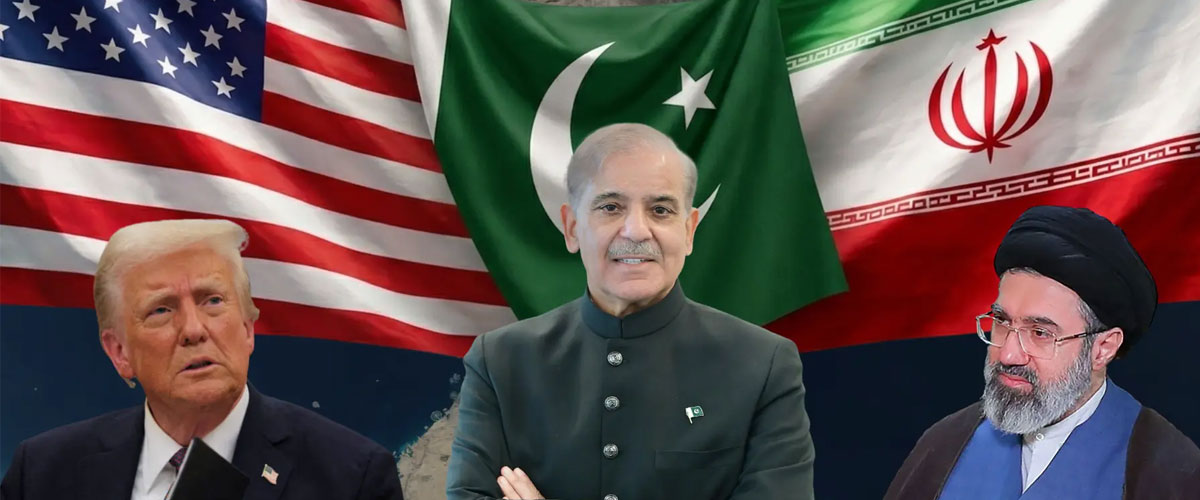
Pakistani efforts to mediate between Tehran and Washington started with lots of optimism, but didn’t make any headway on immediate basis. Prime Minister Shehbaz Sharif even offered Islamabad as a venue for talks. Messages were exchanged between Tehran and Washington with Pakistan acting as a go-between.
There were even reports in Pakistani media that US Vice President J.D Vance would travel to Islamabad to hold talks with Iranian representatives. The hopes were, however, dashed when Iranians rejected the first set of 15 US demands conveyed to them by the Pakistani government. Iranians termed the demands unrealistic. As a result, the Pakistani idea of direct US-Iran talks in Islamabad didn’t make any headway.
Pakistani officials, however, insist that mediation efforts are still continuing. The failure was not diplomatic but strategic. The flaw lies in misreading Iran’s strategy. Military experts around the world point out that Iran seems to be preparing for a long war in which it wants to increase the cost of war for the US and its allies.
Pakistan made a classic middle power move by an attempt to position itself in the mediating role. It assumed that both Washington and Tehran would be interested in de-escalation as war is proving to be too costly for both sides. Pakistan is in a rare position of having close ties to both the belligerents. Pakistani leaders have access to top leadership in Washington and Tehran. During the first month of war, Pakistan’s military Chief held telephonic conversations with President Trump and Prime Minister, Sharif talked to the Iranian President several times on the phone. Pakistan can leverage ties with Washington and Tehran to make this diplomatic initiative a success.
Pakistani commentators have been pointing out that Pakistan’s mediation efforts started after informal consultation with US diplomats based in Islamabad. US and Israeli military strategies are clearly aimed at decisively crippling Iranian military and industrial capacity within a short span of time.
They appear to be in a hurry to do their jobs and take an exit from war as soon as possible. Iran is not trying to end the war. It is trying to stretch it.
They seem to be banking on three possibilities which can exhaust Washington’s stamina for war. First, Iranians are banking on the possibility that US domestic fatigue will become visible in the second or third month of the war. Second, they are banking on the possibility that the Political divisions in Washington will sharpen in the coming days. Thirdly Washington would be facing rising global economic pressure in the form of rising oil prices and inflation. And in the third month the world’s industrial nations will run out of their strategic fuel reserves. For Iran, time is not a constraint—it is a weapon.
Diplomacy cannot succeed where strategy has not paved the way for its success. Pakistan’s assumption that the war is mutually hurting both Iran and Washington is primarily flawed. President Trump might be boasting about the amount of punishment his military is inflicting on Iranian society, but he is clearly facing a situation where Iranians are satisfied to endure the pain. In a longer war it will be holding the economies of Western Europe and East Asia hostage. Oil passing through the Strait of Hormuz serves as a life line for world economies. In this there will be only one problem for Iran–the countries which are not belligerent and with which it has good relations have already started demanding the opening of waterways. I mean China, Pakistan and India.
President Trump’s repeated assertions that the US military had already achieved most of its war objectives clearly indicate that Washington was not interested in prolonging the war. Whereas, Iranian seemed more focused on controlling the Harmoz instead of monitoring and dominating their air space–something essential if a belligerent is interested in a direct conventional war–where US Air force operated unchecked for seven hours in their rescue operation for pilot of downed US fighter aircraft.
When Pakistan presented them the off-ramp in the form of negotiated ceasefire, Iranis saw this as an American ploy. Negotiations between belligerents could start only when there is a mutually hurting stalemate in the war. That situation has not arrived yet. At least that is how the Iranian perceived it. The US military has inflicted heavy damages to the Iranian military and industrial capacity. But Iranians think that soon they will inflict much heavier damage on the US and its allies when strategic oil reserves of great power will finish in the third month of the war, according to generally agreed estimates. 20 Percent of world oil passes through the Strait of Hormuz. Iranian closure of the strait could bring industrial production in countries like China, Western Europe and East Asia to a stand still. Western media has reported recent US intelligence assessments that show Iran sees control over the strait as a long-term leverage tool—even more valuable than nuclear capability in some scenarios.
During the last 24 years Pakistan has largely been seen, internationally, as a security problem. Its internal security situation poses a world wide concern among political leaders in world capitals. The diplomatic efforts for mediating a ceasefire in the Iran War were seen by Pakistan’s leaders as an opportunity to transform Pakistan’s image from a security problem to that of a problem solver at the international level. Pakistan’s role as a mediator has been acknowledged by both Tehran and Washington but only a consolation and only after the former has rudely rebuked the attempt.
Pakistan started with good intentions. It had access to top policy makers in Washington and Tehran. It failure is not because of lack of intent or lack of access. It is because its diplomacy didn’t take into account realities of the battlefield. Time is not a neutral factor in this war. Iran is using time as a weapon. Any mediation that ignores this reality is destined to failure.