
Author

Pakistan Pushes For US-Iran Talks as Ceasefire Nears Expiry
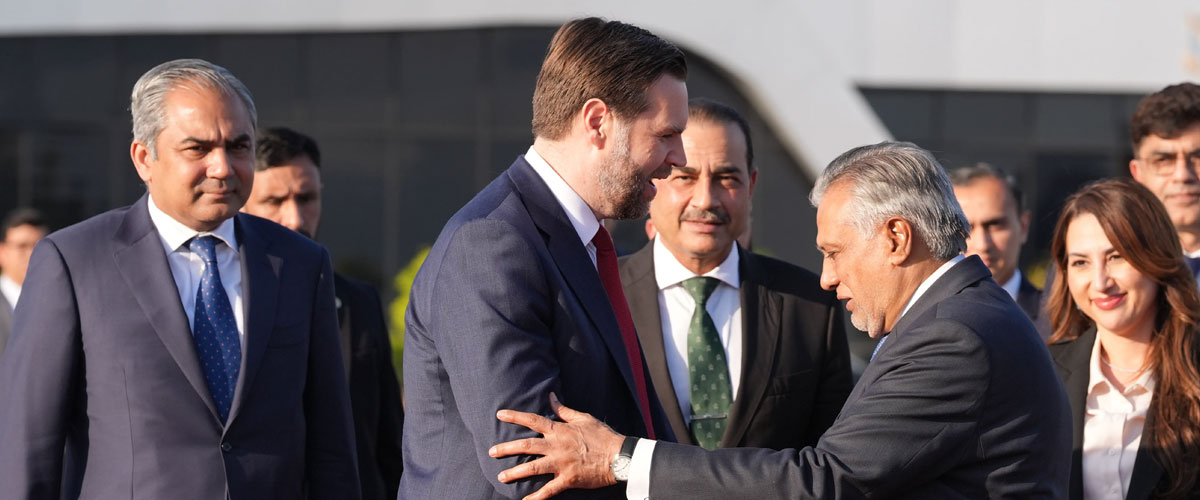
ISLAMABAD: Pakistani government leaders are making round the clock efforts for bringing Washington and Tehran back on the negotiating table Islamabad, and Geneva, Switzerland, as possible venues of the talks.
Prime Minister Shehbaz Sharif told his cabinet meeting on Monday that his diplomatic team is in contact with both Washington and Tehran to make them chose the path of negotiation,instead of resuming hostilities in the Persian Gulf.
Prime Minister sharif had a telephonic conversation with with Japanese Prime Minister Sanae Takaichi, He told told her that “Pakistan would continue efforts to ensure that the ceasefire is maintained. The Japanese leader appreciated Islamabad’s role and expressed support for the peace process”.
The ceasefire between the US and Iran was brokered on April 7 after six weeks of conflict. The ceasefire is set to expire on April 22. The situation in the Persian Gulf is increasingly becoming more and more precarious. The US has moved toward enforcing a naval blockade in the Strait of Hormuz, prompting a warning from Iran that such a move would be a violation of the ceasefire.
The Islamabad talks ended without an agreement. However neither Tehran nor Washington said the talks have ended. The two sides engaged in 21 hours of talks through multiple formats , including direct sessions and expert-level discussions.
The US sought long-term commitments on Iran’s nuclear programme, including constraints on enrichment and safeguards against weaponisation, alongside unrestricted navigation through the Strait of Hormuz.
According to U.S. CNN on the 13th, Donald Trump administration officials are discussing details for a potential second face-to-face meeting before the 2-week ceasefire period expires. Potential locations for the second negotiations include Islamabad, Pakistan, and Geneva, Switzerland, where the first round of talks were held.
The United States is pressuring Iran by imposing a counterblockade on the Strait of Hormuz after the collapse of the first ceasefire negotiations, while reports suggest both sides are attempting to reach an agreement behind the scenes. As the deadline for the “2-week ceasefire” expires on the 21st, there are observations that the second face-to-face negotiations will take place before then.
Pakistani foreign minister , Ishaq Dar continued his efforts to attract support for the peace talks. He held a series of calls with counterparts, including Britain’s Yvette Cooper, China’s Wang Yi, Turkiye’s Hakan Fidan, Saudi Arabia’s Prince Faisal bin Farhan and Egypt’s Badr Abdelatty.
Across these engagements, Pakistan conveyed a consistent message that all parties to the conflict must uphold the ceasefire and that dialogue remains the only viable path forward. International partners responded positively.
In his conversation with Mr Dar, Wang Yi stressed that the priority was to prevent the conflict from reigniting and to maintain the momentum generated by the ceasefire, whom he described as fragile. He urged the international community to support dialogue and oppose actions that could escalate tensions.
