Author

The Geography of American Wars
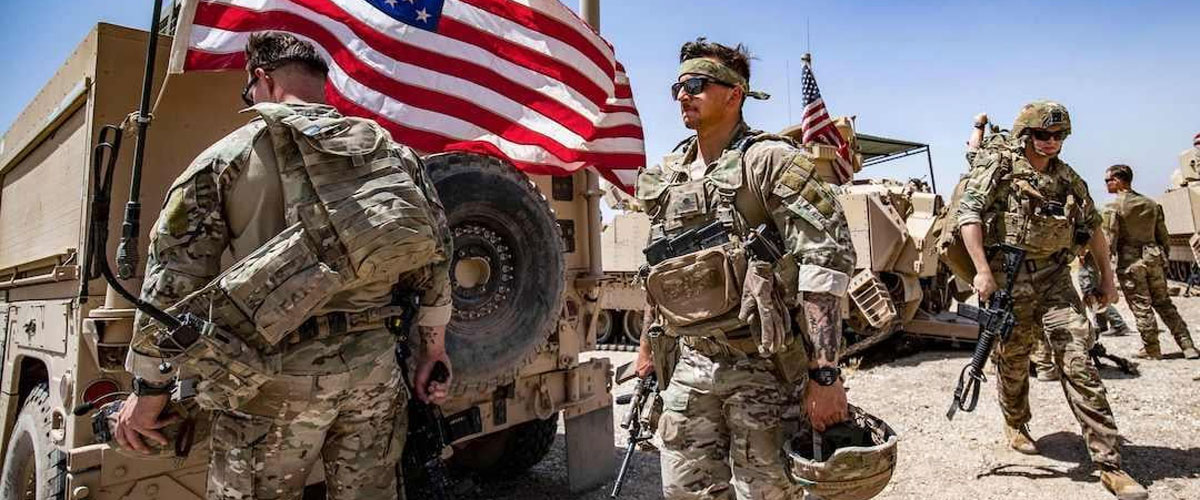
The United States launched three wars in a short span of 25 years–Afghanistan, Iraq and now Iran. Could they have launched three full scale wars if a nuclear armed rival, Soviet Union, still existed? Any type of answer to this question will reveal more about today’s world order than any battlefield ever could. It is highly unlikely that the US could have launched wars with the same frequency, scale and confidence under the conditions of symmetrical deterrence. With rivals like the Soviet Union still in the field, regional wars risked superpower confrontation.
No surprise that the US military launched its first full scale war against regional power in 1990 in the post-Cold War era when the Soviet Union as a political entity was near collapse.
Symmetrical deterrence existed during the Cold War, where two rival super powers possessed comparable military capability and willingness to impose unacceptable damage or cost on each other—making large-scale war extremely risky.
This type of deterrence didn’t exist in the world system when the United States (accompanied by Israel) imposed a war on Iran on February 28, 2026. Six weeks of incessant bombing with the help of ballistic, cruise missiles and one way attack drones. As a result Iran suffered extensive damage. Iran was attacked because there was no military power in the region which could have deterred the US military. There was no rival power of equal or of somewhat equal military capability in the world system. China was not willing to engage militarily in the Persian Gulf conflict. Russia was too preoccupied with the Ukraine war. There was hardly any chance of large conflict.
Iran responded by an attempt to spread the conflict to other Gulf States which are allied with Washington. It launched ballistic missiles and one way attack drones on regional states. It blocked the Strait of Hormuz through which 20 percent of world oil supplies pass, leading to the danger of economic catastrophe.
The problem is not that US military power remains unconstrained in the world system. It is unevenly constrained in regions where symmetrical deterrence doesn’t exist and where there was no danger of immediate military response.
Contrast this with the situation during the Cold War where risk of military escalation involved existential threat and superpower rivalry imposed certain types of discipline in the international system. This is not to argue that wars as an institution didn’t exist during the Cold War. Rather wars remained limited in scope. The presence of another superpower imposed discipline on United States military behavior.
In the post-Cold War era, nearly every US Administration has launched a military intervention in foreign lands. One of these administrations fought two full scale wars in Afghanistan (2001-2021) and Iraq (2003-2011). This was followed by a third full scale war against Iran in Feb 2026. Can this pattern of military behavior have emerged if rival superpower of equal military capability existed in the international system?
It is difficult to imagine that the US could have intervened militarily in foreign lands with the same frequency, scale and confidence if a system of symmetrical deterrence existed in the international system. Primarily because there would have been a clear risk of superpower military escalation. Secondly and most importantly the US military’s underlying assumption that these conflicts would be of limited in scope would not have been a factor in US military decision-making.
Why did Iran become the victim of a US military attack? Explaining this in purely military terms I would quote two factors. The Middle East doesn’t have a superpower which can pose a symmetrical deterrence threat for the US military. For instance, the US military never launched a comparable military adventure in the South China Sea region where China possesses a symmetrical military deterrence. Similarly, the US military didn’t directly come to the rescue of Ukraine against Russian Invasion in Eastern Europe–as they did rescue Kuwait from the Iraqi military in 1990–some three years ago. The US military’s non-interference in the South China Sea and Eastern Europe could only be explained in terms of the existence of symmetrical deterrence.
Iran, on the other hand, is not strong enough to deter the US military. It has the means to raise the cost of US military adventure even without nuclear weapons. But deterring a powerful military like the United States is a whole different ball game. For Americans the use of military force in the Middle East is risky in the face of military capability that Iranians possess but it is not unthinkable.
So in recent history of the International system we could say wars have occurred where deterrence is insufficient. In the post-Cold War era, the US has used military power in the regions where the fear of retaliation existed but in US military formations could have survived the retaliation. Iran is a classical example of this scenario. Iran could not have imposed an overwhelming and immediate cost on the US military. The way the Soviet Union could have during the Cold War.
The US military power is unevenly deterred: it strongly deterred in South China Sea, it is moderately
Deterred by Russia in Eastern Europe and it is quite weakly deterred in the Middle East. The pattern that has emerged is that the US goes to war in regions where no actor would impose immediate and overwhelming cost, where retaliation could be contained or could be survived, and escalation is manageable.
This risk is not tied to any one leader as some of the opposition politicians in Washington have attributed the crisis in the Persian Gulf to the “unsound mind” of President Trump. The risk is inbuilt in the international system where the absence of credible and symmetrical deterrence reduces the threshold for the use of military force. The factor would again produce more such crises in future no matter who is at the helm of affairs in Washington.
The frequency of war in the international system is not only a story of American military might or power. This story is as much about the absence of a counter-power. The fact is not that American military power cannot be deterred. It is that in economically, politically, technologically and socially backward regions like the Middle East there is no one who can deter American power.