
Author

Are The Pakistani Taliban Really “Khawarij”?
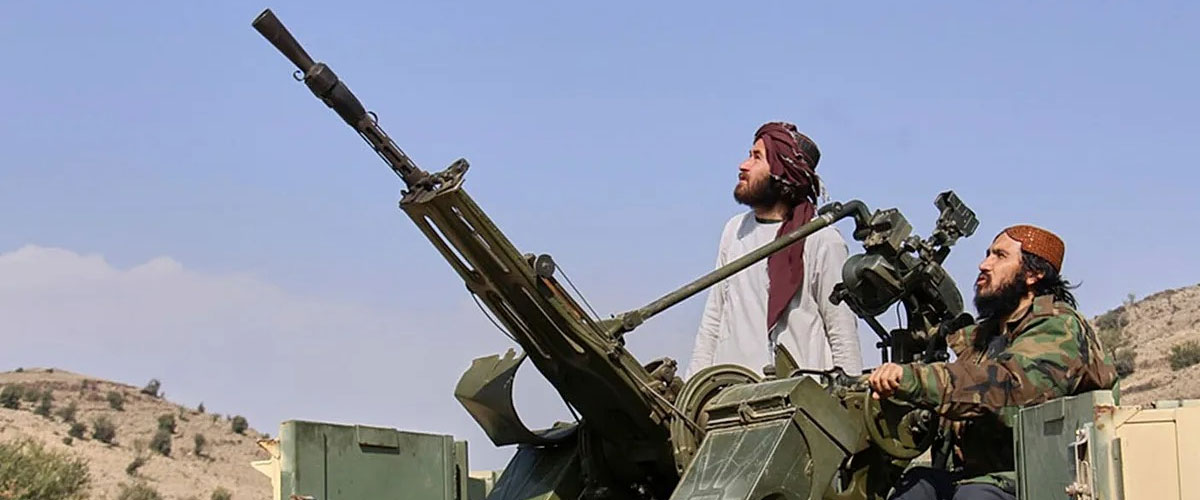
For more than one year Pakistani military has started dubbing the fighters and militants of the Tehreek-e-Taliban Pakistan (TTP) Khwarij, in reference to the group of people or sect from early Islamic period which revolted against the fourth Caliph, Hazrat Ali (RA) during the first civil war in Islamic history.
Earlier, Pakistan military’s media wing used to describe TTP and its fighters simply as terrorists and militants, or sometimes as miscreants. Since last month, the Pakistani military’s media wing has started using the term “Khwarij of Fitna al Khawarij” for the TTP and its fighters and militants. This started after Pakistan’s incumbent Army chief, General Asim Munir described the TTP as Khawarij in a speech delivered in Islamabad.
After this development Pakistani military media wing started describing TTP simply with one word or term, Khawarij.
Historical Context: Who, Were the Khawarij?
The Khawarij are generally described as a sect in early Islam which parted company with the main body of Muslims during the first civil war of Islam, when they revolted against fourth Caliph Hazrat Ali (RA). The origin of the Taliban can be traced to a theological reformist movement in British India called the Deobandi movement for educational reforms, which was started by Indian religious scholars after the British captured India, thus ending the 700 years of military and political dominance of Muslims in South Asia.
The Deobandi movement is generally described as a mainstream Sunni movement with the majority of its adherents following the Hanafi school of law. The Khawarij on the other hand didn’t follow any of the four mainstream Sunni schools of law. Strictly speaking in theological terms, the Pakistan Taliban belong to mainstream Sunni Islam.
However, they have been at war with the Pakistani military, which has cultivated a reputation as a force of Islam, and representing Muslim interests in the region. This politically alienates the Pakistani Taliban or TTP from mainstream Muslim interests in South Asia and Southwest Asia. The Pakistani military has been proud of its role in supporting the Jihad in Afghanistan against the infidel military forces of the Soviet Union, and supporting Kashmiri Muslims against the infidel Indian occupying forces in Indian held Kashmir.
The rank and file in the military are very proud of their legacy in this connection. Since 2001, the Pakistani military has had to fight against a militant force, the Pakistani Taliban, which was formed in the name of Islam. The TTP draws strength from a narrative which is based in Islamic precepts, and it also has cultivated an image as an Islamic force fighting un-Islamic forces in the region. The TTP’s self-image is also reinforced by their connections with international terror groups like al-Qaeda, which has an equally compelling narrative based in Islamic discourses. In this situation, banishing the TTP from the fold of the Islamic fraternity in South Asia becomes an imperative for the Pakistani military.
The Pakistani military has been reacting very harshly towards any attempt by Pakistani religious scholars to dub the TTP or Osama Bin Laden as martyrs (shaheed), since such attempts weaken their position as a legitimate Islamic force in the region. On their part, the TTP describe their fight against the Pakistani state and military as a “jihad.” They have even invented a phrase for this conflict – they call it the “Gazva-e-Hind” (War for India).
The Khawarij disagreed with the fourth Caliph of Islam, Hazrat Ali (RA), when the latter agreed to arbitration to end the fighting in the first civil war in Islam, while Amir Muawiya, another companion of the Holy Prophet (PBUH) was opposing him in military conflict. The Khawarij opined that only Allah could function as an arbitrator. This principle later was incorporated into the Sunni consensus that developed in the 9th century of the common era. The Khawarij, however, differed with the Sunni consensus in multiple ways, one of the most conspicuous of which is that they do not consider the first 30 years of Islamic history as an ideal period or a legitimate source of Islamic law.
All Sunni groups consider the first 30 years of the Islamic community as an ideal source of Islamic law. The Khawarij were a product of a period in Islam’s history when Islamic theology and law were in a formative phase. In the politics and military developments of Islamic lands like Northern Africa, Egypt, Syria, Iran and Afghanistan, the Khawarij continued to play a crucial role in the process of state formation.
An eminent historian of Islam, Michael Cook, in his recent book on Islamic history narrates in detail the process of state formation in various parts of Muslim world and the role played by different Islamic sects in the process of state formation. He particularly points out that the Khawarij remained active in the process of state formation in Iran and North Africa till the 17th century. Even in the modern world, the Khawarij continued to play a significant role in state formation in the Arab world. For instance, the ruling group in Oman belongs to a branch of the Khawarij.
Why the Label Doesn’t Fit the TTP
How accurate would it be to dub the Pakistani Taliban as Khawarij? There are few political problems associated with this decision of the Pakistani military to describe the TTP as Khawarij. Firstly, most Pakistani Taliban leaders have taken an oath of allegiance to the Afghan Taliban. The origin of the Pakistani Taliban and Afghan are the same Deobandi madrassas based in Pakistan, where they are taught the curriculum developed by Deobandi religious scholars.
On the theological level, the position the Pakistani military has taken will be even more problematic. The Taliban as a religious group are part of mainstream Sunni Islam; they believe in all tenets of orthodox Sunni consensus, they follow Hanafi law, and they are indistinguishable from mainstream Sunni groups like the Tablighi Jamat or Jamaat-e-Ulema Islam.
Using a religious term to describe a militant group fighting against the Pakistani state for the last 20 years might alienate other groups with similar religious ideologies from within Pakistani society.
Remember that you are not simply labelling the TTP Khawarij; you will be using your full military firepower against that group. It is quite understandable that the Pakistani military has a strong sense of its role as a champion of Islamic causes in South Asia and Southwest Asia. It is for the first time that the Pakistani military has to use its full firepower against a group of religious militants whose creation itself is based on a grounding within an old and established religious ideology in the subcontinent. How would the ideological siblings of the TTP, which are found in abundance in Pakistani society, react to this decision of the Pakistani military?
Remember that Pakistani society does not support military action against the TTP unanimously. There are deep divisions within society on this question. Using religious concepts, ideas, and discourses to fuel Pakistan’s existential fight for survival will only add to the already existing ideological chaos in our society.
Political and Ideological Implications
The dilemma Pakistani military is facing is that, on the one hand it wants to be seen as a champion of Islamic causes in the region, while on the other hand, it wants to defeat a religious extremist group like Pakistani Taliban, which is not only a source of militancy and extremism in Pakistani society, but at the moment poses a serious existential threat to Pakistani state and society.
Sometimes the narratives of Islamic history that the military and extremist groups espouse are shared and commonly held. This at least creates confusion in the minds of the public. My own opinion is that it would be unnatural to expect the Pakistani military to part company with its narrative of Islamic history, which is something very intrinsic to their existence as an organization. But when the Taliban use a somewhat similar narrative of history it creates a practical problem for the Pakistani state. Suggestion: I think the Pakistani military needs to hire innovative literary minds to show traditional Islamic history in the light of requirements of modern Pakistani society.
