Author

Why Every Global Crisis Becomes Inflation in Pakistan
Inflation is no longer a domestic story
For millions of households in Pakistan, inflation is no longer an economic indicator — it is a daily survival calculation.
Every change in petrol prices reshapes transport costs, food prices, school fees, and business margins within days. A single adjustment in global oil markets can alter household budgets across the country. Inflation, in this sense, is no longer slow-moving or abstract. It is immediate, visible, and deeply personal.
Yet the real story is not just rising prices. It is how global instability is continuously transmitted into Pakistan’s economy.
Global shocks, domestic vulnerabilities
Over the past few years, the global economy has moved from one shock to another.
The Covid-19 pandemic disrupted supply chains and exposed the fragility of global production networks. The Russia-Ukraine war sent energy, wheat, and fertilizer prices soaring. Now, renewed tensions in the Middle East and wider geopolitical fragmentation are once again reshaping global commodity markets.
For Pakistan, an import-dependent economy, these shocks do not remain external for long.
They quickly enter domestic markets through fuel prices, electricity tariffs, transport costs, and industrial inputs.
Inflation in Pakistan is therefore not just monetary or fiscal. It is increasingly imported — through energy, logistics, and global uncertainty.
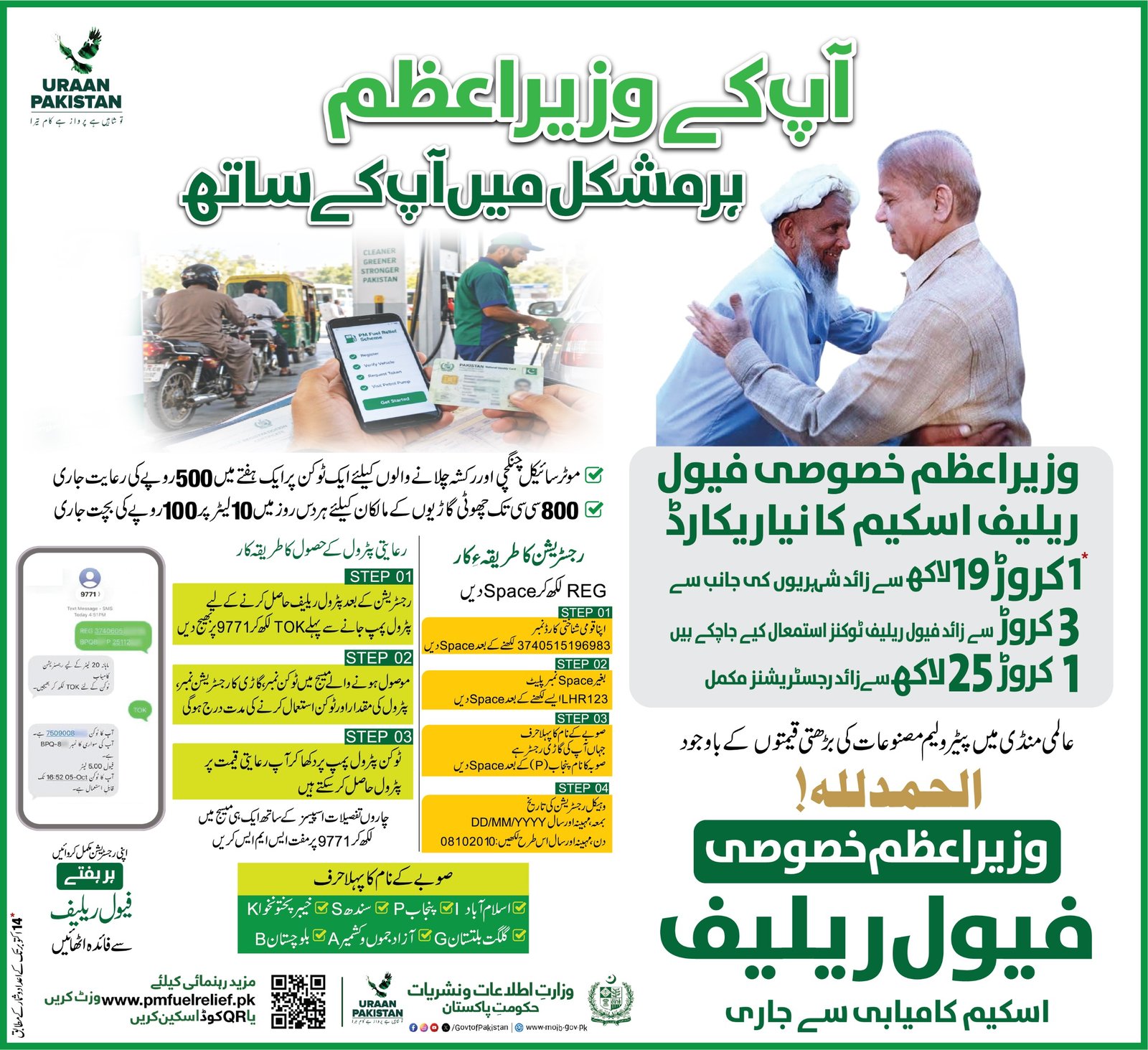
Petrol prices: the fastest transmission channel
Petroleum prices remain the most powerful transmission channel of global inflation into Pakistan’s economy.
When fuel prices rise internationally, Pakistan faces immediate pressure on import bills and exchange rates. This weakens the rupee, increases energy costs, and pushes transportation expenses upward.
From there, inflation spreads across the economy in a predictable chain reaction:
transport becomes expensive → food prices rise → industrial costs increase → businesses raise prices or cut output.
What begins as a global oil shock becomes domestic price inflation within weeks.
Businesses under pressure, industry losing confidence
Across Pakistan, small and medium enterprises are increasingly operating under pressure.
Energy costs remain high, financing is expensive, import costs fluctuate, and consumer demand is weakening. In many industrial clusters, capacity utilization is falling, while expansion plans are being postponed indefinitely.
Some businesses are quietly shutting down. Others are surviving by reducing staff, shortening production cycles, or shifting into informal operations.
This is where inflation moves beyond prices and becomes an economic slowdown.
When production becomes uncertain, investment slows. When investment slows, jobs disappear. And when jobs disappear, inflation becomes not just a price problem — but a livelihood problem.
Weak investment and rising unemployment
Pakistan’s struggle to attract stable foreign direct investment is increasingly tied to structural uncertainty rather than short-term policy cycles.
Investors today look beyond tax rates. They assess energy stability, currency predictability, supply-chain resilience, and geopolitical exposure.
In an economy repeatedly exposed to imported inflation, long-term investment decisions become difficult.
This challenge becomes even more relevant as Pakistan seeks to reposition initiatives like CPEC Phase-II toward greater business-to-business engagement and private-sector participation. Unlike state-led investments under earlier phases of CPEC, private investors operate with far lower tolerance for uncertainty, delays, energy volatility, regulatory unpredictability, and supply-chain disruptions. Governments may absorb temporary shocks through sovereign guarantees and strategic financing arrangements, but private capital responds differently. It demands operational stability, reliable infrastructure, and long-term commercial visibility.
Without strengthening these fundamentals, Pakistan may struggle to fully translate geopolitical partnerships into sustainable private-sector investment and industrial expansion.
At the same time, unemployment pressures are rising. Young graduates face limited absorption in the formal economy, while middle-income households struggle with stagnant incomes and rising costs.
Inflation, in this environment, becomes a multiplier of economic anxiety.
The illusion of macroeconomic stability
Recent macroeconomic indicators suggest partial stabilization — improved reserves, IMF programme continuity, and controlled external accounts.
However, this stability remains fragile when viewed from the ground level.
Macroeconomic improvement does not automatically translate into economic comfort for households or businesses. While fiscal balances may improve, energy prices remain high, industrial costs remain unpredictable, and consumption continues to weaken.
This disconnect explains why inflation feels persistent even during periods of “stabilization.”
An economy can be stable on paper while still under pressure in reality.
IMF reforms and structural constraints
Pakistan’s engagement with IMF-led reforms has helped restore short-term macroeconomic discipline and external financing stability.
However, structural vulnerabilities remain largely unchanged.
Cost-reflective energy pricing, while fiscally necessary, directly transmits global volatility into domestic inflation. Without domestic energy security, supply-chain resilience, and productivity growth, inflation becomes a recurring outcome rather than a temporary shock.
In other words, stabilization manages symptoms — not structural exposure.
The real challenge: economic resilience
The deeper issue is not that Pakistan faces global shocks. It is that these shocks are absorbed without sufficient buffers.
In more resilient economies, external disruptions are softened by strategic reserves, diversified energy systems, strong logistics infrastructure, and stable industrial bases.
In Pakistan, however, weak planning capacity and limited structural cushioning mean that global shocks are transmitted almost fully into domestic prices.
This is where inflation becomes a reflection of institutional preparedness — or the lack of it.
Conclusion: shocks will continue, resilience is the missing link
Global instability is not going away. Energy disruptions, geopolitical tensions, and supply-chain realignments are likely to remain features of the international system.
The real question is not whether shocks will occur — but how much damage they will cause when they arrive.
Without stronger planning frameworks, supply-side stability, energy diversification, and institutional economic foresight, Pakistan will continue to experience inflation as a direct consequence of global turbulence.
Not because the world is unstable alone — but because the domestic system is insufficiently prepared to absorb that instability.