Author

28th Amendment Debate: Fiscal Federalism or Recentralization?
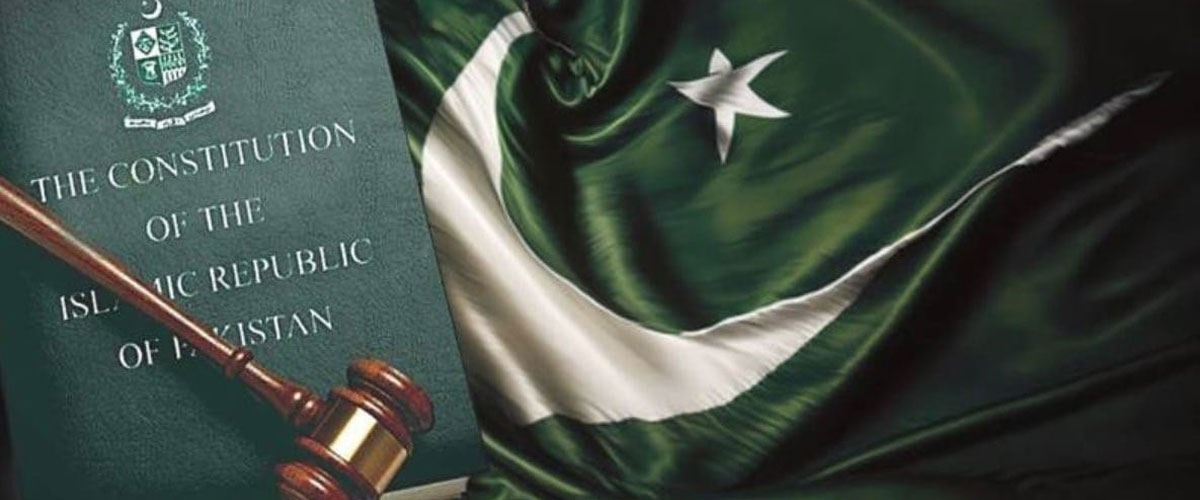
ISLAMABAD: Federal Law Minister Azam Nazeer Tarar on Saturday said there was no immediate possibility of introduction of 28th constitutional amendment in parliament.
He, however, noted that whenever it is introduced, it would be discussed with coalition partners.
He told reporters in Lahore that the meetings and consultations with all stakeholders are underway, and several issues remain unresolved.
Speaking to journalists after a conference on minority rights, Tarar clarified that constitutional amendments are not possible without consultation with coalition partners.
“Legislation is an ongoing process,” the law minister explained.
He asserted that, in the case of the 28th Amendment, all coalition partners would first be taken into confidence.
“The constitutional changes can be introduced, [but] only if an agreement is reached,” he added. He recalled that the 18th Amendment was also introduced with a consensus amongst political parties.
The PMLN government has already taken a public position that it was not envisaging any amendment in the constitution to reverse the 18th constitutional amendment or the provisions in the constitution related to provincial autonomy.
Some reports in the media suggest the federal government and “powerful quarters” believe the federation became administratively and fiscally weak after the Eighteenth Amendment to the Constitution of Pakistan. Media speculation focuses on changes to the NFC (National Finance Commission) formula; creating a greater federal fiscal authority; and rebalancing provincial autonomy,
However, government ministers are publicly denying any rollback. State Minister for Law Barrister Aqeel Malik said, “An extremely false impression is being created”
regarding claims that the amendment would undo the 18th Amendment.
There are also reports in the media that government is considering fiscal restructuring under IMF-linked governance pressure. Some reports suggest the debate is tied to provincial cash surpluses, federal revenue pressures, IMF-related fiscal restructuring demands.
Pakistani media is increasingly connecting the amendment debate with economic centralization, budgetary discipline, and federal-provincial financial tensions.
The 18th Amendment alongside the 7th NFC Award, significantly shifted fiscal power toward the provinces. The provincial share of the divisible tax pool rose substantially. The debate today is whether this arrangement weakened the federal state financially and administratively.
A recurring argument in Pakistani media and policy discussions is that, the federal government carries the largest obligations, but provinces receive a very large share of revenues, while many national-level liabilities remain with Islamabad.
A major media narrative is that provinces received powers but did not build governance capacity. Critics in the media say health and education outcomes remain weak, provincial tax collection remains poor, and development spending is politicized,
This criticism is especially directed toward Sindh, Balochistan, and, in some commentary, Khyber Pakhtunkhwa.