Author

Iranian President Pezeshkian Reaffirms Missile Programme Not Part of Islamabad MoU During Pakistan Visit
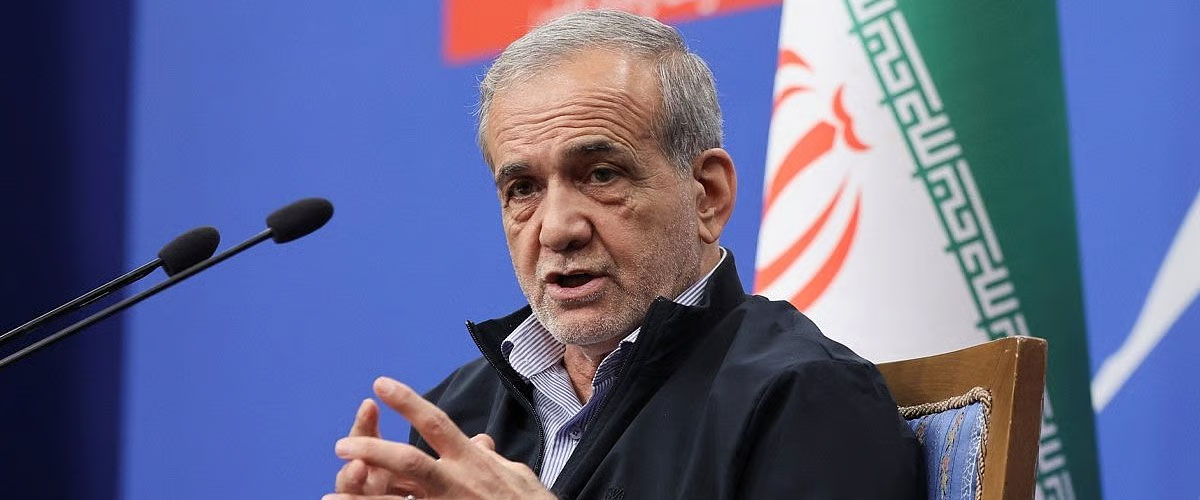
ISLAMABAD: Iranian President Masoud Pezeshkian on Tuesday reaffirmed that Tehran’s ballistic missile programme was never included in the recently signed Islamabad Memorandum of Understanding (MoU) between Iran and the United States, stressing that the issue would remain outside any future agreement.
Addressing a joint press conference with Prime Minister Shehbaz Sharif after bilateral talks in Islamabad, President Pezeshkian said Iran’s missile capabilities were essential for the country’s defence and survival.
“I would like to confirm one fact: our missile programme was not included in the MoU, as you said, and it shall not be included in the MoU,” the Iranian president stated.
He argued that Iran’s missile deterrent had protected the country from external aggression, adding, “If it was not for Iran’s missile capabilities, our country would have been plundered, destroyed and ploughed by the US regime and the Zionist regime, like what Israelis did in Gaza.”
Pezeshkian emphasized that Tehran would never compromise on its missile capabilities. “We will never compromise on our missile programme and capabilities and this shall never be part of any agreement between Iran and any other party,” he said.
The Iranian president is on a one-day official visit to Pakistan at the invitation of Prime Minister Shehbaz Sharif. He was accompanied by a high-level delegation and held separate meetings with Pakistani leaders before participating in delegation-level talks at the Prime Minister House.
Speaking alongside President Pezeshkian, Prime Minister Shehbaz described the discussions as “very productive” and conducted in a “very cordial atmosphere.”
“It was like a family reunion, and brothers were talking to each other with the fullest clarity and total commitment that we will do everything to strengthen our brotherly relations like never before,” the prime minister remarked.
Highlighting the close ties between the two neighbouring countries, Shehbaz said Pakistan and Iran had consistently supported one another during difficult periods.
“We have consistently stood by one another in difficult times, and recent events have once again demonstrated beyond any ray of doubt the enduring strength of this brotherhood, this friendship and this partnership,” he said.
The prime minister began his remarks by reciting an Iranian couplet on friendship and later described Pezeshkian as a “visionary and sagacious leader” of Iran.
“You are a man of many talents and qualities — you are calm, you are wise and you are patient,” Shehbaz said, also recalling the Iranian president’s earlier career in the medical profession and congratulating him on his achievements.
Referring to the Islamabad Memorandum of Understanding signed last week between Washington and Tehran, the prime minister called the development a historic diplomatic breakthrough that had averted a potentially devastating regional conflict.
“It is a matter of great happiness that this war has come to an end, which could have engulfed the entire region and beyond,” he said.
Shehbaz praised the leadership shown by President Pezeshkian and other Iranian officials during the negotiations and reiterated Pakistan’s role as an “honest and sincere mediator” in facilitating the peace process between Iran and the United States.
Describing the day as a “historic moment” in Pakistan-Iran relations, the prime minister announced that he would visit Tehran next week to pay respects to the late Supreme Leader Ayatollah Ali Khamenei and to reaffirm Pakistan’s solidarity with the Iranian people.
The visit comes amid renewed diplomatic engagement between Islamabad and Tehran following the signing of the Islamabad MoU, which ended months of tensions and opened a new chapter in regional diplomacy. While both sides have celebrated the agreement as a major step toward stability, President Pezeshkian made it clear that Iran’s missile programme remains a non-negotiable component of its national security doctrine and lies outside the scope of the accord.