Author

US, Saudi Arabia Sign Landmark Civil Nuclear Cooperation Agreement
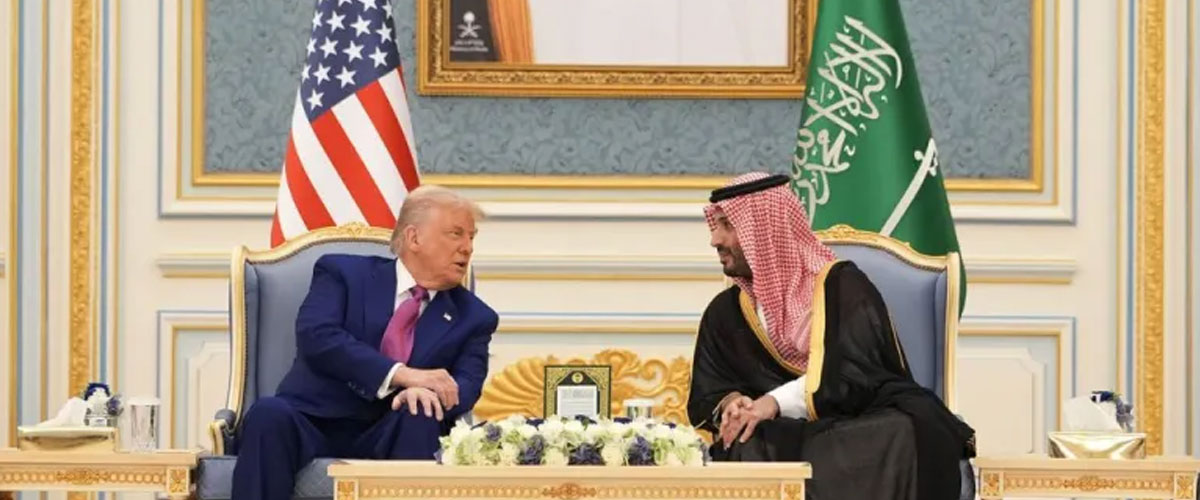
ISLAMABAD: The United States and Saudi Arabia have signed a landmark civil nuclear cooperation agreement, marking a significant step in bilateral strategic relations at a time of heightened military tensions in the Middle East and growing international concerns over nuclear proliferation.
The US Department of Energy announced that US Energy Secretary Chris Wright and Saudi Energy Minister Prince Abdulaziz bin Salman signed the peaceful nuclear cooperation agreement, commonly known as a 123 Agreement, along with a bilateral safeguards agreement.
According to the department, the agreements establish the legal foundation for a “decades-long, multi-billion-dollar partnership” aimed at expanding commercial ties, strengthening energy cooperation and advancing nuclear nonproliferation objectives.
The agreement is expected to provide American companies with extensive opportunities to participate in Saudi Arabia’s civil nuclear energy programme while helping the Kingdom diversify its energy mix and meet its rapidly growing electricity demand.
The Energy Department said the partnership would expand US nuclear technology exports, create high-paying jobs in the United States, strengthen American energy and national security interests, reinforce global nonproliferation standards and deepen the long-standing strategic relationship between Washington and Riyadh.
“These agreements reflect our two nations’ shared commitment to strengthening US-Saudi commercial relations, delivering prosperity at home and security to our allies abroad,” Energy Secretary Chris Wright said in a statement.
“Rest assured, these agreements uphold the highest standards of nuclear safety and nonproliferation, while relying on the world’s best nuclear technology and scientists, designed right here in the United States,” he added.
The department said the agreement would now be transmitted to the US Congress for the mandatory review process before it enters into force.
The signing comes at a time of heightened regional instability, with Washington continuing military and diplomatic pressure on Iran over its nuclear programme. The United States has repeatedly demanded that Tehran permanently abandon uranium enrichment, arguing that such capabilities could be diverted toward developing nuclear weapons. Since the outbreak of the latest US-Iran conflict in late February, American forces have carried out multiple strikes against Iranian nuclear facilities.
Saudi Arabia has for years sought to develop a civilian nuclear energy programme as part of its Vision 2030 economic diversification strategy, which aims to reduce the Kingdom’s dependence on oil revenues. Riyadh plans to generate a portion of its electricity through nuclear power while preserving more crude oil for export and supporting long-term industrial development.
Negotiations over a US-Saudi nuclear cooperation agreement had continued for several years, with earlier discussions complicated by concerns over whether Saudi Arabia would accept restrictions on uranium enrichment and spent fuel reprocessing. Washington has traditionally insisted that partner countries adopt stringent nonproliferation commitments under Section 123 of the US Atomic Energy Act before American nuclear technology or materials can be transferred.
The agreement also carries wider geopolitical significance as the United States seeks to reinforce strategic partnerships with Gulf allies amid increasing regional competition and security challenges. Analysts say the deal is likely to strengthen Washington’s influence in the Kingdom’s emerging nuclear sector while providing Riyadh with access to advanced American nuclear technology under internationally recognised safeguards.