Author

Asif Signals Breakthrough in US-Iran Talks
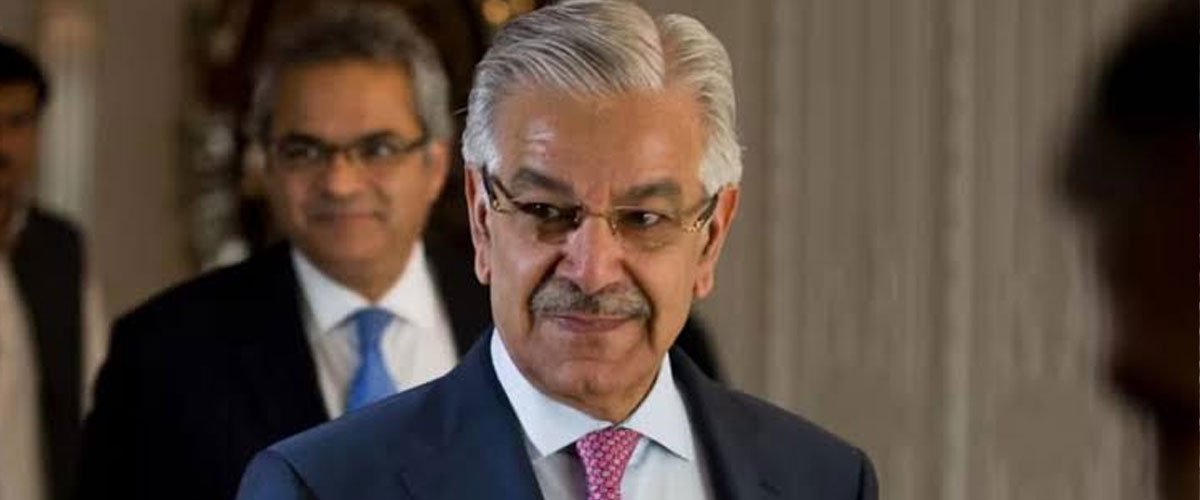
ISLAMABAD: The United States and Iran are close to “some sort of an arrangement”, Defence Minister Khawaja Asif has told an international wire service in an interview published today.
“Things are shaping up again in favour of a peace arrangement or a deal,” Asif told the international wire service.
“The signals in the last two three days are that we are close to some sort of an arrangement,” he added.
Defence Minister Khawaja Asif’s assertion that the United States and Iran are close to “some sort of an arrangement” comes against the backdrop of months of Pakistani diplomatic efforts aimed at bringing the two sides back to negotiations and preventing the conflict from developing into a prolonged regional confrontation.
Asif told Bloomberg that “things are shaping up again in favour of a peace arrangement or a deal” and that signals over the past two or three days suggested the sides were close to an understanding. His carefully qualified wording appears to indicate an emerging interim arrangement rather than a comprehensive peace agreement.
Pakistan has played an unusually active role in the diplomatic process since the outbreak of the US-Iran conflict. Islamabad helped broker the initial ceasefire, hosted direct US-Iran talks and subsequently worked with Qatar to develop a framework for sustained negotiations. The process culminated in the Islamabad Memorandum of Understanding in June, followed by talks at Bürgenstock, Switzerland, where the mediators announced a roadmap towards a final agreement within 60 days. Pakistan’s Foreign Office said the Bürgenstock process established mechanisms dealing with nuclear issues, sanctions, monitoring and dispute resolution, effectively converting the initial ceasefire diplomacy into a structured negotiating process.
The significance of Asif’s latest statement, therefore, lies less in the possibility of an imminent formal peace treaty and more in what it says about the progress of the diplomatic architecture Pakistan helped establish. The principal obstacles have remained the Iranian nuclear programme, sanctions, security guarantees and the status of the Strait of Hormuz. Recent reports indicate that Oman has also been intensively involved in efforts to advance US-Iran talks, suggesting that the mediation process has evolved into a multi-channel effort involving Pakistan, Qatar and Oman.
The emergence of parallel channels may allow the most difficult issues to be negotiated separately rather than requiring Washington and Tehran to resolve all outstanding disputes simultaneously.
For Islamabad, a breakthrough would carry significance well beyond diplomatic prestige. Pakistan shares a long border with Iran and has substantial security and economic interests in the Gulf, making prolonged confrontation between Washington and Tehran particularly damaging.
A settlement could ease pressure on energy supplies, shipping and regional security while strengthening Pakistan’s claim to a larger diplomatic role in the Middle East. This is especially significant following Pakistan’s recent defence agreement with Saudi Arabia and Türkiye, as Islamabad is simultaneously deepening its security ties with major Gulf and regional powers while maintaining its role as a mediator between Iran and the United States.
Nevertheless, Asif’s statement should be treated as an indication of diplomatic movement rather than confirmation that a final agreement has been reached. The history of the negotiations shows that Washington and Tehran have repeatedly approached understandings before disagreements over nuclear restrictions, sanctions and security guarantees derailed progress. Pakistan’s principal achievement so far may therefore be the creation and preservation of a negotiating channel rather than the resolution of the underlying conflict.
If the current signals do lead to an agreement, however, Islamabad will have played a significant role in transforming itself from a neighbouring state concerned about the fallout of the conflict into one of the principal regional intermediaries attempting to shape its outcome.