Author

Pakistan Renews Push for Peace as US-Iran Conflict Continues
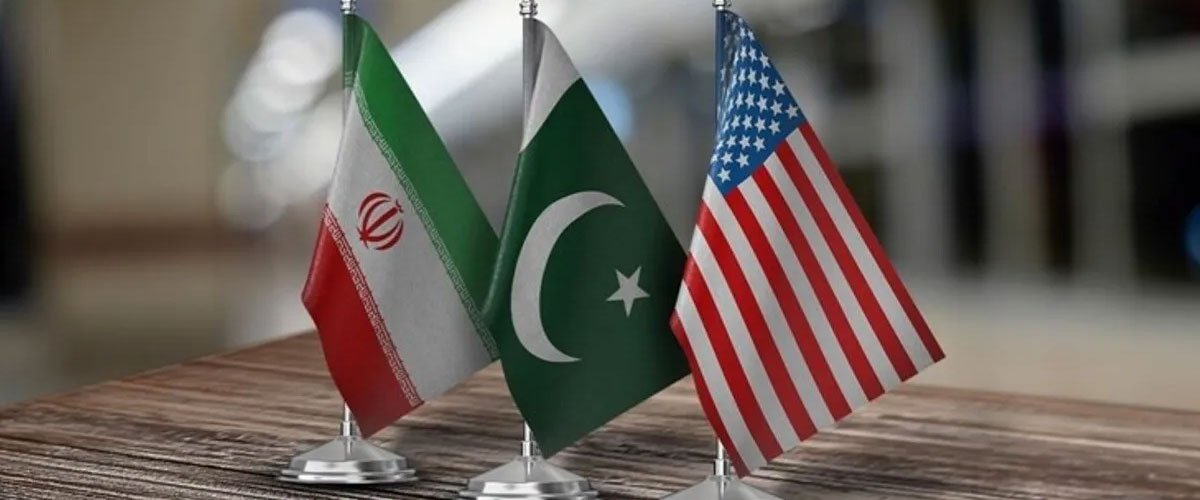
ISLAMABAD: Pakistan has renewed diplomatic efforts for bringing peace in Persian Gulf where the military conflict between US and Iran is continuing after a short ceasefire, Pakistani government announced.
“Field Marshal Syed Asim Munir, NI (M), HJ, Chief of Army Staff & Chief of Defence Forces along with Mohsin Naqvi, Minister of Interior departed for Islamic Republic of Iran as part of Pakistan’s efforts to promote regional peace and stability” reads a press release of ISPR.
The Field Marshal will focus on promoting efforts towards peaceful, lasting and comprehensive resolution of the conflict in the Middle East.
Pakistan has increasingly positioned itself as a diplomatic bridge in the Persian Gulf crisis, particularly following the devastating confrontation between the United States, Israel and Iran earlier this year. Islamabad’s role acquired greater significance when it hosted contacts between Washington and Tehran and subsequently helped facilitate a process that led to a ceasefire and negotiations. Pakistan’s geographical position, its longstanding relations with Iran and the Gulf Arab states, and its security partnership with the United States have enabled it to maintain channels with parties that otherwise have limited trust in one another.
Islamabad’s diplomatic effort has centred on preventing the conflict from developing into a wider and more permanent regional war. Pakistani leaders have repeatedly argued that military escalation cannot provide a lasting solution and that the crisis requires a peaceful, comprehensive and politically sustainable settlement. Pakistan’s engagement has therefore gone beyond simply supporting a ceasefire, focusing instead on encouraging negotiations over the underlying disputes that produced the confrontation and preventing renewed hostilities.
The present situation in the Persian Gulf nevertheless remains fragile. While the immediate large-scale fighting has subsided, the underlying tensions between the United States and Iran remain unresolved, particularly over regional security arrangements and the broader questions that brought the two sides into confrontation. The ceasefire has reduced the danger of an immediate war, but the absence of a comprehensive political settlement means that the region remains vulnerable to another cycle of escalation.
The crisis also exposed the vulnerability of the Persian Gulf’s security and economic infrastructure. The conflict raised serious concerns about maritime security and the uninterrupted movement of energy supplies through the Strait of Hormuz, a waterway critical to the global economy. Any renewed confrontation could again threaten shipping, energy markets and the economies of the Gulf states, giving regional countries a strong incentive to support a diplomatic settlement rather than a return to military confrontation.
Pakistan has a direct interest in the success of this process.
A prolonged conflict in the Gulf would affect Pakistan’s energy security, trade, economic stability and relations with neighbouring Iran and the Arab Gulf states. Islamabad is also seeking to translate its diplomatic role into a broader contribution to regional peace, arguing that the security of South Asia and Southwest Asia can no longer be viewed in isolation. The recent crisis has reinforced the importance of stability on Pakistan’s western frontier and in the wider Gulf region.
Field Marshal Asim Munir’s visit to Tehran, accompanied by Interior Minister Mohsin Naqvi, comes against this backdrop. His discussions are expected to focus on sustaining the diplomatic momentum, strengthening Pakistan-Iran engagement and exploring ways of promoting a peaceful, lasting and comprehensive resolution of the Middle East conflict. The visit reflects Pakistan’s attempt to remain engaged at a critical stage, when the guns may have fallen largely silent but the political and security issues that triggered the conflict are yet to be fully resolved.