Author

Iran Rejects German Claims Over Nuclear Programme, Accuses Berlin of Distorting War Narrative
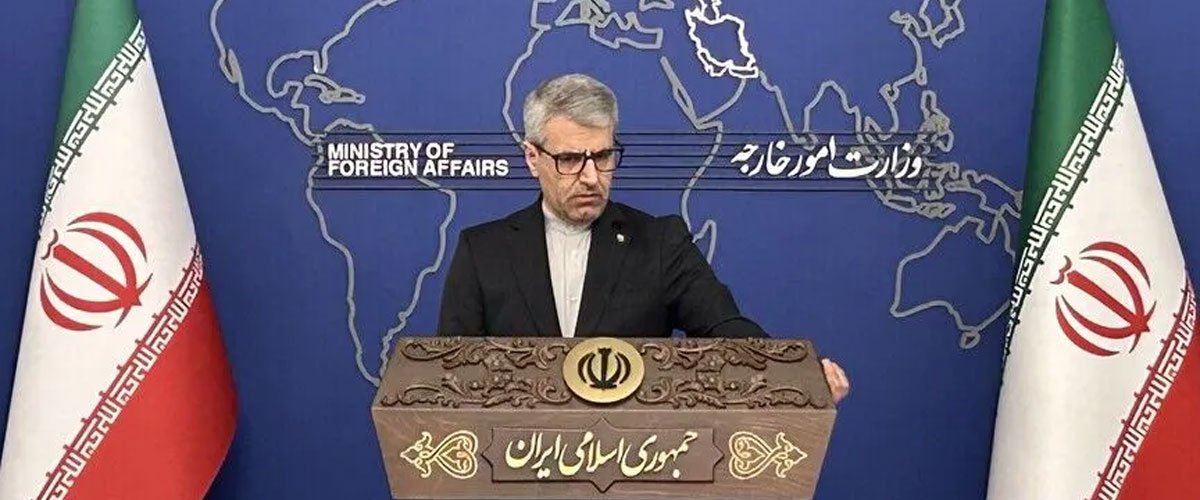
ISLAMABAD: Iran’s foreign ministry spokesperson Esmaeil Baghaei says that the country has “no ‘military’ nuclear program — no matter how often the Israeli fabricated ‘big lie’ is repeated by Israeli apologists.”
In a post on X, he criticised the German chancellor’s statement on the Iran war and nuclear program as a “knowingly distorted narrative”.
“It was US (United States and Israel) — not Iran — that launched a war of aggression, and Germany failed to show even the minimum moral courage required to deplore that.
“Those Berlin labels ‘proxies’ are independent actors with their own clear causes and calculations. They are fighting for self-determination, freedom, and dignity against occupation, aggression and subjugation.”
“Our region should not have to pay the price for Germany’s guilt complex or its habit of appeasement vis-a-vis bullies,” he said.
Iran’s latest confrontation with Germany comes amid a wider dispute over the nature of Tehran’s nuclear programme and the international response to the continuing US-Israeli conflict with Iran. German Chancellor Friedrich Merz has called for Iran to verifiably end what Berlin describes as its “military nuclear programme”, while Tehran continues to insist that its nuclear activities are peaceful. In June, the German government said any diplomatic settlement should ensure that Iran verifiably ends its military nuclear programme and stops attacks on Israel and other regional states.
The dispute has intensified as international monitoring of Iran’s nuclear facilities has become increasingly difficult. The International Atomic Energy Agency’s board of governors reported Iran to the UN Security Council on September 9, the first such move in 20 years, citing Tehran’s failure to resolve questions concerning uranium found at undeclared locations. Iran rejected the action as politically motivated and said the war and attacks on its nuclear facilities had complicated cooperation with the agency.
The nuclear issue centres partly on Iran’s stockpile of highly enriched uranium. The IAEA has been unable to fully verify the status of a reported stockpile of around 440.9 kilograms of uranium enriched to 60 percent, while access to several nuclear sites remains restricted. Iran maintains that it is not seeking nuclear weapons and describes its programme as peaceful, although international officials continue to raise concerns about the scale of enrichment and unresolved safeguards questions.
Baghaei’s criticism also reflects Tehran’s broader rejection of the Western framing of the conflict. Iran says the United States and Israel initiated the war and argues that armed groups allied with Tehran should not simply be described as Iranian “proxies”, maintaining that they pursue their own political and national causes. The issue has become particularly contentious as the conflict has expanded beyond Iran’s nuclear facilities to shipping, energy infrastructure and regional security, including continuing tensions around the Strait of Hormuz.
Germany, meanwhile, has remained closely aligned with the Western diplomatic position on Iran’s nuclear activities while also supporting negotiations. Berlin was among the European powers involved in the recent international pressure on Tehran, and Germany, Britain and France previously triggered the mechanism for restoring UN sanctions over Iran’s nuclear commitments. The latest exchange between Berlin and Tehran therefore reflects a deeper disagreement: Germany argues that Iran must provide verifiable assurances about the military dimension of its nuclear programme, while Tehran says its programme is peaceful and that Western governments are using disputed nuclear allegations to justify military pressure.