Author

Kohat Attack Highlights Renewed Terror Threat in KP
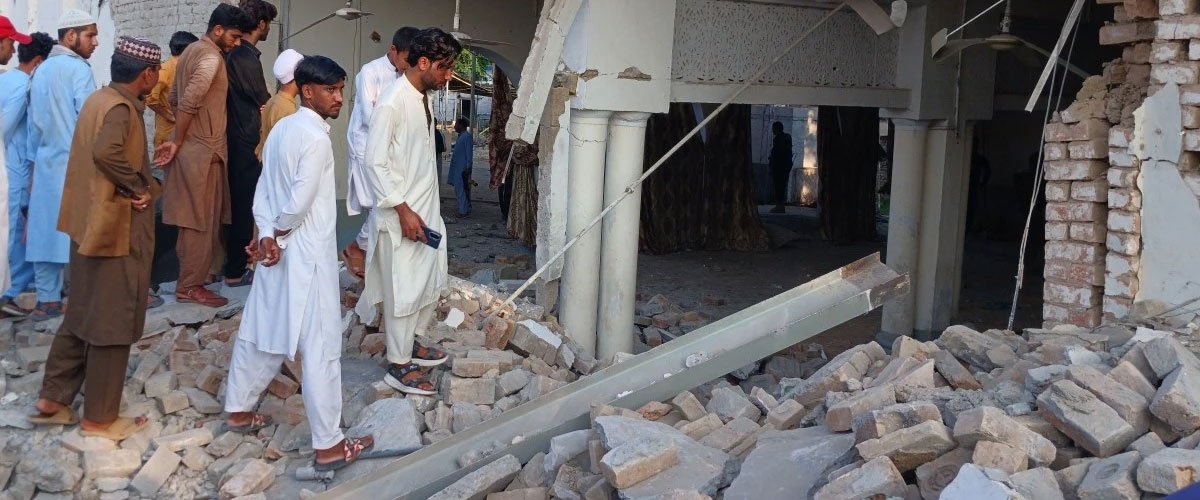
ISLAMABAD: At least 21 people, including 15 police officials, were martyred on Friday when an explosives-laden vehicle detonated near a mosque in Kohat Police Lines, followed by terrorists storming the compound and attacking police facilities, according to senior police and district health officials.
Officials confirmed death toll to the media and added that more than 80 people were injured, with three in critical condition.
Footage aired on television showed citizens gathered next to a building with a collapsed wall, digging through rubble and helping the injured. The bomb attack caused severe damage to the mosque structure.
Officials said that a vehicle-borne suicide bomber initially struck the building’s gate, following which several attackers headed towards the Counter-Terrorism Department (CTD) building, where they were neutralized. Around three others tried to move towards the Special Branch building.
According to police, at least one attacker was holed up inside the compound and a clearance operation was underway.
Meanwhile, the CTD said the Additional IG CTD reached the site of the Kohat attack. An exchange of fire between CTD personnel and the terrorists was ongoing, the department said, adding that the Additional IG had entered the site himself to take part in the operation and lead the personnel.
The Kohat Police Lines attack comes amid a renewed deterioration in the security situation in Khyber Pakhtunkhwa (KP), where militant violence has remained concentrated despite intensified counterterrorism operations. Data from the Center for Research and Security Studies (CRSS) shows that KP was the worst-affected region of Pakistan in the second quarter of 2026, recording 475 violence-linked fatalities and 151 incidents. Fatalities in the province rose by about 53% compared with the first quarter, with Bannu, Lakki Marwat, Kurram and Bajaur accounting for a large share of the violence.
The escalation has continued into the second half of the year. According to the Pakistan Institute for Conflict and Security Studies (PICSS), militant attacks in the former tribal districts of KP increased from 23 in July to 52 in August, although deaths from militant attacks declined slightly. Security forces also intensified operations in the region, killing dozens of militants in August. The figures indicate that the reduction in casualties has not translated into a sustained reduction in militant activity, with attacks continuing at a high frequency.
The Tehrik-i-Taliban Pakistan (TTP) remains central to the security challenge in KP. Pakistan has repeatedly accused the Afghan Taliban authorities of allowing TTP militants to operate from Afghan territory, while Kabul rejects the allegation. On September 3, Pakistani security forces said they killed 15 TTP militants attempting to cross into North Waziristan from Afghanistan after a 36-hour engagement. The incident underscored the continuing connection between the militant threat inside KP and tensions along the Pakistan-Afghanistan border.
The latest Kohat attack illustrates the changing nature of the threat, combining a vehicle-borne suicide bombing with an armed assault on a security installation. The attack follows other serious militant incidents in KP in recent weeks, including an attack that killed six soldiers a day earlier. Although no group had claimed responsibility for the Kohat assault at the time of reporting, Pakistani officials and regional reporting have linked the broader recent escalation to the TTP. The concentration of attacks against police, military and counterterrorism facilities suggests that security personnel remain a primary target of the militant campaign in KP