Author

Nauman Mahmood to Lead Makkah Defence Alliance Secretariat
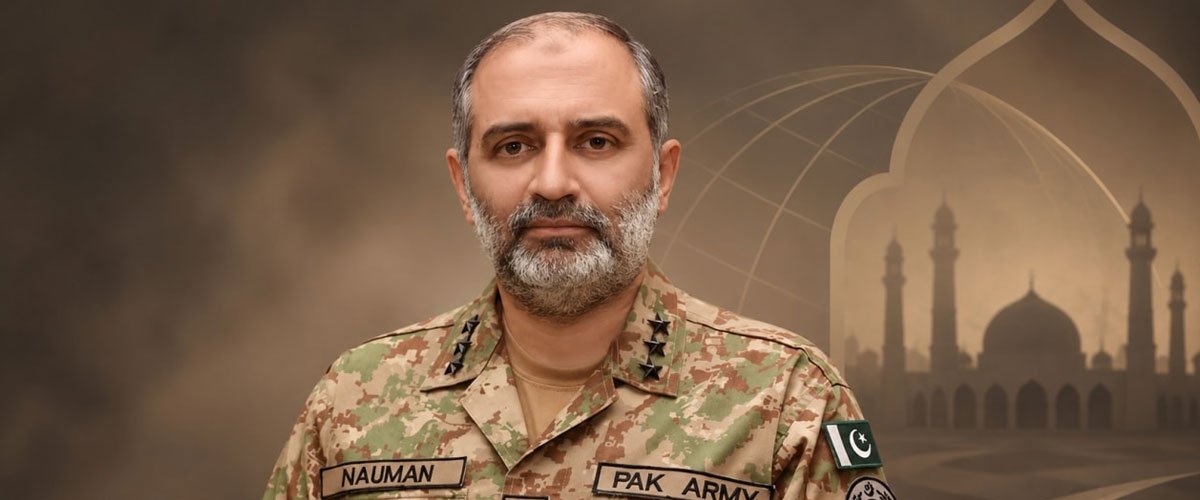
ISLAMABAD: The Foreign Office (FO) announced on Wednesday that retired Lieutenant General Nauman Mahmood had been appointed as the first secretary general of the Makkah Defence Alliance between Pakistan, Saudi Arabia and Turkiye.
“The government of Pakistan is pleased to announce the appointment of Lt Gen Nauman Mahmood, Hilal-i-Imtiaz (Military), (retired), as the first secretary general pursuant to the Makkah Joint Defence Agreement,” the FO said in a handout, referring to the alliance’s initial name.
“The secretary general will lead the general secretariat of the alliance being established at Riyadh,” the FO said.
The appointment of retired Lieutenant General Nauman Mahmood as the first secretary general of the Makkah Defence Alliance comes as the three founding members — Pakistan, Saudi Arabia and Türkiye — begin converting their August 7 joint defence agreement into a functioning institutional arrangement.
The agreement provides that an armed attack on any one of the three countries will be regarded as an attack on all, while the governments have described the arrangement as defensive and intended to strengthen collective deterrence.
Mahmood brings a combination of field command, intelligence analysis, strategic planning and military education to the new position. A Baloch Regiment officer, he commanded an infantry division in North Waziristan before serving as director general of the Analysis Directorate at the Inter-Services Intelligence (ISI), where his responsibilities included assessing external developments and liaison with foreign intelligence agencies.
He subsequently commanded XI Corps in Peshawar during a particularly sensitive period of the Afghanistan conflict and Pakistan’s border-management efforts.
His later appointment as president of the National Defence University adds another dimension to his experience. At NDU, Mahmood was involved in professional military education and strategic studies, after earlier serving in instructional positions at the Command and Staff College. His career therefore spans operational command, counterterrorism, intelligence assessment, Afghanistan-related security affairs and the study of national-security strategy — experience that could be particularly relevant to an organisation whose initial challenge will be integrating three different military establishments and strategic perspectives.
The Makkah agreement could provide a mechanism for the three countries to move from bilateral defence relationships towards structured trilateral security cooperation. Its stated areas include strengthening collective deterrence and defence, improving cohesion and interoperability among the armed forces, and expanding defence-industry cooperation, including joint technology development and production.
Its immediate regional role, however, is likely to depend less on the treaty’s political symbolism than on how far the three militaries develop practical arrangements for consultation, intelligence-sharing, training, defence production and responding collectively to security crises.
The Riyadh-based General Secretariat will be the institutional machinery through which this process is coordinated. The three countries have agreed that the secretary general will head the secretariat, initially for a three-year term, with Pakistan providing the first secretary general. Its likely functions will include preparing meetings and decisions of the alliance’s political and defence bodies, coordinating military and defence-industry cooperation, monitoring implementation of agreed programmes and maintaining communication among the three governments and armed forces. In that sense, Mahmood’s immediate task is less to command a new military force than to build the institutional architecture capable of turning the political commitment of Makkah into sustained defence cooperation.