
Author

Saudi Arabia Faces Renewed Houthi Security Threat
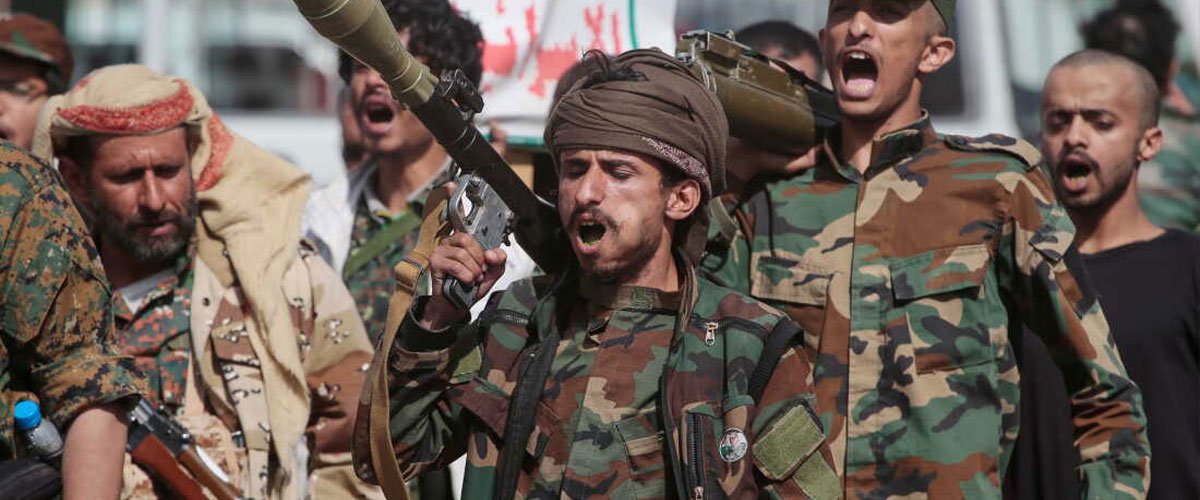
ISLAMABAD: The United Nations Security Council has condemned escalating attacks on Saudi Arabia by Yemen’s Houthi rebels in a rare show of unity from the UN’s top body.
“The members of the Security Council condemned, in the strongest terms, continued Houthi attacks against the Kingdom of Saudi Arabia, including attacks impacting civilian and energy infrastructure, which have resulted in the injury of civilians, including women and children,” says the rotating president of the Council, French UN envoy Jerome Bonnafont, delivering a joint statement.
The Security Council “further stressed the importance of acting in accordance with international law, in particular the United Nations Convention on the Law of the Sea, and of upholding navigation rights and freedoms.”
The body “demanded the Houthis immediately cease their military escalation and their attacks impacting civilians and civilian objects,” according to the statement.
Saudi Arabia is facing a renewed and widening security challenge from Yemen’s Houthi movement, with attacks increasingly reaching beyond the Kingdom’s southern border into major population centres and strategic economic infrastructure. Houthi missile and drone attacks on Abha, Khamis Mushait, Jizan and Najran on September 8 reportedly injured 73 civilians, including women and children, while further attacks struck southern Saudi Arabia in the following days. The United Nations has described the escalation as part of a broader deterioration in Yemen, with fighting intensifying along the Red Sea coast.
The threat became more serious when the Houthis targeted Riyadh, marking the first reported Houthi strike on the Saudi capital during the latest escalation. Saudi air defences intercepted a ballistic missile on September 19, while the Houthis also claimed attacks against targets in Yanbu, Taif and other locations.
The geographical spread of the attacks has increased pressure on Saudi Arabia’s air-defence system and raised concerns about the protection of densely populated areas, airports, military installations and energy facilities.
Energy security has emerged as a particularly sensitive dimension. A separate drone attack on Saudi Arabia’s East-West Pipeline disrupted the route carrying crude to Yanbu on the Red Sea, temporarily affecting an important alternative to the Strait of Hormuz. The pipeline has since resumed operations at reduced capacity, but the attacks demonstrate the vulnerability of Saudi Arabia’s energy infrastructure from multiple directions. At the same time, the Houthi advance along Yemen’s western coast and towards the Bab al-Mandab Strait has created an additional threat to Red Sea navigation and Saudi economic interests.
Against this backdrop, the Security Council’s condemnation reflects concern that the Houthi escalation has become a broader regional security issue rather than simply a Saudi-Yemeni confrontation. The Council has condemned attacks on Saudi civilian and energy infrastructure while also stressing freedom of navigation in the Red Sea and Bab al-Mandab under international law. For Riyadh, the immediate security challenge therefore involves simultaneously protecting its territory, population and energy infrastructure while confronting developments along its southern frontier and safeguarding vital maritime and commercial routes.
