
Author

Pakistan and the IMF: A History of Recurring Bailouts
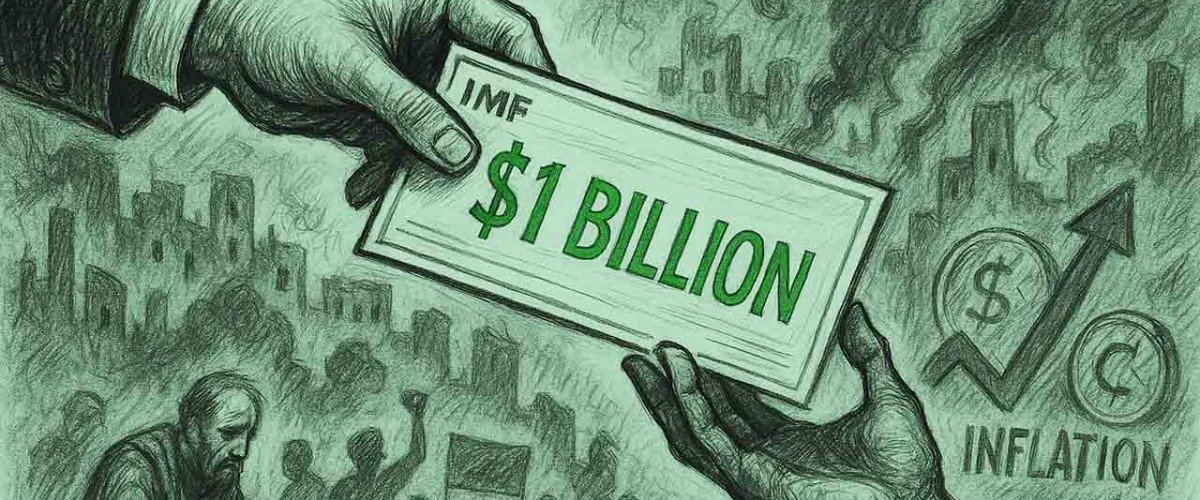
ISLAMABAD: Federal Minister for Finance and Revenue Muhammad Aurangzeb held a kick-off meeting on Tuesday with a visiting staff mission of the International Monetary Fund (IMF).
The IMF mission, led by Iva Petrova, is in Islamabad for the fourth review of Pakistan’s $7 billion Extended Fund Facility (EFF) arrangement and the third review of the $1.4bn Resilience and Sustainability Facility (RSF).
Aurangzeb, in a virtual meeting, briefed the IMF team on the latest macroeconomic indicators, improvements in credit rating and overall investment climate amid a challenging outlook emanating from prolonged Iran conflict.
On the successful conclusion of talks, Pakistan will be entitled to disbursement of about $1.2bn under the two programmes: $1bn under the EFF and $200 million under the RSF by the end of October or early November, but may require waivers from the IMF’s executive board for slippages on structural benchmarks.
Pakistan’s reliance on the International Monetary Fund (IMF) dates back to 1958, when the country entered its first Stand-By Arrangement with the Fund, although it did not draw any funds under that programme. Since then, IMF support has repeatedly been sought during periods of external financing stress, particularly when foreign-exchange reserves, fiscal balances and the balance of payments came under pressure. Pakistan has had 25 IMF arrangements since joining the Fund in 1950, according to the IMF.
The pattern became more pronounced from the 1970s onward, with successive Stand-By Arrangements and longer-term programmes, including Extended Fund Facility (EFF) arrangements in the 1980s and 1990s. Between 1988 and 2004 alone, Pakistan entered a series of IMF-supported programmes involving structural adjustment, fiscal reforms and balance-of-payments assistance. The repeated recourse to the Fund reflected persistent structural weaknesses in public finances and the external account rather than a one-off liquidity problem.
In the 21st century, Pakistan again turned to the IMF during major balance-of-payments crises. A $7.2 billion Stand-By Arrangement was approved in November 2008, while a $6.6 billion EFF followed in 2013. The 2013 programme was followed by another EFF in July 2019, originally amounting to about $6 billion, although Pakistan ultimately drew about $4.5 billion. The 2019 programme expired in 2023 amid difficulties in completing its reviews.
As external pressures intensified in 2023, Pakistan secured a $3 billion Stand-By Arrangement, which helped provide short-term financing and stabilise the economy. After the SBA expired in April 2024, Islamabad negotiated a larger and longer-term programme.
In September 2024, the IMF Executive Board approved a 37-month, $7 billion EFF, with the programme focusing on fiscal consolidation, expansion of the tax base, rebuilding foreign-exchange reserves, reform of state-owned enterprises and restoring the viability of the energy sector.
The latest programme has subsequently been supplemented by the IMF’s Resilience and Sustainability Facility (RSF), providing about $1.4 billion for climate-related reforms and resilience. By May 2026, Pakistan had received about $4.8 billion under the EFF and RSF combined following completion of the third EFF review and second RSF review. The latest round of talks therefore comes against the broader historical backdrop of Pakistan repeatedly returning to the IMF to bridge external financing gaps and undertake reforms intended to address the structural causes of those recurring crises.
