
Author

Militancy and the Erosion of State Authority in KP
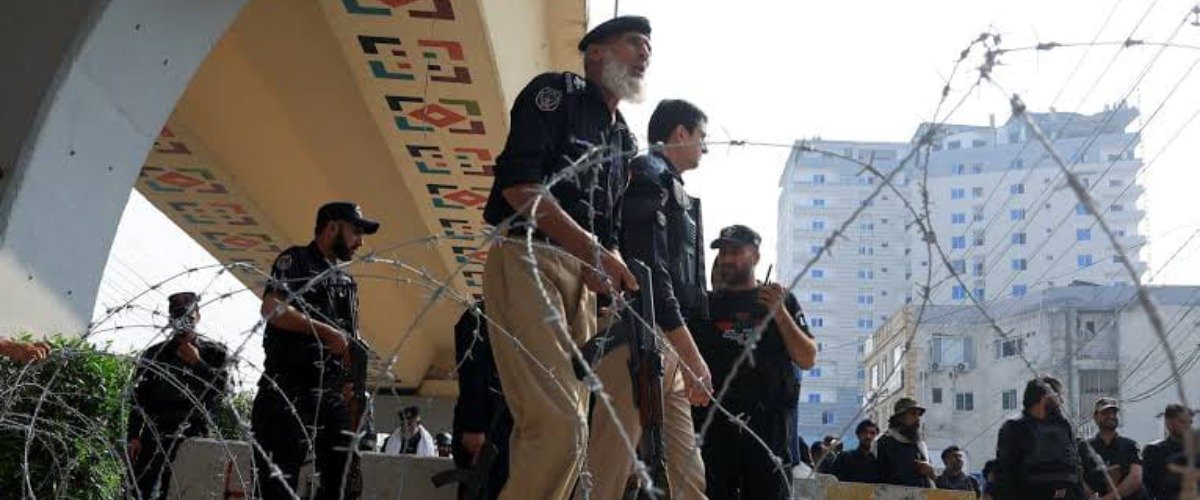
ISLAMABAD: At least 12 cops were injured on Wednesday as a police party came under attack in Kohat’s Gumbat tehsil, Local police officials said Rescue 1122 spokesperson Jawad Afridi, in a video message, said, “There was an incident where a police party came under fire, and so far, we have shifted 12 police personnel to the hospital.”
He said that according to the injured police officials, there were several bodies at the scene. He added that details regarding the exact number of deaths would be shared when more information became available.
A statement issued by KP police said that a major operation had been launched against illegal gold mining, which was being fuelled by a nexus between terrorists and criminal elements.
It said that terrorists attack a police contingent in the Darbukach area, within the jurisdiction of the Gumbat police station, adding that Fitna al Khawarij were behind the attack.
The attack on a police contingent in Kohat’s Gumbat tehsil on Wednesday, which left at least 12 police personnel injured, underscores the persistent security challenges confronting Khyber Pakhtunkhwa. The incident took place in the Darbukach area while police were conducting an operation against illegal gold mining reportedly linked to a nexus between terrorist groups and criminal elements. The provincial police attributed the attack to Fitna al Khawarij, a term used by the state for the banned Tehreek-i-Taliban Pakistan (TTP) and its affiliates. The incident highlights how militant networks are increasingly exploiting criminal economies and local vulnerabilities to challenge the writ of the state.
The security situation in KP has deteriorated considerably over the past few years, with districts in the southern belt, particularly Lakki Marwat, Bannu, Dera Ismail Khan, Tank and parts of Kohat, witnessing repeated attacks on police, security personnel and government installations. Police stations, checkposts and patrols have increasingly come under attack, reflecting the growing operational confidence of militant groups. The frequency of such incidents has also placed considerable pressure on provincial police forces, which are often the first line of defence against militant violence but face serious challenges in terms of resources, equipment and operational capacity.
The resurgence of militancy is closely linked to the deteriorating security environment along Pakistan’s western border. The presence of TTP leadership and operational networks in Afghanistan has remained a major source of concern for Islamabad. Pakistan has repeatedly urged the Afghan Taliban authorities to prevent their territory from being used by militant organisations for attacks inside Pakistan. However, the continued targeting of Pakistani security personnel suggests that the threat has not been effectively contained. The situation has also complicated efforts to restore normal economic and administrative activity in the affected districts.
An emerging dimension of the security challenge is the intersection of terrorism with organised crime, including illegal mining, smuggling and other illicit economic activities. Such activities provide militant networks with potential sources of revenue, logistical support and opportunities to establish influence in vulnerable areas. The Kohat incident is particularly significant in this context because the police operation was directed against illegal gold mining allegedly sustained by criminal and terrorist elements. Combating militancy, therefore, requires more than conventional counterterrorism operations; it also demands effective policing, financial investigations and sustained action against the criminal networks that facilitate militant activity.
The deteriorating law and order situation has wider implications for governance, investment and public confidence in KP. Repeated attacks on police personnel undermine the state’s ability to maintain security at the local level and create an environment in which criminal and militant networks can operate with greater freedom. While intelligence-based operations and military action remain important components of the counterterrorism response, a sustainable improvement will require strengthening the provincial police, improving coordination among civilian and security institutions, dismantling terrorist financing networks and addressing administrative weaknesses in vulnerable districts. Restoring the writ of the state across KP remains essential not only for internal security but also for Pakistan’s broader stability.
