
Author

Shehbaz Calls for Climate Justice, Warns Against Weaponizing Water
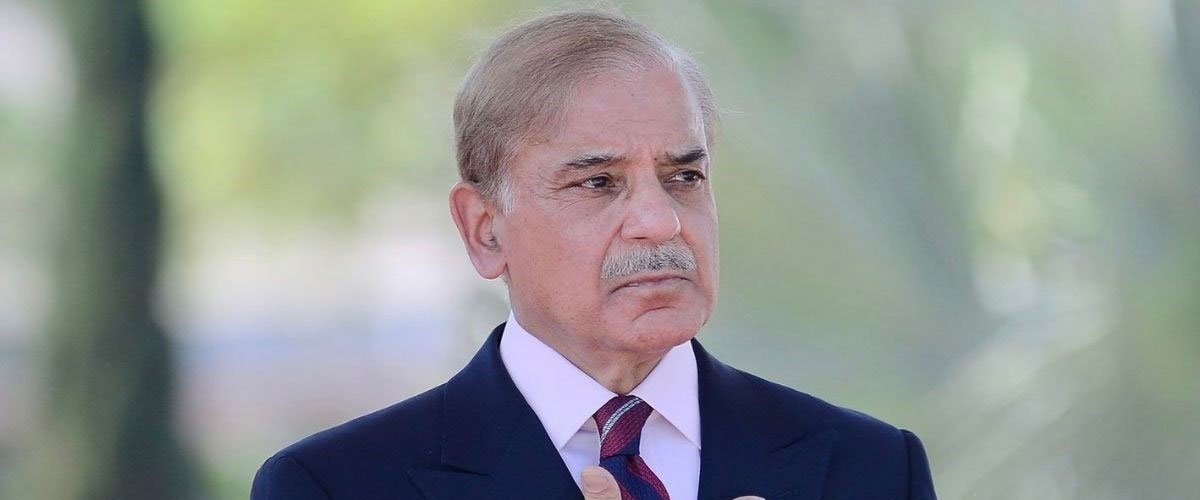
ISLAMABAD: Prime Minister Shehbaz Sharif on Thursday urged grant-based financing for countries affected by climate change.
Prime Minister also warned against “weaponizing water.”
“National effort cannot replace a fair and just global response when climate disaster strikes. Vulnerable countries need timely help and finance that does not deepen their debt. We call for grant-based finance, including public-private partnerships, alongside significant enhancement of resilience and adaptation funds, which amount to survival funds, especially for struggling economies,” said PM Shehbaz at the COP31 summit in the Turkish city of Antalya.
He said that water “must never be weaponised” and that no nation should be allowed to put the lives and livelihoods of people downstream at risk.
“Water sharing agreements must be honoured,” he said.
The prime minister said national efforts to combat climate change could not replace a fair and just global response. “When climate disasters strike, vulnerable countries need timely help and finance that does not deepen their debt,” he said.
PM Shehbaz called for grant-based financing, including public-private partnerships, alongside a significant increase in resilience and adaptation funds, which he described as essential for the survival of struggling economies. The prime minister recalled the devastating floods in Pakistan, highlighting the human and economic consequences of climate-related disasters.
He recounted the story of a young man in Buner who was just two days away from his wedding when flash floods struck his village in August 2025. “A home preparing for celebration became a house of mourning,” he said.
PM Shehbaz said he had visited families who had lost their homes, livelihoods and loved ones in the floods. He said their suffering reflected the experiences of millions of people in Pakistan and across the developing world who had contributed the least to climate change but were facing its most severe consequences.
Referring to the devastating floods of 2022, the prime minister said one-third of Pakistan had been submerged, affecting 33 million people.
Pakistan, despite contributing a relatively small share of global greenhouse gas emissions, remains among the countries most vulnerable to climate change. Its climate policy framework, guided by the National Climate Change Policy 2021 and the National Adaptation Plan 2023, focuses on climate resilience, disaster risk reduction, water security, ecosystem restoration and sustainable development.
The government has also pursued initiatives such as the Living Indus programme and large-scale afforestation and ecosystem restoration efforts to strengthen environmental protection and reduce climate vulnerabilities.
The devastating floods of 2022, which submerged nearly one-third of the country and affected approximately 33 million people, exposed the scale of Pakistan’s climate vulnerability and the economic consequences of extreme weather events. The catastrophe prompted Pakistan to press for climate justice and greater international support, including through the Loss and Damage Fund established at COP27.
However, Islamabad has consistently maintained that climate financing should be accessible, predictable and additional to existing development assistance, with grants rather than loans forming a substantial part of the support extended to countries facing climate-induced losses.
The prime minister also recalled the flash floods that struck Buner in August 2025, recounting the tragedy of a young man who lost his life just two days before his wedding. The incident, he said, illustrated the devastating human consequences of increasingly unpredictable weather patterns. Pakistan’s climate policy priorities therefore extend beyond emergency relief to include resilient infrastructure, improved early-warning systems, climate-smart agriculture, watershed management and better preparedness at the community level.
Islamabad maintains that domestic adaptation efforts must be matched by international financial commitments, technology transfer and cooperation, particularly from major economies whose historical emissions have contributed disproportionately to global warming.
