Author

Courts of Justice and Political Verdicts — A Complex World
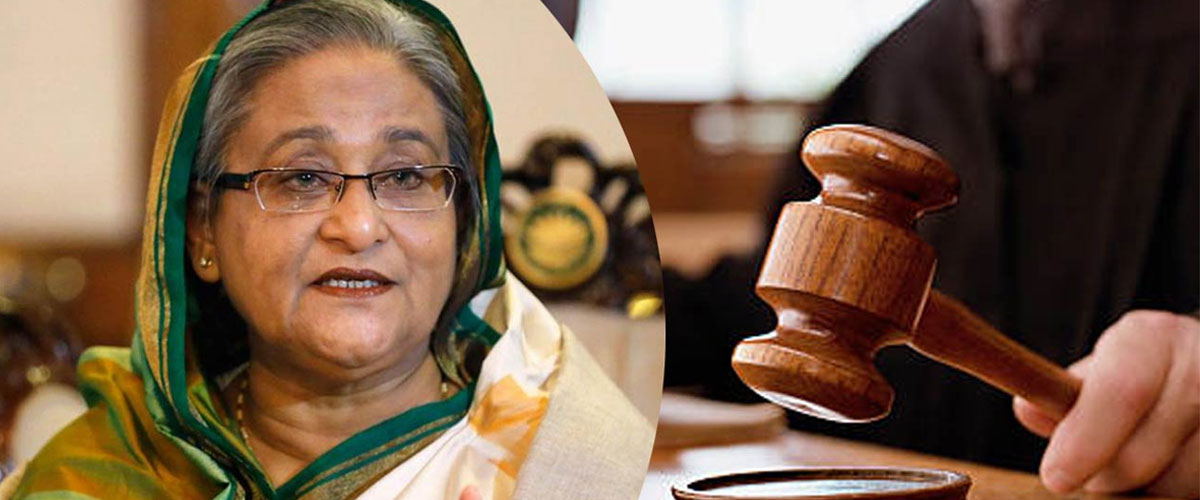
Bangladesh’s International Crimes Tribunal has declared former Prime Minister Sheikh Hasina guilty of crimes against humanity and sentenced her to death. The three-member tribunal, headed by Justice Muhammad Ghulam Murtaza, announced the verdict in the cases filed against Sheikh Hasina Wajid, declaring her guilty of instigating violence and ordering killings. She was handed life imprisonment on charges of incitement and issuing orders to kill, while in three other charges she was sentenced to death.
The tribunal released a detailed 453-page judgment, ordering the death penalty for Sheikh Hasina Wajid. Strict security arrangements were made across the country during the announcement, and protests erupted outside her residence as the verdict was delivered. The Bangladeshi court stated that Sheikh Hasina “deserved the death penalty 1,400 times.” According to the leaked phone call referenced in the judgment, she had allegedly ordered the killing of protesting students. Instead of listening to their demands, Sheikh Hasina had, according to the court, fuelled unrest and used insulting and coercive measures to crush the student movement. She received the death sentence specifically in the case related to burning six people alive.
Meanwhile, former Prime Minister Sheikh Hasina Wajid rejected the verdict declaring her guilty of crimes against humanity. In a message to the Awami League and her supporters after the judgment, she said that all allegations against her were false and urged her supporters not to worry. “Let them announce whatever verdict they want; I do not care,” she stated.
She added, “Allah has given me life, and only He will take it. I will continue to work for my people. I lost my parents and my siblings—they burned my house. We will not forget this.”
Across the world, delivering justice in cases of crimes against humanity has never been easy. After the Second World War, the Nuremberg Trials sent a clear message that even the most powerful perpetrators—whether backed by states or armed by authority—could not escape accountability. Later, courts and tribunals in the former Yugoslavia, Rwanda, Cambodia and several Latin American nations delivered verdicts against thousands of individuals involved in war crimes and crimes against humanity.
With the establishment of the International Criminal Court (ICC), the world gained—for the first time—a permanent forum for legal prosecution of such crimes. Yet the reality remains that many powerful nations and political leaders continue to escape global accountability. As a result, the international justice system often appears shaped by politics. In some cases, such verdicts are hailed as justice; in others, they are seen as political revenge.
The verdict against Sheikh Hasina Wajid is expected to alter the political balance of Bangladesh. New political alignments may emerge, and the Bangladesh Nationalist Party (BNP) along with other opposition groups will likely attempt to expand their influence. Political instability could intensify, and street protests may once again dominate national politics.
If the verdict generates public sympathy for Hasina, she or her party may re-emerge politically with renewed strength.
This decision may also carry significant international consequences. It could be a major setback for India, which has long considered the Hasina government a reliable ally. China and the United States also view Bangladesh as strategically vital, and both may reassess their diplomatic approaches under the new circumstances. This shifting landscape could spark a new struggle for regional influence among India, China, and the United States—impacting the entire South Asian region.
Cases involving crimes against humanity stand on moral and legal principles, yet domestic politics and global power dynamics often influence them. Thus, every such verdict is viewed through two lenses: judicial and political. In Sheikh Hasina Wajid’s case, this complexity is even more pronounced. The world will not assess this judgment solely as a matter of Bangladeshi law but as part of broader regional and global political currents.
The punishments handed down to perpetrators of crimes against humanity worldwide remind us that the rule of law can prevail—but power, politics, and diplomacy inevitably shape the path. Any major verdict in Bangladesh affects far more than one individual; it leaves deep marks on politics, regional balance, and global diplomacy.
The decision against Sheikh Hasina Wajid is not just a verdict in one case—it is a new example of the constant struggle between justice and politics, reflected in South Asia’s evolving political realities and the shifting priorities of global powers.