Author

Anti-Pakistan Provocative Statements — India’s Compulsion Or A Political Fashion?
The Pakistan Hindu Council has strongly condemned the provocative statement made by the Indian Defence Minister regarding Sindh. Patron-in-Chief of the Pakistan Hindu Council, Dr. Ramesh Kumar Vankwani, said that the patriotic Pakistani Hindu community considers Pakistan its own motherland. He called Rajnath Singh’s statement irresponsible, provocative, childish, and foolish.
Dr. Ramesh Kumar said that Sindh is an integral part of Pakistan; borders around the world do not change through emotional slogans or fiery speeches. “We are proud,” he added, “that at the time of Partition, our elders abandoned the idea of migration on the advice of Quaid-e-Azam.” He urged the government of Pakistan to take strong diplomatic notice of the Indian Defence Minister’s remarks.
In his provocative statement, Rajnath Singh had said that although Sindh may not be a part of India today, “culturally it has always belonged to India. And as far as land is concerned, borders can change. Who knows—perhaps one day Sindh may return to India.”
South Asia is among the regions where peace remains a long-held aspiration. Yet it is unfortunate that India, which calls itself the world’s largest democracy, often adopts an anti-Pakistan narrative for political gains, electoral needs, and domestic pressure. This narrative not only deepens mistrust between the two countries, but also affects the peace of the entire region.
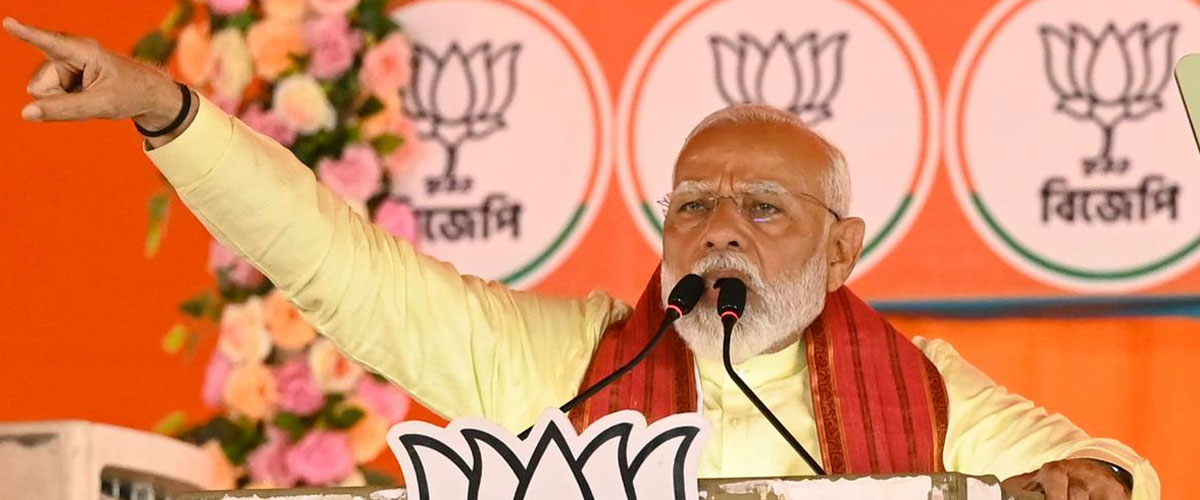
In India’s domestic political structure, nationalism has become a tried and tested formula. For the ruling BJP in particular, using Pakistan’s name, igniting war hysteria, or giving aggressive statements is the easiest way to mobilize voters. During Indian election campaigns, harsh language against Pakistan has always been an effective tool to secure votes.
Through this tactic, public attention is diverted from real issues such as rising inflation, unemployment, industrial decline, and farmers’ protests. By provoking anti-Pakistan sentiment, the majority vote bank is emotionally consolidated. In rallies, “security nationalism” becomes the centerpiece—where portraying opponents as weak becomes necessary. This is precisely the style of politics that experts term “diversion politics.”
In this environment, the hostile approach of the Indian mainstream media toward Pakistan is an open secret. A large portion of Indian media follows the government narrative closely. TV ratings spike whenever there is loud, sensational debate against Pakistan in the studio. In such a media environment, aggressive statements cost Indian leaders nothing; instead, they bring political gains, as the media portrays them daily as “strong leaders.”
India remains one of the world’s largest arms importers, with a defense budget that keeps rising. Within this framework, portraying Pakistan as a permanent threat has become a political and economic necessity for the defense establishment and its supporting lobby.
Indian state institutions often level accusations against Pakistan without presenting evidence. The objective is to damage Pakistan’s international image, increase diplomatic pressure, and maintain India’s narrative dominance in the region. As a result, the Pakistani state’s stance does not weaken, but regional mistrust certainly increases.
Indian society still carries the psychological imprints of the Partition, the Kashmir dispute, and the rise of Hindu nationalism. Together, these factors create an environment where Pakistan is perceived as an “eternal enemy.” Indian politicians fully understand this psychology and exploit it for political benefit.
The truth is that tensions between India and Pakistan have risen instead of easing. Trust has not been established. The process of regional economic development has slowed and become unstable. The international community continues to view both countries with concern. Provocative rhetoric may bring temporary political advantage, but it obstructs long-term peace, trade, development, and regional stability.
South Asian populations face poverty, unemployment, and lack of education. In such circumstances, if India and Pakistan demonstrate political courage, peace can be established along the borders, regional investment can increase, and trade can boost both economies—ultimately improving the quality of life for the people.
Provocative statements serve neither India’s interest nor Pakistan’s. The leadership of both countries must rise above political gain and think about the future of the region. Unfortunately, in India today, this forward-looking approach is overshadowed by the politics of power and electoral advantage.