
Author

From April 2022 To December 2025: What Did Pakistan Lose And Gain?
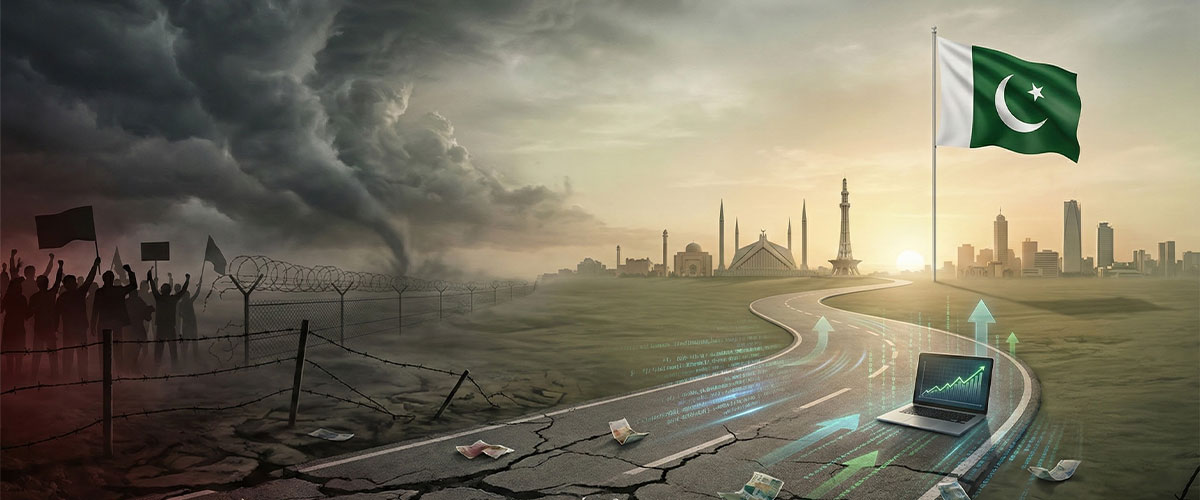
The removal of Imran Khan’s government through a no-confidence motion in April 2022 was not merely a political change; it marked a significant turning point in Pakistan’s political journey. This single event altered the course of politics and left lasting effects on the state, the economy, and public psychology—affects that remained visible through the end of 2025.
Following the ouster of Imran Khan, the country immediately entered a phase of intense political instability. The coalition government that came to power carried a weak mandate and spent most of its time defending itself and managing opposition challenges. As a result, state decisions were delayed, and the national narrative revolved around power struggles rather than development.
Economically, the situation became even more complex. Foreign exchange reserves plummeted, the rupee hit historic lows, and inflation severely eroded the purchasing power of ordinary citizens. By 2023 and 2024, entering an IMF program became inevitable, resulting in tough financial measures. While these measures prevented the economy from collapsing by 2025, the cost was borne primarily by the common people.
Politically, the trust gap between the state and the public widened after 2022. Arrests, restrictions, and ongoing political confrontations weakened democratic norms. Even after the general elections of 2024, the political temperature did not subside, reinforcing the perception that the issue lies not just with governments, but with the system itself.
However, there is another side to the story. By the end of 2025, Pakistan had emerged from the brink of total collapse. Fiscal discipline, limited economic stability, growth in sectors such as IT and freelancing, and an increase in remittances are all factors that offer a glimmer of hope. On the security front, challenges persist, but the state response appears relatively organized.
From a critical perspective, Pakistan at the close of 2025 does not stand on solid ground but occupies a fragile transitional stage. The country has learned how to survive crises, but a clear path to development remains blurred. Without political tolerance, economic self-reliance, and institutional transparency, these improvements may prove temporary.
Meanwhile, Defense Minister Khawaja Asif stated that construction has begun on the “ruins” left by the previous government. In a statement, he said that Pakistan now has a clear stance on major issues and that the country is entering 2026 with dignity and pride.
In the end, the central question remains: after the price paid by the nation since April 2022, have we achieved a better system, or have we merely bought time? By the end of 2025, Pakistan has not collapsed—that is a fact. But has Pakistan become stronger? History has yet to provide the answer.
