Author

After The War Failed: Trump’s Threat And The Limits of American Power
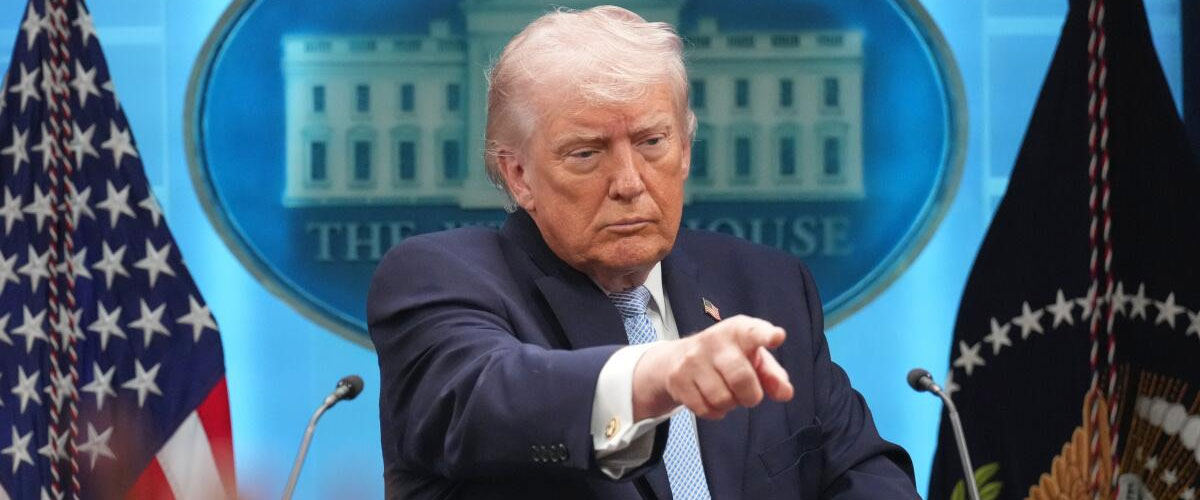
When Donald Trump threatened that Iranian civilization “will die tonight,” it was not a routine battlefield statement. His statement revealed less about American military power and more about its limits in the ongoing Middle Eastern conflict.
Realistically speaking, only nuclear weapons could wipe out a whole civilization. Even a massive use of conventional weapons could not make a civilization die in a single night. When the leader of a powerful military power talks about ending a civilization, it means he has exhausted all the normal tools of coercion that exist in his inventory.
More than a month-long US-Israeli military campaign against Iran failed to produce the stated political objectives like regime change. The Iranian state and military didn’t show any signs of collapsing or cracks within its ranks. Iran’s core military capabilities survived the military campaign. Iran fired more than 400 ballistic missiles against Israel on the first day of war. The number of attacks were greatly reduced by the end of war.
But it never completely stopped. The main issue is that American and Israeli military campaigns failed to translate into coercive leverage. US military capability proved itself to be unmatched in its military effectiveness in the battlefield. But the fact that this unmatched military capability on the ground failed to produce the desired political objective is beyond any doubt.
The notion that President Trump’s statement was an implicit nuclear threat is debatable. Literal interpretation will convincingly prove that what President Trump meant was a nuclear strike against Iran. During the Second World War there were massive carpet bombings of different cities in Europe and Japan. And Yet civilizations survived the Second World War.
We can interpret Trump’s statement in two ways: first, it was a rhetorical exaggeration. Second, it was an implicit nuclear threat. Several experts point out that there are chances President Trump’s statement was not cleared by Washington’s policy apparatus. They say Americans had a distinctive style of issuing nuclear threats during the Cold War. Most of the times when Americans issued nuclear threats against the Soviet Union it was not in the form of a verbal statement.
Rather the threat was issued through operational movement of nuclear weapons or their delivery system close to the theatre of military tensions or conflicts. Like moving the nuclear bombers to the forward bases or raising the alert level of nuclear forces. This time President Trump’s “A whole civilization will die” statement was not backed by any operational movement.
When a state jumps to civilizational threats after a failed conventional military campaign, it doesn’t signal strength, its behavior indicates lack of usable military options.
Apart from the dreadful impression Trump’s statement created in the public realm, the Iranians didn’t have any reason to take the statement seriously at the strategic and the military levels. For the obvious reason that the US military in the region didn’t make any movement that corresponded with the threat. Neither did the US military and government make any explicit or implicit signaling in this regard.
The use of conventional military tools in the month-long war failed to force the collapse of the Iranian regime or to compel the Iranians to surrender.. This left Americans with two options: first, they continue to use the conventional military tools against Iran, which have not worked and which would not have worked if they continued to use them. They threaten to use weapons that can make “a whole civilization die” as the President did.
The intended objectives of the statement from Trump’s perspective could be listed as follows: first, it was an attempt to restore deterrence which had been lost in the process of war where both Americans and Iranian made massive use of ballistic, cruise missile and One way attack drones against each other.
Second, the statement was an implicit admission of limits of American conventional military power. Third, it was simple political rhetoric aimed at the domestic audience to influence public opinion in American society.
Now the situation on the ground is that a two-week ceasefire has been agreed upon. On coming Friday US and Iranian representatives are scheduled to meet in Islamabad to discuss a permanent end to hostilities. Israel has conditionally agreed to respect the ceasefire. The talks, however, will not be held under the shadow of American military power but under the memory of its limits. Iranian policy makers and diplomats’ minds are filled with the stories of Iranian resilience. Iran will enter Islamabad talks with validated resilience. Whereas the US will enter talks with damaged coercive credibility.
Americans should not believe that the impending Islamabad Accord will be a manifestation of compliance under coercion. It will be a bilateral agreement where both sides are facing strategic and political constraints.
President Trump’s extreme threat was not the peak of American coercive power. It was rather an admission that everything below that escalatory ladder has failed to work. The “civilization will die” tweet didn’t restore American coercive credibility. It only damaged its diplomatic seriousness.
The world is watching the developments in the region with anxiety, and the general expectation is that Islamabad Accord will bring a permanent end to hostilities. The war could possibly end in a way that could appear like a disguised American political defeat or in the form of a highly distorted shape of regional political and military order. What we see in the Middle East is history in the process of formation.