Author

From Iraq To Iran, U.S. Strategy Has Shifted From Long Occupations To Short, High-Intensity Conflicts
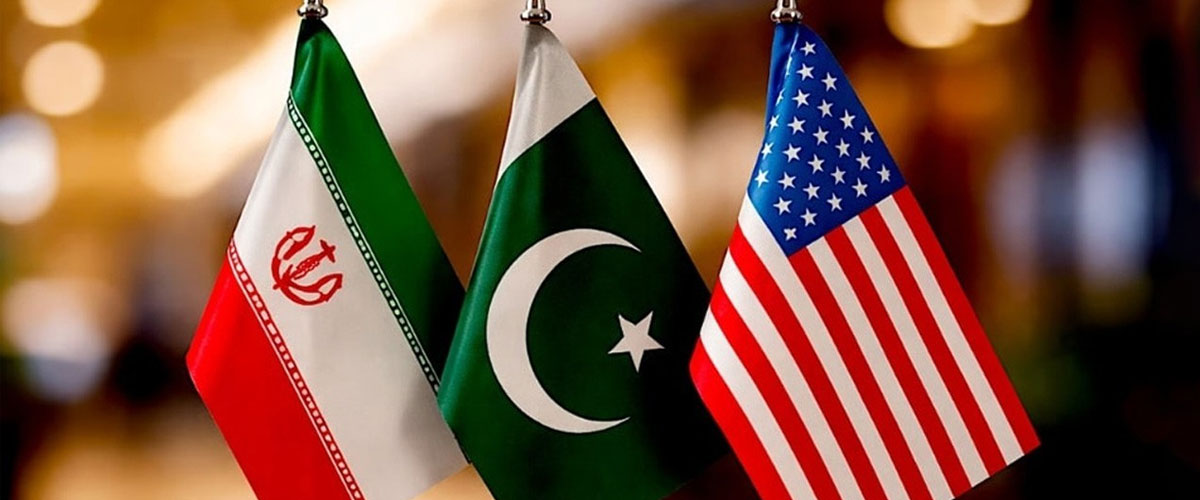
Islamabad is hosting American Vice President, JD Vance who is in town to hold talks with the Iranian delegation following two weeks of ceasefire after a month-long war. The talks are seen as an indicator that Washington wants to step back. The point is that It is not stepping back from risk. It is only redesigning the risk involved in war.
America has not abandoned military intervention after Iraq. Instead of long-term occupation heavy wars, it has redesigned interventions as short term, high intensity conflicts that reduces the chances of long-term entanglement. Iran war is a classic example: Short duration, highly destructive war with no risk of long-term entanglement of American military in Iran.
President Trump became famous for his anti-war rhetoric. He criticized endless wars in Afghanistan and Iraq. Yet he didn’t hesitate to start an extremely dangerous war with Iran. Attack on Iran could be described as one of the most escalation prone scenarios imaginable. Trump is on record repeatedly saying he wants to avoid endless wars. In this situation what explains Trump’s adventure in Iran?
The popular narratives or the impressions they create of the political character of Americans post-Cold War presidents’ foreign policies will not stand the test of rigorous historiography. That President Trump is anti-War, that President Clinton was peaceful and that George Bush Junior was the only interventionist, are all characterizations which will hardly stand the test of rigorous analysis or intellectual scrutiny. The fact is all US Presidents have used force outside the US territory during their times in office–the question is not whether they had intervened in foreign lands, but how they had intervened and how they had packaged their intervention.
President George Bush Senior launched a full-scale war against Iraq. He managed a cover of international sanctions from the UN Security Council. Clinton’s tenure was a period of managed intervention in Kosovo backed by multilateral cover. It was a controlled escalation. George Bush Junior’s tenure was a period of maximal intervention. He invaded two countries–Iraq and Afghanistan–which led to long-term occupations. Obama, Trump and Biden’s tenures were periods of compressed intervention. It involved no occupations. They relied on air power, drones, sanctions and proxy actors to intervene in foreign lands.
The Obama Administration used drones’ warfare in Libya, and in the anti-ISIS campaign in Syria and Iraq. During Donald Trump’s first tenure he applied maximum military pressure that led to targeted strikes, which were centered around less troop-heavy wars. The Joe Biden era would be known for no major war in which the United States directly intervened. But even he provided military support to Ukraine in its war against the Russian Federation.
But it will be folly to label all these wars with the loaded term of military intervention primarily because all these Presidents packaged their military adventures completely differently. Intervention in Kosovo in 1990s was portrayed as an effort to stabilize the conflict in the Balkans, which, President Clinton said, was needed to uphold international order.
George Bush Junior intervention was aimed at promoting democracy in the Middle East and to present Iraq–the country he intervened in–as a model of liberal democracy in the Muslim world. Obama was just interested in managing threats in the troubled spots. Biden went out of the way to defend American allies in Europe by supplying arms to Ukraine. Trump in his first tenure averse to any risk but still intervened militarily in the Middle East to avert threats. But American Presidents learned a lesson after Iraq–they made it a point not to launch an intervention.
The Iran war was extremely dangerous from a regional perspective–a prolonged conflict could have dragged many regional countries into the war. The exchange of ballistic missiles and One way Attack drones proved highly destructive for Iran and other regional countries. It could have spread to the neighboring regions. Yet for Trump, this was a preferred form of conflict over a war that involved occupation of foreign land.
It is strange that several American analysts still label President Trump’s foreign policy as risk averse. True, Trump’s attack on Iran involves a high level of risk. But still there was little chance of long term American military entanglement in the region. In other words, the attack on Iran was designed in a way which could not have led to occupation of that country. So Americans don’t want to avoid danger or risk. They have chosen to experience the risk in short bursts and not in the form of long-term wars.
Trump has proved he is not anti-war; he is anti-duration. He is averse to engaging the American military in long term invasions and occupations. He has shown willingness to escalate sharply in a conflict. And yet he doesn’t seem to be averse to engaging the same enemy in talks, whom he has expressed the intention to annihilate as a civilization. This, he seems to believe, will keep his “Anti-endless war” rhetoric intact.
The era of endless war may have come to an end as far as American military strategy is concerned. However, it is being replaced by highly destructive short-term wars. It has redesigned military interventions. As a foreign policy analyst, I cannot predict future. However, I believe American foreign policy elites will be serving their national interests as well as the interests of international community best if they learn the lesson that even short duration wars or military interventions are unaffordable.