Author

Standing Tall: Pakistan’s Quiet Diplomacy in a Fracturing Middle East
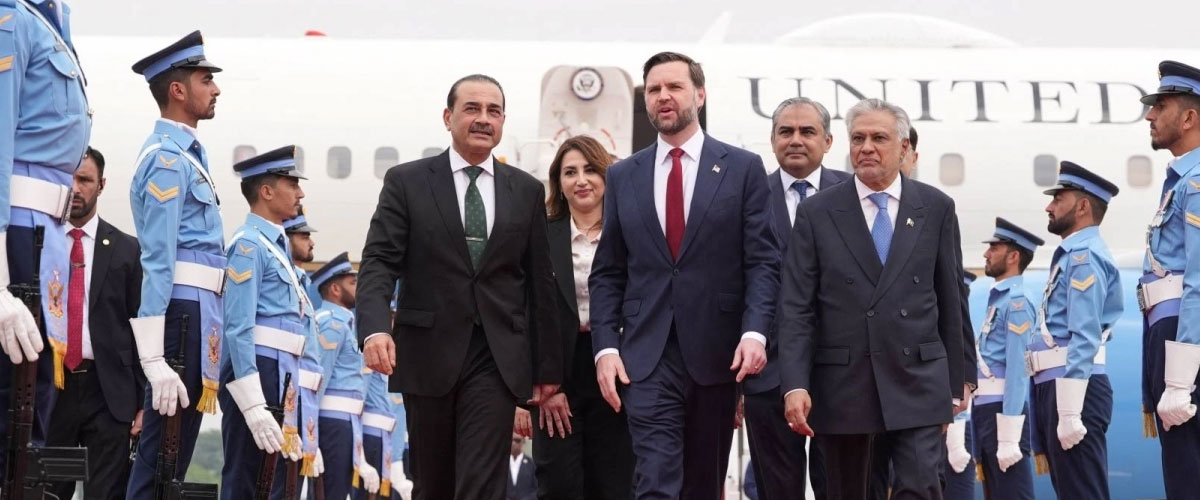
As tensions involving Iran, the United States, and Israel edge toward direct confrontation, the Middle East stands on the brink of a wider conflict—one that threatens not only regional stability but the foundations of the global economic system. In recent days, oil prices have surged while tanker traffic through the Strait of Hormuz has thinned under mounting security risks—early signals of a crisis no longer contained.At home, the stillness in Islamabad—marked by shuttered schools, disrupted routines, and slowed movement during high-level diplomatic engagements—reflects a nation willing to absorb inconvenience in the service of peace, underscoring the resilience of its people.
At the center of this confrontation lies the Strait of Hormuz, a narrow maritime corridor through which nearly one-fifth of the world’s oil supply transits. Its disruption has turned a geopolitical standoff into a systemic economic shock. Shipping risks are rising, insurance premiums climbing, and supply chains straining under uncertainty.
Yet beyond markets lies a far more profound cost: the loss of innocent lives.
Civilians—including women and children—continue to bear the brunt of escalation. Schools, homes, and essential infrastructure are caught in cycles of retaliation. These are enduring human tragedies that underscore the urgency of de-escalation—and the failure of politics to stay ahead of violence.
From Strategic Rivalry to Systemic Risk
The Iran–U.S.–Israel dynamic is rooted in decades of mistrust and competing security doctrines. Today’s escalation marks a qualitative shift—defined by eroding deterrence, increasing reliance on pre-emptive doctrines, and the expansion of conflict across military, maritime, and economic domains.
The Strait of Hormuz has become both chokepoint and lever. Disruptions—real or anticipated—are enough to unsettle global markets, as energy flows now serve as instruments of strategic signaling.
What makes this moment particularly dangerous is the shrinking margin for error. With multiple actors operating across overlapping theatres, miscalculation is no longer distant—it is an ever-present risk.
For energy-importing economies like Pakistan, the consequences are immediate: rising import bills, pressure on foreign exchange reserves, and renewed inflationary stress.
Global Economic Shockwaves
While oil dominates the narrative, the economic implications are broader. LNG supplies from the Gulf face similar vulnerabilities, fertilizer and petrochemical chains are under strain, and rising freight and insurance costs are burdening global trade. Investor sentiment is shifting toward risk aversion.
For developing economies already under fiscal stress, such shocks are destabilizing. Currency pressures, widening current account deficits, and shrinking policy space are likely if volatility persists.
At the same time, the crisis is accelerating structural shifts—diversifying energy routes, testing non-dollar trade mechanisms, and gradually reconfiguring geopolitical alignments.
Pakistan’s Diplomacy: Quiet, Calculated, Necessary
In this volatile landscape, Pakistan’s role—though understated—acquires significance.
Despite economic constraints, Pakistan has not retreated inward. It has engaged carefully and consistently, recognizing that disengagement is not neutrality—it is irrelevance.
Its response has centered on calls for restraint, support for dialogue, and the maintenance of a balanced, non-aligned posture, reinforced through discreet backchannel engagement.
This is not diplomacy of visibility; it is diplomacy of credibility.
Pakistan’s ability to maintain working relationships with Iran, longstanding ties with the United States, and linkages across the Muslim world is not incidental—it is strategic capital.
More importantly, this posture reflects a broader foreign policy recalibration—prioritizing economic stability, regional connectivity, and insulation from external shocks. Peace, in this framework, is not idealism. It is necessity.
Standing Tall—Within Limits
To say Pakistan has “stood tall” is not to overstate its influence. It is to recognize discipline.
Pakistan has maintained restraint under pressure, avoided reactive alignment, and preserved credibility across competing actors. In an era where visibility is often mistaken for strength, such restraint is a more difficult—and more consequential—choice.
Why This Role Matters
Pakistan’s engagement, though measured, is not inconsequential.
Geography alone imposes stakes. Instability in Iran or the Gulf directly affects Pakistan’s security environment. Economic exposure reinforces this reality, with energy imports, remittances, and trade linkages tying Pakistan’s stability to the region.
At the same time, diplomatic space—though limited—remains real. In a polarized world, those able to communicate across divides retain quiet but meaningful relevance.
There is also a reputational dimension. Constructive engagement strengthens Pakistan’s standing as a responsible stakeholder—one that contributes to stability rather than merely absorbing its consequences.
Risks That Remain
The path ahead remains uncertain, with risks of direct confrontation, prolonged disruption of trade routes, expansion into cyber and financial domains, and deepening regional polarization.
There is also the danger of normalization—where instability becomes the baseline, reducing urgency for resolution while deepening structural damage.
Even with de-escalation, the aftershocks—economic, political, and human—will endure.
Conclusion: The Value of Measured Statecraft
In moments like this, influence is not defined by visibility alone, but by the ability to shape outcomes at the margins where escalation can still be prevented. Pakistan’s approach reflects continuity—measured, balanced, and anchored in realism—but it also signals intent.
To stand tall is not merely to resist escalation, but to preserve space for dialogue where it is rapidly shrinking. In an interconnected world, stability is a shared responsibility—and those who can speak across divides carry both burden and opportunity.
Peace facilitation is not a one-off gesture. It is a long-term strategic posture—one that can gradually redefine Pakistan’s role from a frontline state to a bridge-builder.
In a region where margins for error are narrowing, such steadiness is not passive. It is purposeful. It is necessary. And increasingly, it is indispensable