Author

Why Pakistan Should Cooperate With India Against Terrorism
In the post-9/11 situation, Pakistani intelligence became a critical partner of the western countries in global campaign against terrorism. Pakistani intelligence services helped western countries identify terror suspects, disrupt terror networks in Europe and United States and prevent attacks. In today’s Pakistan there is now less unanimity of views about that period and how Pakistani security apparatus contributed in the international war against terror, but still we cannot avoid a central fact: Pakistan could cooperate with friendly and not so friendly countries in dealing with the threat of terrorism if it considers that cooperation to be in its national interest.
This leads us to an uncomfortable question. If Pakistan can cooperate with countries located thousands of kilometers away, why, in Pakistan, it is considered impossible to cooperate with India against terrorism? Pakistan should extend intelligence cooperation to India against terrorism not as a concession to it but as a strategic investment in its own security and its standing in the international system.
In the years following 9/11 Pakistan learned two lessons: First, terrorism ultimate threatens the state which tolerates it. Secondly, extending intelligence cooperation to states, which, at that moment, were not pursuing sympathetic foreign polices towards Pakistan, was not a sign of weakness but a tool of statecraft. In the wake of Al-Qaida attack on American cities the intelligence cooperation between western European countries, American CIA and Pakistani intelligence became a routine matter. This cooperation was of critical importance in European states campaigning against terror networks in their territory.
In the same way, American CIA and FBI prevented major attacks on mainland America with the assistance of Pakistani intelligence. British intelligence nabbed the culprits of London subway attacks with the help and assistance of ISI. This was the period when states in the west and in our parts of the world were in the process of learning how the terror networks operated in Europe and other parts of the world.
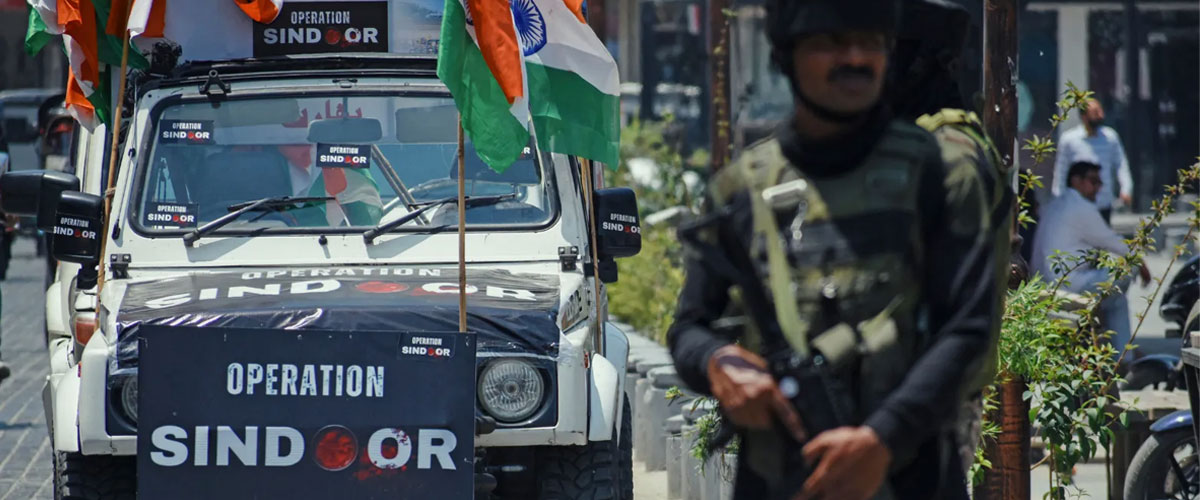
I will present two arguments to support my contention that Pakistani should extend cooperation to India on counter terrorism front. Firstly, almost all terrorism incidents in India during the last two decades have always resulted in military tensions, confrontation or direct conflict between Pakistan and India. Therefore, it will be in Pakistan’s as well as in India’s interests to create an environment where war is removed as an option for policy makers on both sides. Secondly, the world has become increasingly less tolerant of non-state armed actors.
This is an environment which can prove conducive for Indian belligerent stance in case of any future terror attack. It would be in Pakistan’s interests to offer verifiable cooperation to India against any type of terrorism.
And of course, Pakistan could demand reciprocity in this regard. This will not be tantamount to Pakistan meet the demands of India, rather it would be a diplomatic masterstroke to deprive India of its most lethal diplomatic weapon.
The aim of counterterrorism cooperation should obviously not be to win Indian gratitude. Rather this move will go a long way in achieving Pakistan’s objective of avoiding a war with India. Secondly, it will strengthen Pakistan’s international standing and would certainly deny hardliners in India a justification for confrontation.
Cynics will argue that at this moment of high diplomatic achievements—when Pakistan’s political and military leaders are receiving applause from White House and from around the world for their role in US-Iran peace deal—it will not be realistic to expect Pakistani leaders to make such a move which can potentially show them weak-kneed. I think diplomatic success is exactly the moment when political leaders possess the greatest room for strategic innovation. States make bold moves from a position of strength and confidence not weakness.
Second strong argument against this idea is the Indian intransigence in its aggressive posturing towards Pakistan. India is not interested in cooperation, it doesn’t believe in talks on contentious issues like Kashmir and there is a tendency in India blame every security incident on Pakistan, the critics would say. The point, however, is that states pursue their strategic interest irrespective of the fact whether the other states are responding positively or not.
I am not suggesting that Pakistan should make a unilateral concession. Neither I am arguing that Pakistani government should accept every allegation that Indians hurl on Pakistan and its security apparatus. And obvious nobody should be naïve enough to expect that India would immediately become friendly with Pakistan. None of this is likely to happen.
I am only arguing that Pakistan should ensure that no group operating from its territory should be allowed be to become the trigger of another military crisis in South Asia. This kind of policy will strength Pakistan’s security, will avoid the risk of war between two nuclear states and improve its diplomatic standing even further. Pakistan played a critical role in the war against terrorism and its intelligence helped prevent major terror attacks in Western countries. The question is whether its leadership could be imaginative enough to repeat this performance in its neighborhood. With the help of common sense, we can easily distinguish between politically weak-kneed and politically wise leaders.