Author

Why Pakistan Matters Again to Washington
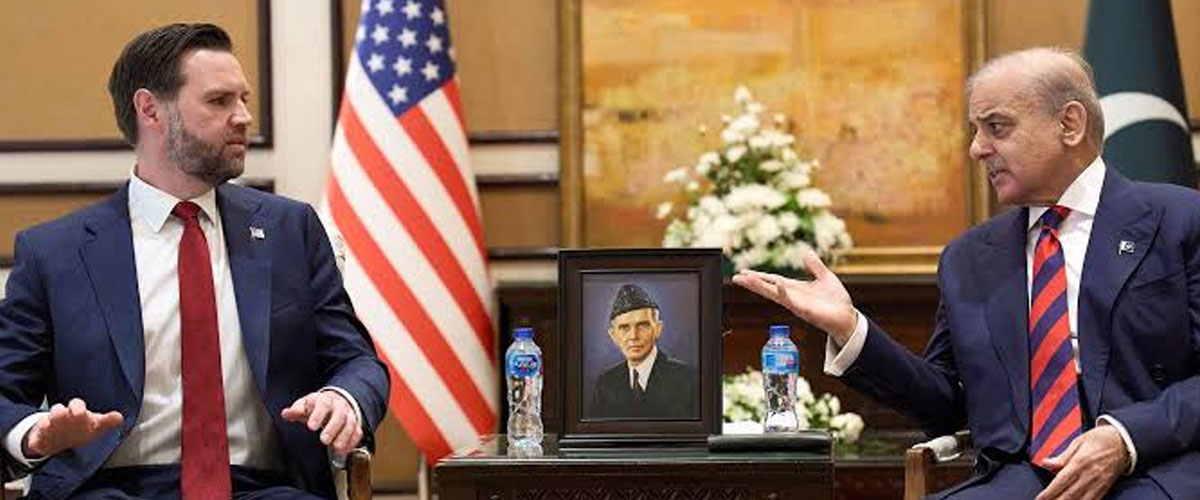
Analysts and commentators around the world have attributed Pakistan’s renewed importance in Washington to the former’s reported role as mediator in Iran-US talks. But this role only partially explains Pakistan’s relevance in American strategic calculations for Southwest Asia. The puzzle is even bigger.
Why did Islamabad suddenly become strategically valuable after years of difficult US-Pakistan relations? Why was the Trump Administration prepared to invest diplomatic capital in rebuilding ties with Islamabad? Pakistan’s renewed importance is not simply a result of successful diplomacy; it reflects a fundamental shift in American strategic calculations for the region in the wake of the war in Gaza and the Israel-Iran war.
The war in Gaza was not simply the worst humanitarian crisis of 21st century. It also generated trouble for US diplomacy in the Arab world and its geopolitical interests in the region. In Arab perception, Israel emerged militarily stronger than ever after the havoc it caused in Gaza. American support for Israel generated unprecedented anger in the Arab streets.
This caused Arab governments to face domestic pressure. Washington was facing credibility problems among its Arab allies. Now the American challenge was no longer simply supporting Israel. It also included efforts to prevent America’s military support for Israel from alienating Arab governments and Arab streets.
The past two decades have seen some dramatic changes in the Arab Middle East. Arab Sheikhdoms of the Persian Gulf are deepening their relations with China. They have entered security dialogues with Russia. This doesn’t mean that they have abandoned the United States. However, it would not be an exaggeration to say that they increasingly want guarantees against an uncertain future in the face of weakened American security guarantees for the region.
Arab concern was never Israel itself. There were signs that Arab monarchies were increasingly showing concern for regional order that increasingly became centered around Israeli military power while overlooking Arab security concerns. This was the situation which produced Arab demands for reassurance.
Pakistan’s increased diplomatic value reflects the Trump Administration’s recalibration of its strategic interests in the region following the Gaza and Iran wars. Washington needed to reassure its Arab allies that the regional military balance would not overwhelmingly tilt towards Israel and Pakistan would emerge as a useful Muslim military power to restore the military balance.
There is no publicly stated US policy to introduce Pakistan as a balancer to Israeli military power. There have been no implicit or explicit US official statements on record to this effect. But Pakistan’s rise as an apparent security provider in the Middle Eastern and Eastern Africa—two regions traditionally considered under US security influence—indicate that Washington has no objection to the Pakistan military playing increasingly influential roles in countries like Sudan, Somalia, Libya and Saudi Arabia.
The Gaza war undoubtedly damaged American standing in the Islamic world. Israel inflicted devastating destruction on Gaza. Later Iran war also established the superiority of Israeli military machines and its technology, thus altering the perception of regional military balance. Pakistan, a Muslim state, whose military has recently claimed victory over much larger India military, was the first candidate to act as a balancer to Israel’s military dominance of the region, at least at the political level.
The rise of Iran in the wake of the 40 days of war poses a peculiar problem for this exercise in perception management. The very survival of Iran’s clergy led regime following 40 days of heavy and incessant Israeli and American bombing, makes it clear that both countries have failed to achieve their political and military objectives in Southwest Asia.
Thus, it would not be an exaggeration, if we say that Iran emerged politically much stronger than ever in this war. With vast oil resources at its disposal, it is only a matter of time that Iran would soon be able to rebuild its military capabilities. Most certainly, Iran’s rise as a political and military power in the region would not be to the liking of America’s Arab allies and to the US itself. In this way, there will not be one, two Muslim military powers to balance Israel’s dominance of the region. However, in Iran’s case the balancing act will not simply be an exercise in perception management.
In this situation, Pakistan’s position as a frontline state in Southwest Asia further strengthens. Arab sheikhdoms’ suspicion of America’s long-term commitment to their security has now assumed proverbial status. US strategic planners, however, would never want Arab states to adopt a radical path by turning towards Russia and China for their security. Pakistan, in fact, presents a non-radical path for Arab security—a path which will be acceptable to both the Americans and Arab street. Islamabad in fact carries other additional advantages as a security provider for the Middle East: firstly, Pakistan retains credibility in the Muslim world, it has functional relations with Iran, it is in the process of rebuilding relations with Washington and last but not the least Pakistan could engage China while remaining useful to the United States.
I don’t want to overstate my argument. Firstly, I want to make it clear that Pakistan is not replacing Israel as the most favorite country of the United States. Secondly, Arabs are not abandoning Washington. Instead, Pakistan has become an important pillar of American regional security strategy with the possible role of political and military balancer.
So, we can say that Pakistan’s recent diplomatic relevance has less to do with its own transformation and more the result of Washington’s changing strategic requirements. Gaza and Iran have reshaped US regional strategic calculations. In such a scenario, Pakistan maintains functioning relations with Iran and strategic relevance for countries like Saudi Arabia, Qatar and UAE, and it remains useful for US interests without posing any danger to America’s strategic relations with Israel. The real story is not Pakistan’s revival as an important strategic player in the region; the real story is America’s search for regional security architecture which can balance major strategic and military players after a period of major strategic upheaval.