Author

IRGC Chief Vows Revenge for Khamenei’s Killing, Warns US and Israel
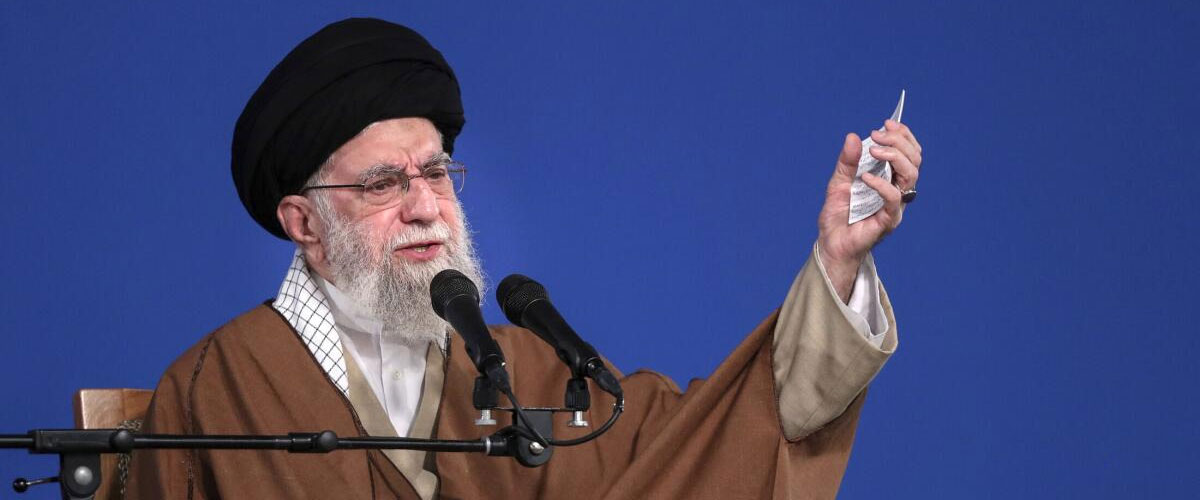
ISLAMABAD: The Islamic Revolutionary Guard Corps’s (IRGC) top commander has pledged vengeance against the US and Israel for the killing of Supreme Leader Ayatollah Ali Khamenei, saying it won’t “be erased from the historical memory”, international media reported.
Brigadier-General Ahmad Vahidi called for the “full realization of justice and a fitting response to the criminals, especially the child-killing American army”.
“The criminal leaders of America and all enemies of the Islamic Revolution and the Resistance Front must know that by the cowardly assassination of this divine leader they will never… bring the flag of resistance to the ground,” Vahidi said in a statement carried by Sepah news agency.
“Avenging the martyrs and the punishment of the perpetrators… will remain a definitive, legitimate, and an unforgettable demand.”
Iran’s Supreme Leader Ayatollah Ali Khamenei was killed during the recent US-Israeli military campaign against Iran, marking an unprecedented escalation in tensions between Tehran and its adversaries. Iranian authorities have described the assassination as a direct attack on the country’s sovereignty and political system, vowing that the incident will fundamentally reshape Iran’s security and military posture.
Following Khamenei’s death, Iran’s top military and political leadership declared that retaliation against the United States and Israel would be pursued at a time and place of Tehran’s choosing. Senior officials of the Islamic Revolutionary Guard Corps (IRGC) have repeatedly maintained that any response would be aimed at restoring deterrence and demonstrating that attacks on Iran’s leadership would carry severe consequences.
The conflict, which lasted about 40 days, witnessed extensive exchanges of missile and drone attacks, US strikes on Iranian military and nuclear facilities, and Israeli operations targeting senior Iranian commanders and strategic infrastructure. Although active hostilities ended after a ceasefire agreement, Iranian leaders have insisted that the conflict is not over politically and that accountability for the killings remains a national objective.
Security analysts believe the repeated references to “revenge” by senior IRGC commanders are intended not only for domestic audiences but also as part of Iran’s broader deterrence strategy. The statements are seen as an effort to maintain pressure on Washington and Tel Aviv while preserving uncertainty over the timing and nature of any future Iranian response.
The latest remarks also come amid continuing regional instability, with Iran-backed groups across the Middle East closely watching Tehran’s next moves. Governments in the Gulf, including Pakistan, have consistently called for restraint and dialogue, warning that any renewed military confrontation between Iran, the United States and Israel could have serious implications for regional security, energy supplies and global trade.