Author

Middle East War Expands as Houthis Target Saudi Arabia, Iran Strikes Gulf States
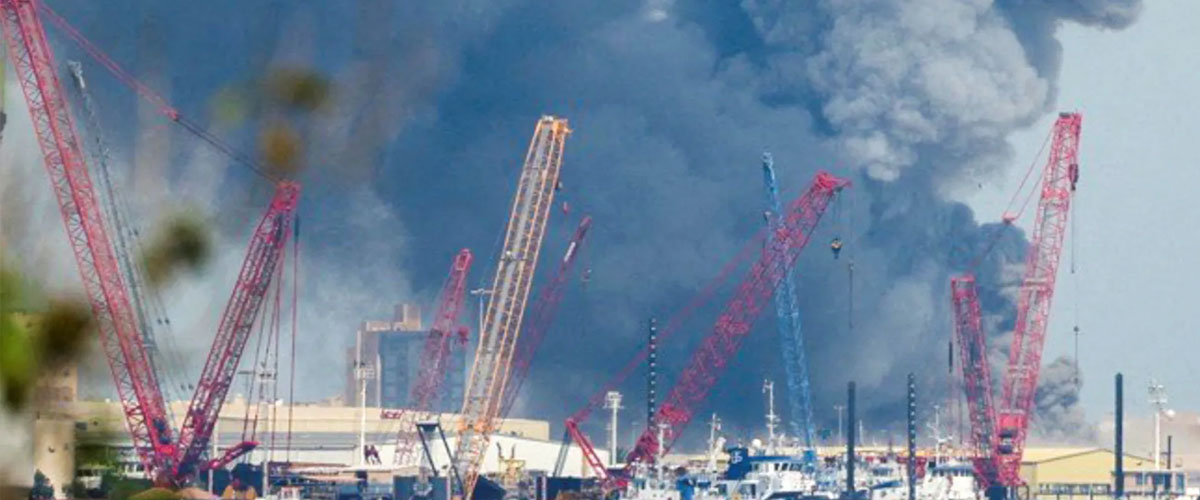
ISLAMABAD: War in the Middle East is in the process of continuous expansion with major new military players joining the conflict.
Yemen’s Houthi rebels have announced a maritime embargo of their foe Saudi Arabia, after the pair traded fire last week for the first time in years.
The rebels “declare a maritime embargo against the criminal Saudi enemy, based on the equation of ‘an eye for an eye,’ effective immediately upon the issuance of this statement,” military spokesman Yahya Saree said.
Kuwait’s military says it was responding to renewed missile and drone salvos as Tehran pressed its attacks against Gulf countries and the United States expanded its strikes across the Islamic republic.
“Kuwaiti air defences are currently confronting hostile missile and drone attacks,” the Gulf state’s army said in a statement blaming Iran, while an AFP journalist confirmed hearing explosions in Kuwait City. In neighbouring Bahrain, air raid sirens also sounded, according to the island kingdom’s interior ministry.
Iranian President Masoud Pezeshkian said on Monday that Iran is engaged in a “full-scale war” with the United States and Iran must accept the repercussions of the conflict.
“The reality is that today the Islamic Republic of Iran is engaged in a full-scale war. We must be realistic and accept the natural consequences of this resistance,” Pezeshkian said, according to a presidential statement reported by Al Jazeera.
Pezeshkian added that the Islamabad Memorandum of Understanding signed with the US largely favours Iran.
“In none of the 14 clauses … have we backed down from our rights, principles, national interests, revolutionary values, and beliefs,” he said.
“A major part of the achievements has been in favour of the Islamic Republic of Iran, and practically no clause can be found that has created a unilateral benefit for the American side,” Pezeshkian said.
Hostilities resumed in the Gulf region between the United States and Iran this month despite the agreement that was signed in June.
The latest escalation comes weeks after the collapse of the fragile ceasefire established under the Islamabad Memorandum of Understanding (MoU), which was signed in June following more than a month of intense fighting between the United States and Iran. Brokered through Pakistani mediation with the support of Qatar and several regional states, the agreement was designed to halt military operations, establish mechanisms for technical negotiations, and prevent further attacks on energy infrastructure and international shipping routes.
Although the accord temporarily reduced hostilities, both Washington and Tehran repeatedly accused each other of violating its provisions, while proxy groups aligned with Iran continued military operations across the region. Diplomatic efforts to preserve the ceasefire gradually stalled as mutual distrust deepened.
The renewed conflict has steadily expanded beyond direct exchanges between the United States and Iran, drawing an increasing number of regional actors into the confrontation. Iranian-backed armed groups have intensified attacks against US military facilities and allied interests, while Washington has responded with expanded air and missile strikes inside Iran.
The widening battlefield now stretches from the Gulf to the Red Sea, with commercial shipping, military installations and critical energy infrastructure emerging as key targets. The Houthis’ announcement of a maritime embargo against Saudi Arabia marks another significant expansion of the conflict, threatening one of the world’s busiest energy and trade corridors and raising concerns over disruptions to global oil supplies and maritime commerce.
The latest missile and drone attacks against Kuwait, along with air raid warnings in Bahrain, underscore growing fears that the conflict could evolve into a broader regional war involving Gulf Cooperation Council states.
Although Gulf monarchies have sought to avoid direct military involvement, repeated attacks on their territory increase pressure on their governments to strengthen security cooperation with the United States while attempting to prevent a wider confrontation with Iran.
Regional analysts warn that any sustained exchange involving Gulf states could further destabilize the Middle East, increase volatility in international energy markets, and complicate diplomatic efforts aimed at reviving negotiations between Washington and Tehran. The widening conflict also presents significant security and economic challenges for neighbouring countries, including Pakistan, which has consistently called for dialogue and a negotiated settlement to prevent further regional destabilization.