Author

Saudi-Houthi Strikes Raise Fears of New Middle East War
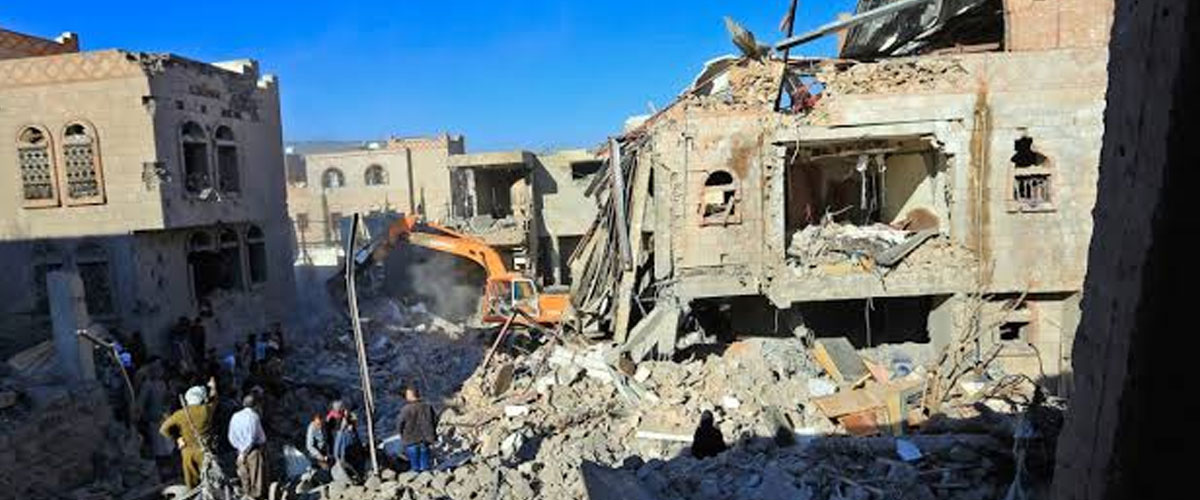
ISLAMABAD: Houthis and Saudi military have launched strikes against each other’s military and civilian targets during the last 24 hours, giving rise to the fear that a new war in the Middle is about to begin.
It would be an exaggeration to describe what has been going on between Houthis and Saudi Arabia as a full-scale war. However, things seem to be moving in that direction.
Houthis—a Yemen based Shia militia group is closely allied with Iran and Saudi Arabia sees its conflict with Houthis as part of its broader strategic vis-à-vis Iran.
On Saturday Houthis condemned Saudi Arabia’s air strikes on Hodeidah port and Kamaran Island and claim air defences “intercepted enemy aircraft”.
In response, the militia in Yemen says it launched two retaliatory strikes targeting Aramco oil facilities in Jizan and Yanbu with ballistic missiles, cruise missiles, and drones, claiming direct hits.
The group vows to maintain its naval blockade of Saudi Arabia and warns it is prepared to expand military operations if the conflict escalates further.
“In response to this blatant and criminal aggression, the Yemeni armed forces carried out two qualitative military operations: the first targeted sensitive Aramco facilities in Jizan with dozens of ballistic missiles and drones, while the second targeted sensitive Aramco facilities in Yanbu with a number of ballistic and cruise missiles and drones,” a Houthi statement says.
“This escalation of aggression confirms the Saudi enemy’s determination to continue its siege of our people and its violation of our country’s sovereignty, which is unacceptable. Our free, faithful, and steadfast people will confront it with unwavering resolve and strength.”
Saudi Arabia and the Houthis had largely avoided direct military confrontation since a UN-brokered truce took effect in 2022, allowing Riyadh to shift its focus toward domestic economic reforms and regional diplomacy. Although the ceasefire formally expired later that year, both sides generally maintained restraint while indirect negotiations, facilitated by Oman, sought a permanent political settlement to Yemen’s prolonged civil war.
The latest exchange of missile, drone and air strikes signals the most serious deterioration in Saudi-Houthi relations in years. While it is premature to describe the situation as a full-scale war, military analysts warn that the conflict could escalate if retaliatory attacks continue. The Houthis remain one of Iran’s closest regional allies, and Saudi Arabia has long viewed the militia as an important component of Tehran’s strategy to expand its influence across the Middle East.
The renewed hostilities come at a time of heightened regional tensions following months of confrontation involving Iran, Israel and the United States. The conflict in Yemen has increasingly become intertwined with wider geopolitical rivalries, particularly over maritime security in the Red Sea and the Bab el-Mandeb Strait—one of the world’s busiest shipping lanes. Any prolonged fighting could threaten regional energy infrastructure, disrupt global trade routes and increase volatility in international oil markets.
Diplomatic efforts to prevent a wider conflict are expected to intensify, with Oman and the United Nations likely to resume mediation between the parties. However, the collapse of the relative calm that had prevailed since 2022 has raised concerns that the Middle East may be entering another period of interconnected conflicts, where localized confrontations risk drawing in regional and international powers and making de-escalation increasingly difficult.