Author

Pakistan, Kuwait Reaffirm Resolve to Deepen Defence Partnership
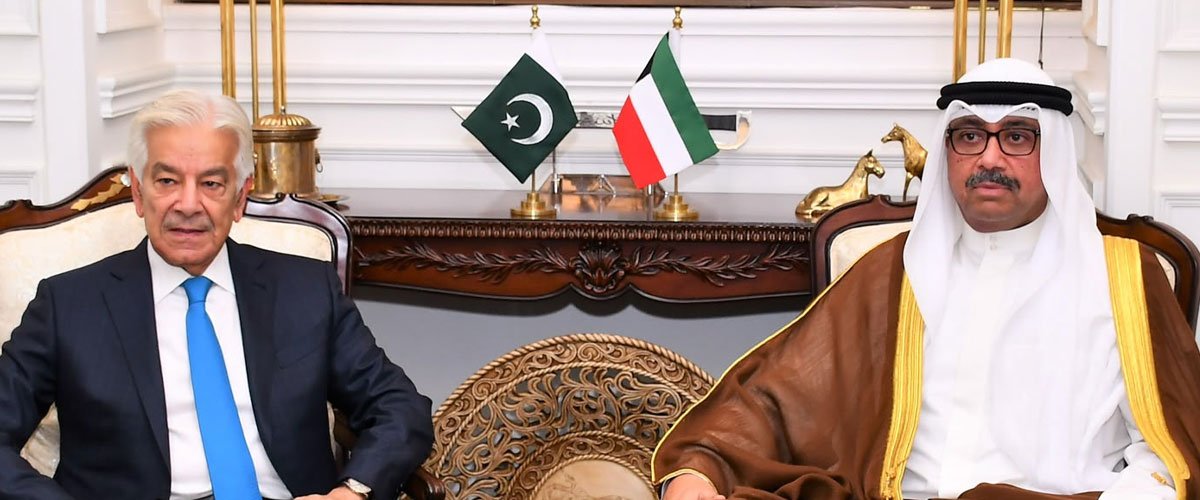
ISLAMABAD: Pakistan and Kuwait military leaders have affirmed the resolve to further consolidate their historic and brotherly relations into a strong, enduring and mutually beneficial defense partnership, contributing to regional security and stability.
A high-level delegation from Kuwait, led by H.H. Sheikh Abdullah Ali Abdullah Al-Saleem Al-Sabah, Minister of Defence, accompanied by H.E. Lieutenant General Khalid Darj Saad Al-Shriaan, Chief of General Staff of the Armed Forces of Kuwait, called on Field Marshal Syed Asim Munir, NI (M), HJ, Chief of Army Staff & Chief of Defence Forces (CDF), at General Headquarters (GHQ), Rawalpindi.
The meeting focused on matters of mutual interest, regional security and bilateral defence cooperation. Both sides reaffirmed their commitment to enhancing institutional ties and expanding mutually beneficial defence collaboration between the two brotherly countries.
The Kuwaiti delegation appreciated the professionalism, operational excellence and valuable contributions of the Pakistan Armed Forces towards regional peace and stability.
The engagement reaffirmed the resolve of Pakistan and Kuwait to further consolidate their historic and brotherly relations into a strong, enduring and mutually beneficial defence partnership, contributing to regional security and stability.
Pakistan’s engagement with Kuwait comes amid an expanding security role for Islamabad in the Gulf, where its military is increasingly being viewed as a potential partner in addressing a changing regional security environment.
Pakistan has historically maintained close defense ties with several Gulf states, providing military training, advisory support and participating in joint exercises. However, the growing uncertainty surrounding the regional security order has created fresh opportunities for deeper and more institutionalised defense cooperation.
The recent conflict and tensions in the Persian Gulf have particularly reinforced concerns among Gulf states about their dependence on external powers for security. Pakistan, with one of the region’s largest and most experienced armed forces, longstanding military relationships across the Gulf and close political ties with Arab countries, is increasingly positioning itself as a reliable regional security partner. Its armed forces have also gained extensive operational experience in counterterrorism, conventional warfare and the protection of strategic infrastructure.
Pakistan’s security engagement is also being broadened beyond traditional bilateral military cooperation. Its recent defence diplomacy with Saudi Arabia, Türkiye, Iran and other regional countries indicates an effort to develop a wider network of security partnerships connecting South Asia, the Gulf and the broader Middle East. Islamabad has simultaneously sought to present itself as a diplomatic bridge during regional crises, complementing its military relationships with an increasingly active role in conflict mediation and regional diplomacy.
For Gulf states such as Kuwait, closer cooperation with Pakistan offers access to military expertise, training and professional cooperation without necessarily altering their existing strategic relationships with major powers. Pakistan, meanwhile, sees stronger defense partnerships as serving both its economic and strategic interests, while giving it a greater voice in the emerging regional security architecture. The presence of Pakistani military personnel and decades of defence cooperation have also provided Islamabad with an institutional foundation that can be expanded as Gulf security requirements evolve.
The meeting at GHQ therefore reflects a broader trend rather than an isolated episode of defense diplomacy. As uncertainty persists over the future security architecture of the Gulf, Pakistan appears to be seeking a more consequential role as a security partner while maintaining its traditional emphasis on regional stability and cooperation. The challenge for Islamabad will be to expand this role without becoming entangled in rivalries among regional powers, while converting its longstanding military ties with Gulf countries into durable and mutually beneficial strategic partnerships.