
Author

Six Martyred as Security Forces Foil Coordinated Attacks in Balochistan
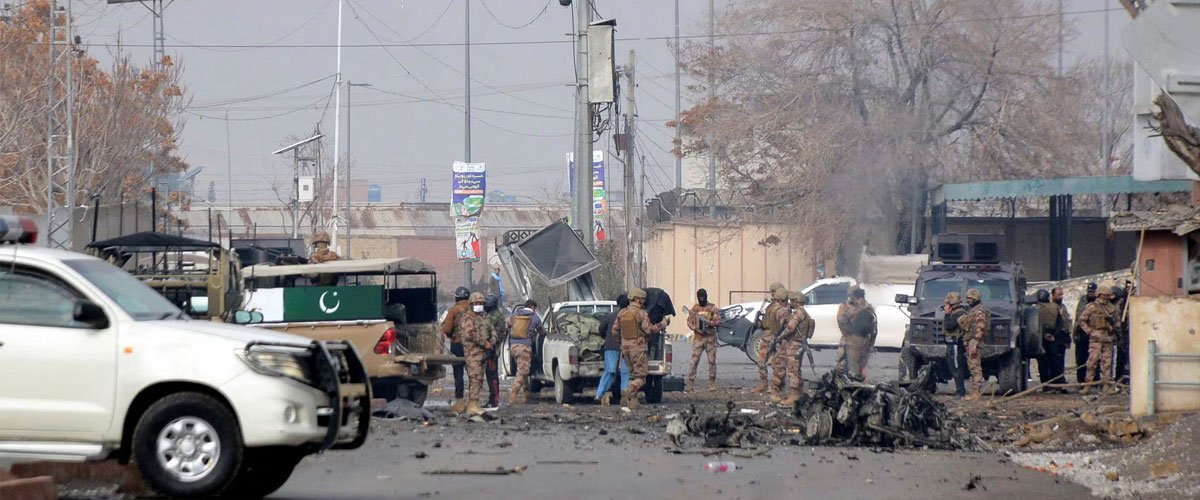
ISLAMABAD: Five security personnel, including two officers, and a Customs official were martyred during a “coordinated attack in an attempt to breach the Customs House” on the night of August 31-September 1 in Balochistan, the military’s media wing said.
In a statement the ISPR said that on night of 31 August–1 September, during multiple incidents in Nokcha, Chagai District, and Ziarat Cross, Pishin District, twenty-one terrorists belonging to Indian-sponsored proxies of Fitna al-Hindustan and Fitna al-Khawarij were sent to hell due to effective responses by the Security Forces.
On 31 August, terrorists belonging to Fitna al-Hindustan attempted to disrupt the peaceful movement of commuters along N-40 Quetta–Taftan Highway by establishing an illegal checkpoint for extortion. Security Forces responded immediately and, after an intense fire exchange, killed eleven terrorists on the spot. A large quantity of weapons, ammunition and explosives was also recovered from the terrorists.
During the night of 31 August–1 September, terrorists belonging to Fitna al-Khawarij launched a coordinated attack in an attempt to breach the Customs House. Security Forces responded effectively and, after an intense fire exchange, killed ten terrorists. Moreover, fleeing terrorists were also engaged by the Security Forces, inflicting further casualties.
The attack on the Customs House was a manifestation of the terror-crime nexus, orchestrated to prevent Customs officials from performing their lawful duties and thereby facilitate the continuation of criminal activities in the area.
However, during the exchange of fire, six brave sons of the soil, including two officers and a government official from the Customs Department, made the ultimate sacrifice in the line of duty and embraced Shahadat.
Sanitization operations are continuing in the surrounding areas to eliminate any remaining terrorists and ensure the safety and security of the local population as well as the vital national highways.
The relentless counter-terrorism campaign under the vision of “Azm-e-Istehkam,” as approved by the Federal Apex Committee on the National Action Plan, will continue with full resolve. Security Forces and Law Enforcement Agencies remain committed to eliminating the menace of foreign-sponsored and foreign-supported terrorism from the country.
The latest attacks underline the continuing security challenge confronting Balochistan, particularly along the province’s strategically important highways and border regions. Chagai, which borders Iran and Afghanistan, is a major transit area, while the N-40 Quetta–Taftan Highway serves as a vital commercial and connectivity route linking Pakistan with Iran. Militants have frequently sought to disrupt movement along these routes, target security forces and government installations, and exploit the vast and difficult terrain of the province.
The attack on the Customs House also highlights the growing overlap between militancy and organised criminal networks in the border regions. Customs installations and officials play a crucial role in controlling cross-border trade and combating smuggling, making them potential targets for groups whose activities intersect with illicit commercial networks. Pakistani authorities have increasingly described attacks on state institutions in Balochistan as part of a broader effort by militant and criminal groups to weaken the government’s writ and maintain control over illegal economic activities.
The incidents come as Pakistan continues its nationwide counterterrorism campaign under the framework of Azm-e-Istehkam, approved by the Federal Apex Committee of the National Action Plan. The strategy envisages coordinated action by the military, law-enforcement agencies and civilian institutions against militant networks, while also focusing on intelligence-based operations and the disruption of their financial and logistical infrastructure.
Balochistan and the adjoining border regions remain among the principal theatres of this campaign because of the persistence of militant violence and the province’s strategic importance.
